
Taipei in One Day
Because of Typhoon Champi, three days in Taipei had to be compressed into one. Of course, what that really means is a lot of the itinerary didn’t happen at all, and some things had to be rushed. But Alexis, our trip leader, managed to squeeze a lot into our day.
And now I’m going to squeeze a lot into a very quick post. I already gave a history lesson about Taiwan, so I can jump right in. Plus, I’m already in Shanghai, and I’m going to have a lot to write about in the next few weeks. So I will mostly let my photo album serve to give you an overview of my one day in Taipei.
What I saw in a day
Longshan Temple
Founded in 1738 by settlers from Fujian, China, and completed in 1740, the temple is dedicated primarily to Guanyin (the Buddhist Goddess of Mercy), while also housing over 100 Buddhist, Taoist, and Chinese folk deities (including Mazu, Guan Yu, and Yue Lao the matchmaker god).
Between 1796 and 1874, several heavy earthquakes, storms and termite erosion resulted in many repairs. In 1945, our US allies in World War II bombed the temple by mistake, the main hall was utterly destroyed, yet leaving the Buddha miraculously unscathed-the prophecy was revealed once again. After rigorous reconstruction, the temple returned to its original state. (All this per signage at the temple.)

The whole time we were there, early in the morning, there was loudly amplified chanting going on. This happens every morning.
Chiang Kai-shek Memorial Hall
Chiang Kai-shek (1887–1975) is both revered and reviled by the Taiwanese people. It depends which political party they belong to. (Kind of like someone we know and wish we didn’t.)
After he died, this grand memorial structure was built to honor his memory. Like him or not, he did fight the Communists, and even though he lost and had to flee to Taiwan, and even though his government instituted 39 years of martial law that didn’t end until more than ten years after he died, he remains an important leader in Taiwan’s history.

There are 89 steps going up, one for each year of Chiang’s life. The monument houses an interesting museum about his life, but after democracy came to Taiwan in the 1990s, half of the museum became a celebration of freedom.
They do a fun changing of the guard every hour for tourists. There’s a video in my album.
National Palace Museum
For me this was the highlight of the day. The National Palace Museum is filled with gorgeous art and artifacts from the history of China. In the winter of 1948, as Communist forces advanced were advancing and it became clear they were going to prevail in the Chinese Civil War, Chiang Kai-shek ordered selected imperial collections and artifacts from the Palace Museum and the National Central Museum to be loaded onto ships. Across three separate maritime batches departing from Nanjing, a total of 2,972 crates of Forbidden City artifacts (about 22% of what was originally slated to move) plus 852 crates from the National Central Museum were carried across the Taiwan Strait to Taiwan.
Upon arrival, the crates were initially stored in a sugar mill warehouse and mountain bunkers. The National Palace Museum finally opened in 1965, and this is where the collection remains today.
The collection is arranged and displayed beautifully. I especially enjoyed the ceramics, with pottery from ancient times as well as Ming dynasty and Qing dynasty. There’s also lots of bronze and jade and more than I had time to see.


Ding type ware
Northern Song to Jin dynasty (12th century)

Taipei 101
When it opened in 2004, Taipei 101 was the tallest building in the world, a distinction it held until 2010. (Today it is #11.)

The views from the top were impressive, especially since no other buildings around come close to its height. You can see photos in my album.
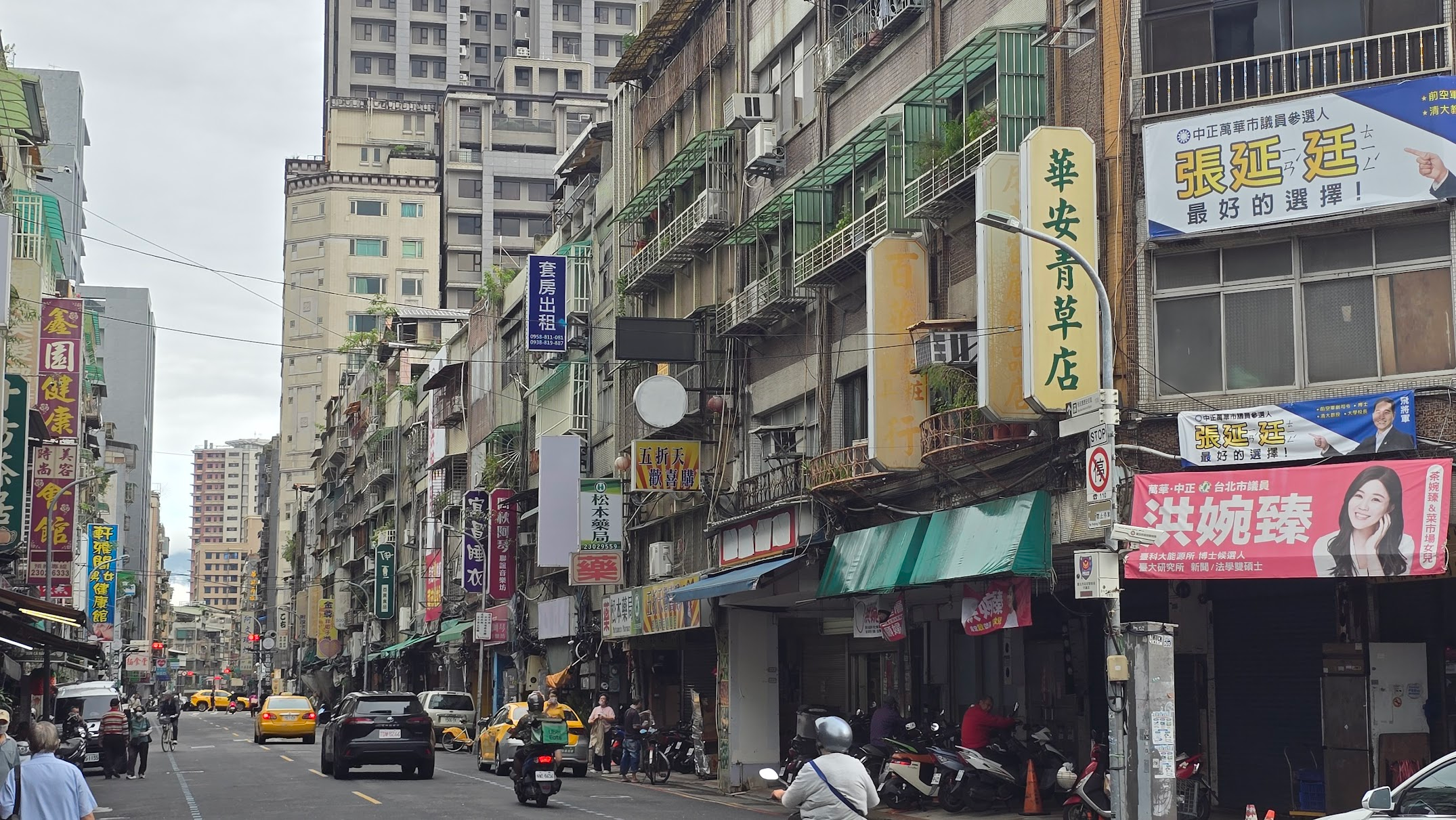
Dihua Street
This street is thought to be Taipei’s oldest historical street. It’s filled with interesting shops selling some touristy stuff but also some interesting traditional herbs and stuff like that.


OK, I’m done. This might be a record for me, fastest overview I’ve ever written. I think it took me just about a half hour. Don’t forget the photo album, with lots more pics, especially of the beautiful collection from the National Palace Museum.