
Moving on from Beijing
I had three days in Beijing. (I’m not there anymore, but I’ll get to that later). I have lots to write about, but the trip has moved on. This has been a trip with very little downtime. Plus getting photos is a crap shoot. Sometimes I can connect to the VPN and sometimes I can’t. I have so many photos I need to organize, and it’s hard for me to tell my stories without the photos to help me keep things straight.
So I’m going to keep this short, and I’m going to steal a lot of content from internet sources. I have one hour to get this done, because we have an activity in one hour, and I’m not going to let this drag on past that.
Forbidden City
Here are some facts I found about the Forbidden City:
- The Forbidden City is the world’s largest imperial palace, over three times larger than the Louvre Palace in France.
- It has some of the largest and best-preserved ancient wooden structures in the world.
- The Forbidden City took 14 years to build (from 1406 to 1420) with a workforce of more than 1,000,000, including more than 100,000 craftsmen.
- It was the imperial palace of China for 492 years (1420–1912) and was the home of 24 emperors — 14 of the Ming Dynasty and 10 of the Qing Dynasty.
- The Palace Museum in the Forbidden City is one of the world’s largest cultural museums, hosting 14 million visitors per year.
- There are European and Arabic style buildings in the Forbidden City. (I don’t remember seeing any such buildings. They all looked Chinese to me.)
- There are no trees in the Outer Court because emperors thought they would overshadow or disrupt the majesty of the atmosphere.
- Birds cannot land on the palace roofs, which have a special design so as to retain the cleanliness and magnificence of the Forbidden City.
- Supposedly, the Forbidden City has 9,999½ rooms. Half a room is missing to avoid upsetting the God of Heaven (who has 10,000 rooms in his heavenly palace).
Why it’s called the Forbidden City
In ancient times, the emperor was divine and had divine power. So his palace was off limits to ordinary people.
What it looks like
It’s a huge collection of buildings that all look the same. Different sizes, but the same design.
I think I sound a bit jaded. I’m not, really. It was magnificent. But honestly, all the Chinese palaces and temples and towers and pagodas look more or less alike. They’re all lovely, but it’s hard to distinguish between them. Our guide would tell us this is where the emperor did such and such, and this is where something else happened. But I couldn’t begin to keep track of all the different structures and their purposes.
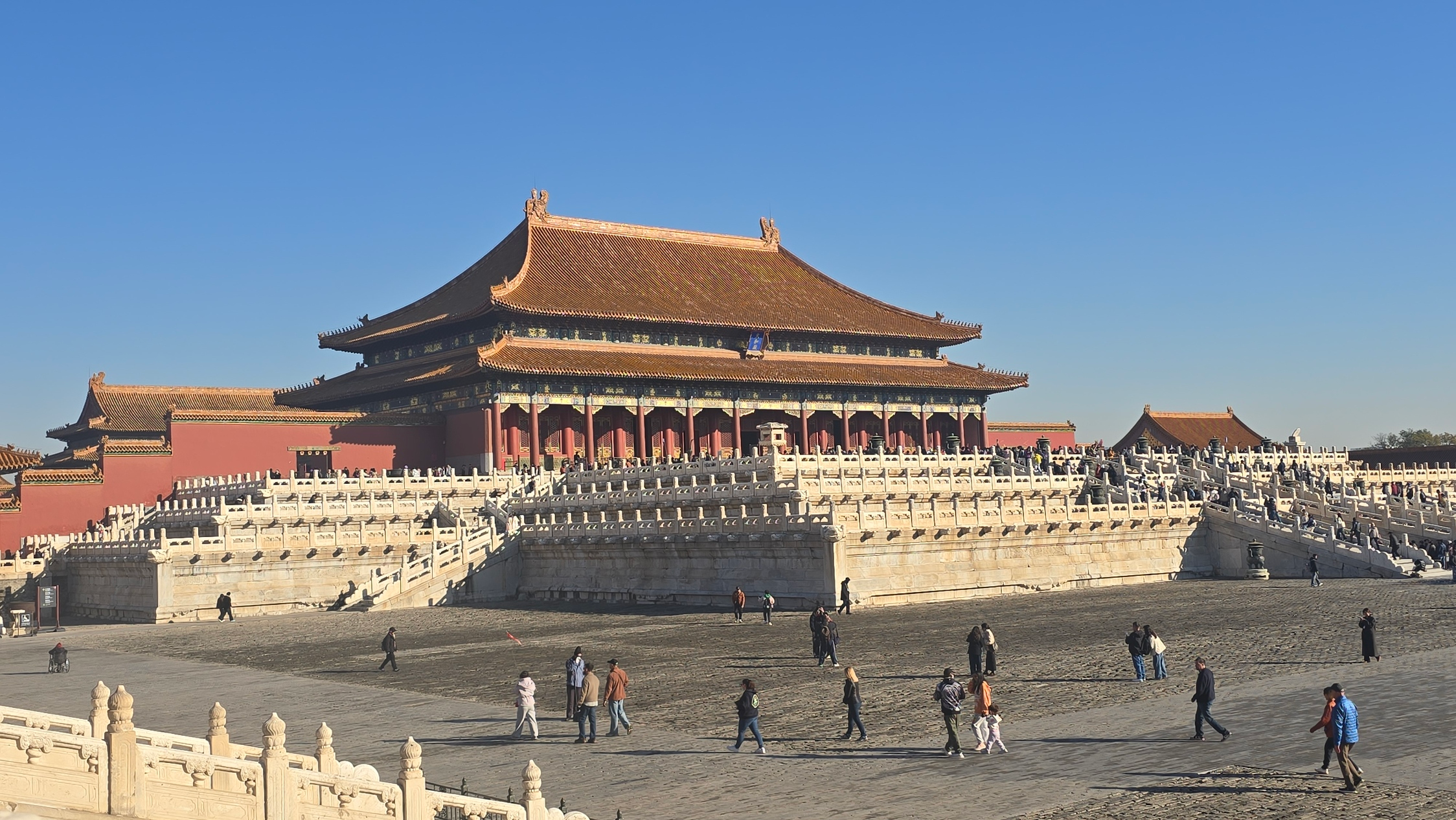
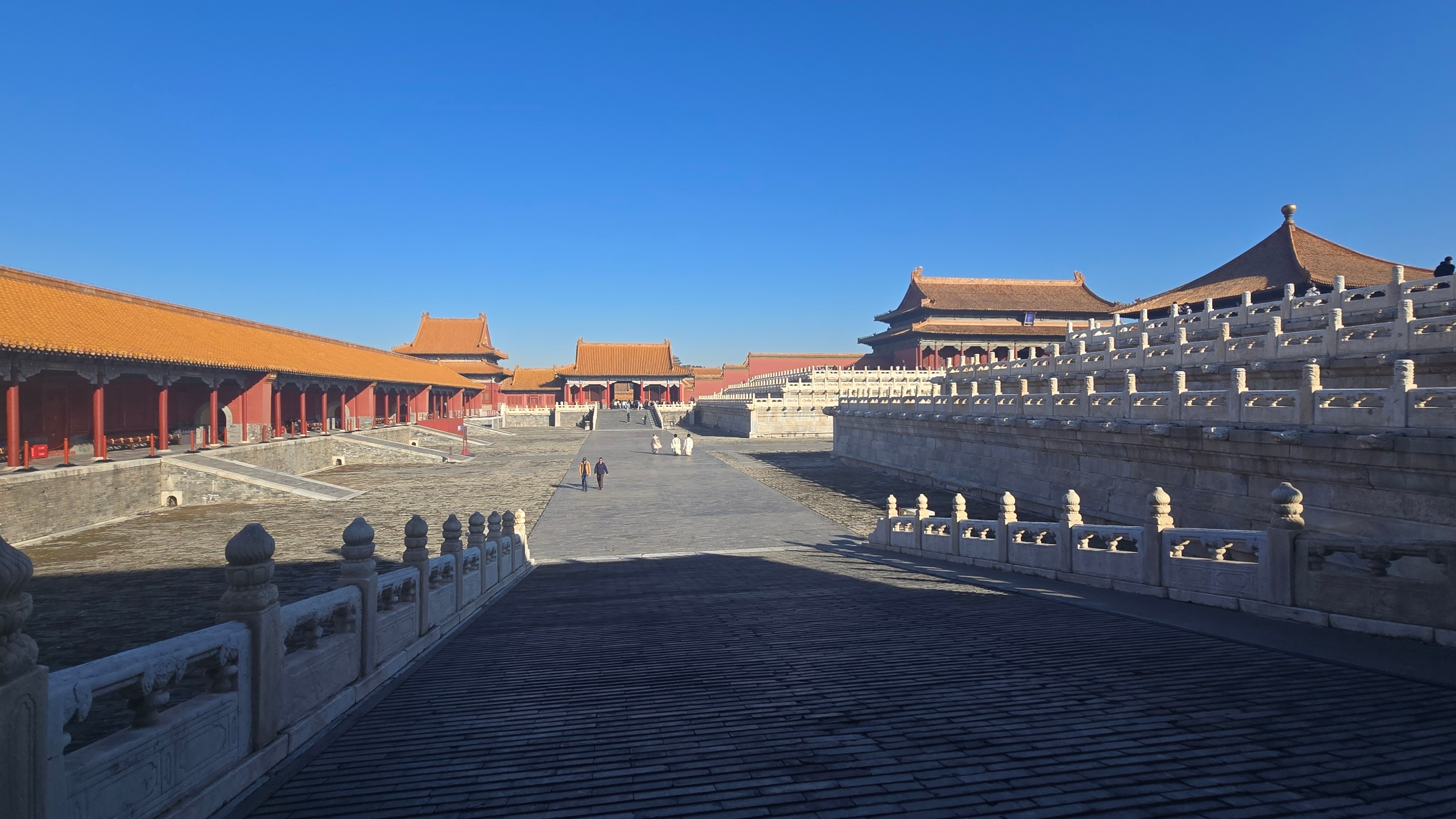
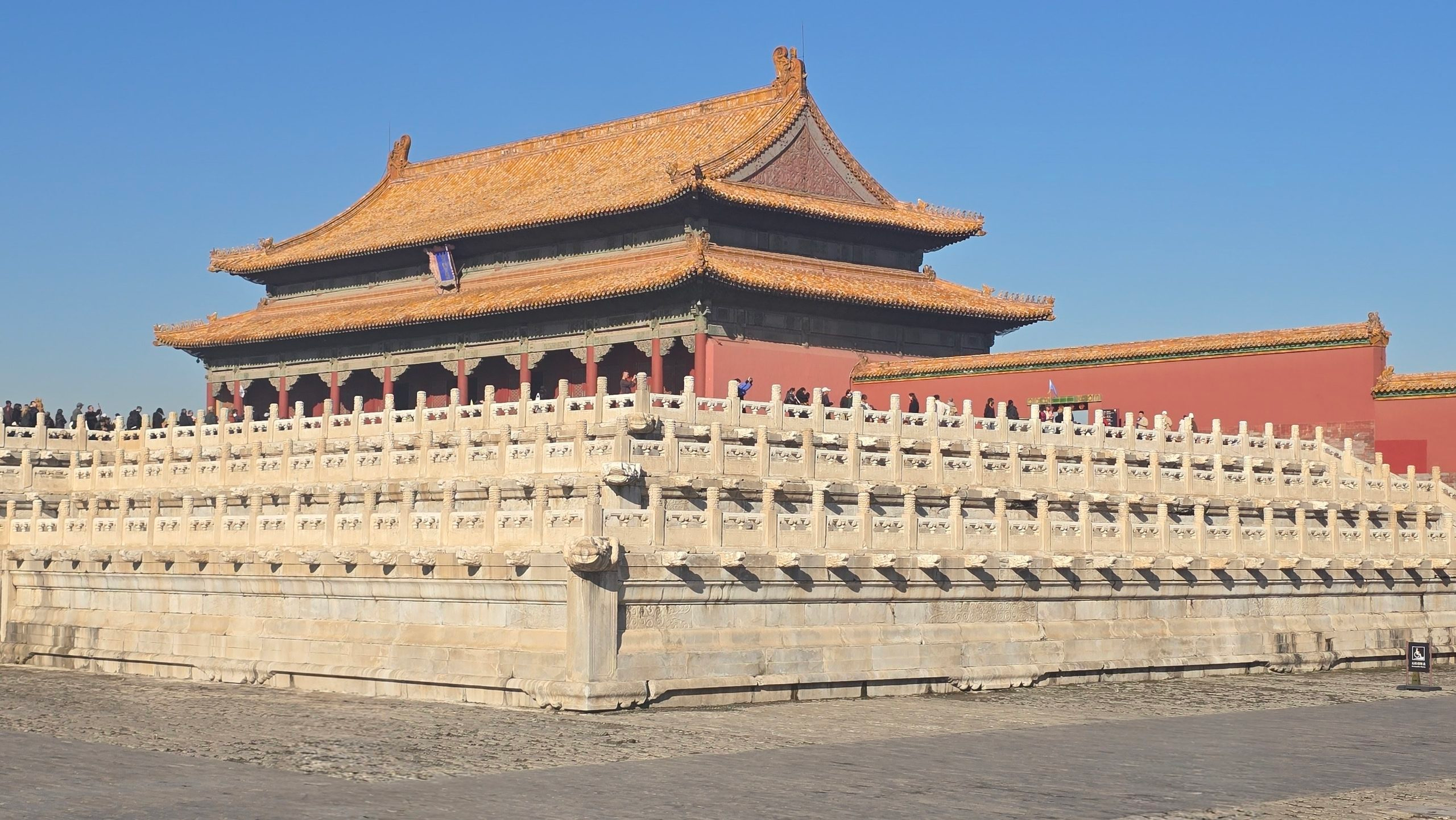
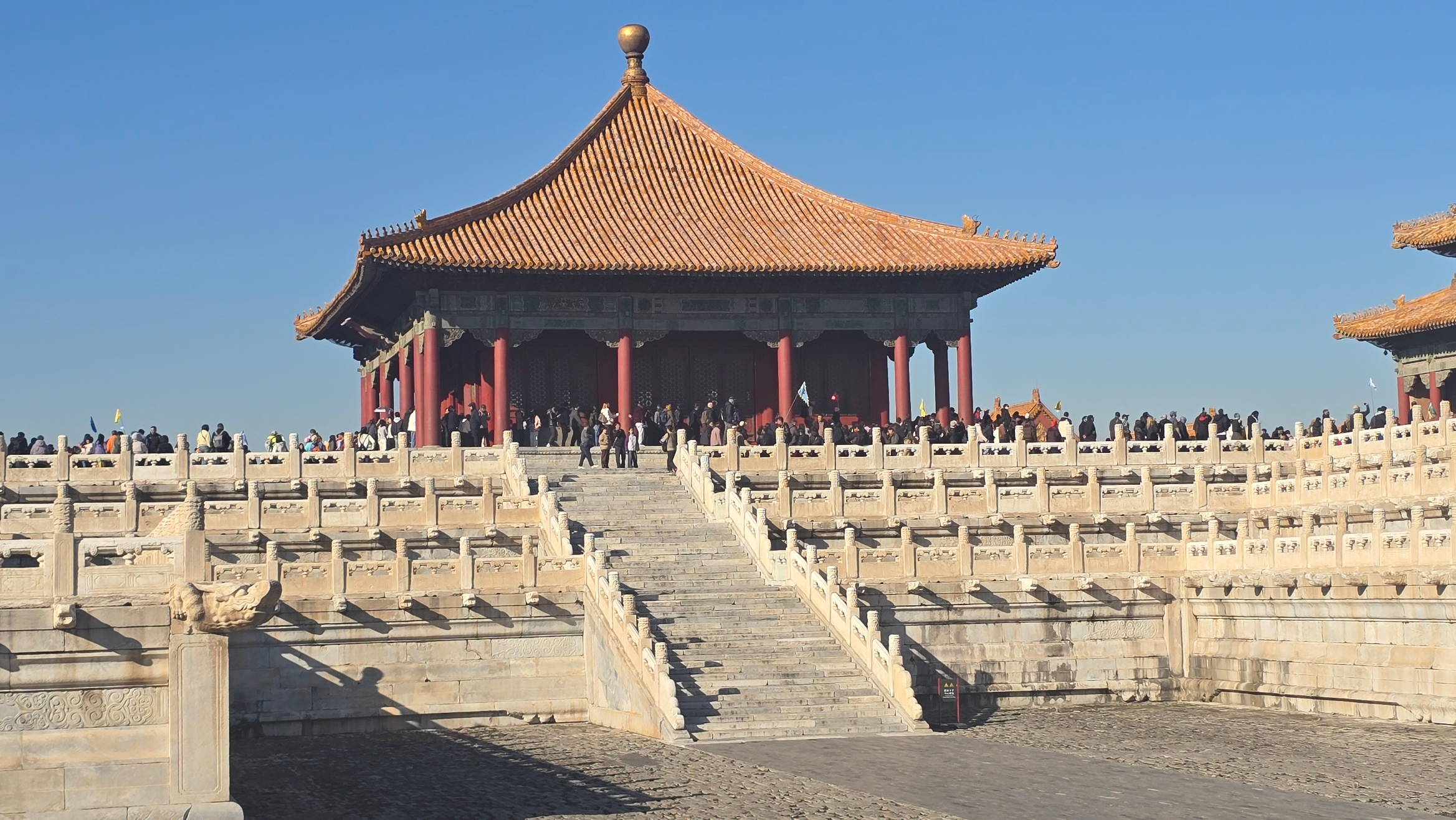
Do you see what I mean about all the buildings looking alike?
The Great Wall
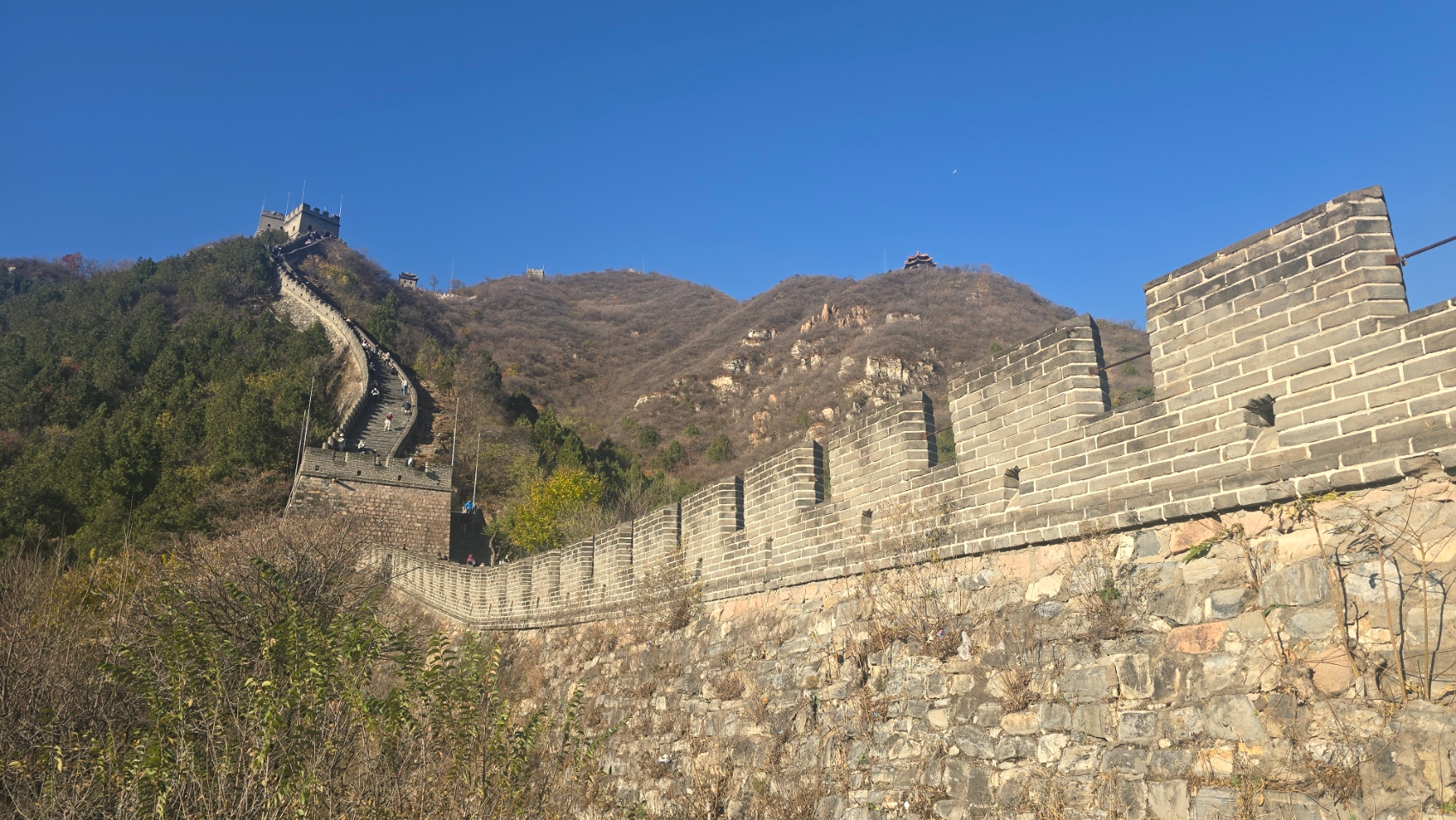
The Great Wall was great!
History
The following comes from Travel China Guide, because I don’t have time to research and write it myself.
The construction of the Great Wall dates back over 2,700 years to the Spring and Autumn Period (770 BCE — 221 BCE). During this era, powerful vassal states such as Chu, Qin, and Qi erected defensive walls on their territories, laying the groundwork for the Great Wall. After Qin Shi Huang unified the six states in 221 BCE, he connected the old walls of various states, creating the rudimentary form of the Great Wall. During the Han Dynasty (202 BCE — 220 CE), it was further expanded and extended westward to Xinjiang. Subsequent dynasties made smaller-scale constructions, until the Ming Dynasty (1368 — 1644) carried out large-scale reconstructions using brick and stone, forming the best-preserved Great Wall system we have today. Most of the Great Wall we see today was built during the Ming Dynasty and has a history of about 600 years.
The Great Wall is more than just a wall; it is a sophisticated defense system. Besides blocking invaders with the wall itself, the beacon towers on the Great Wall also played a crucial role. Upon spotting enemy forces, soldiers would light beacons, sending plumes of thick smoke into the sky. This was an extremely fast military warning method before the advent of the telegraph.
The location of the Great Wall usually relied on natural barriers, avoiding flat terrain as much as possible to increase the difficulty for nomadic cavalry to reach and cross. However, the Great Wall itself was like a highway, capable of transporting troops. The watchtowers distributed along the Great Wall could be used by soldiers for residence and storage of weapons and provisions, providing convenience for their own forces. Key passes, such as Shanhaiguan Pass and Jiayuguan Pass, served as crucial garrison points, allowing for both offensive maneuvers and solid defense.
Visit
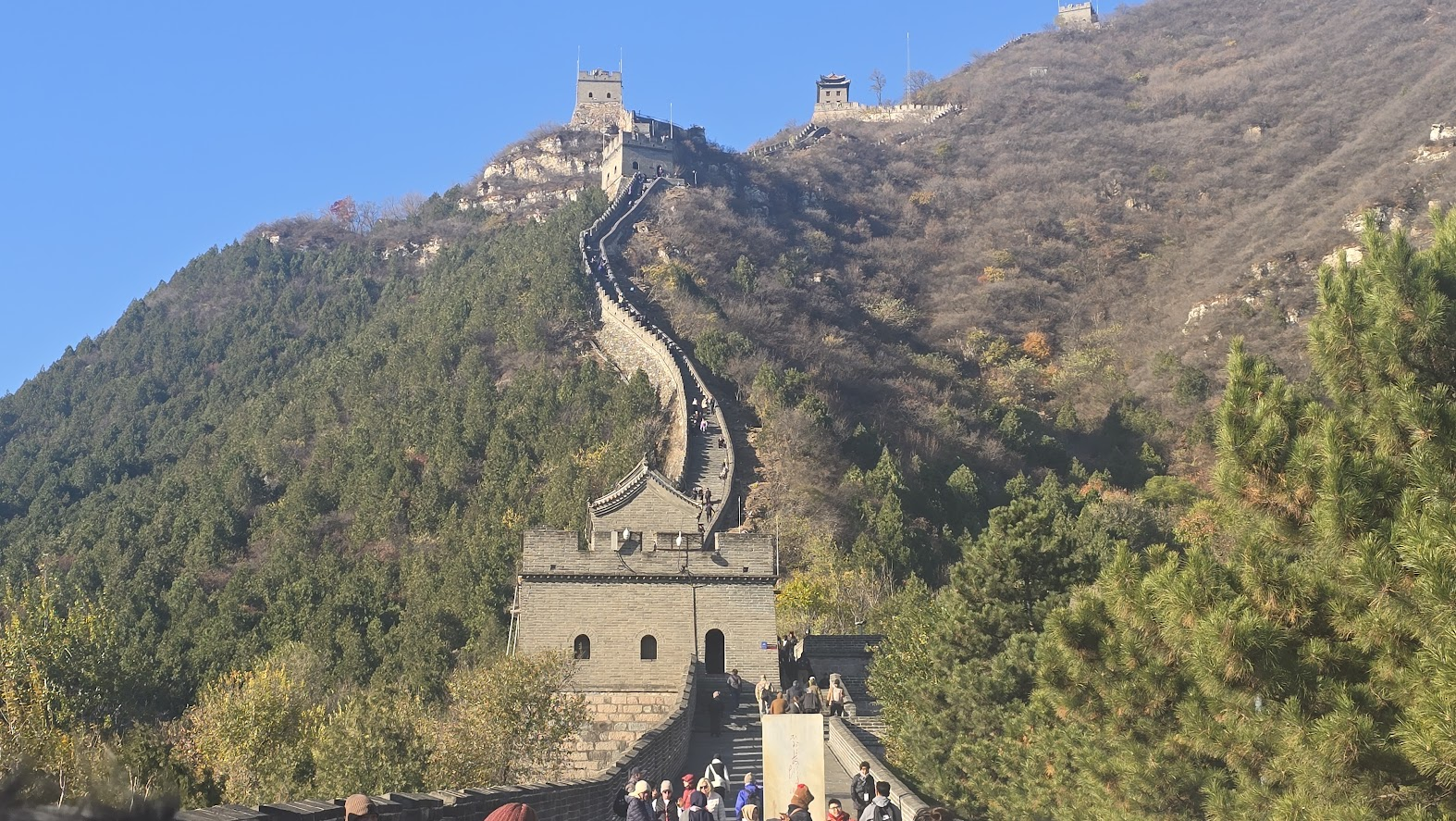
Today the Great Wall has no military purpose. It’s a great tourist attraction. Our group wasn’t the only one to think so. We got there early enough that we were able to climb without getting too bogged down in the crowds. But descending was a little bit of a clusterfuck.
The climb is very steep and the steps are not even. Some are just a few inches; others are nearly knee-high. So going down was especially tough. And of course, going up was no walk in the park.
But the scenery was spectacular, and the feeling of being in this amazing place defies description.
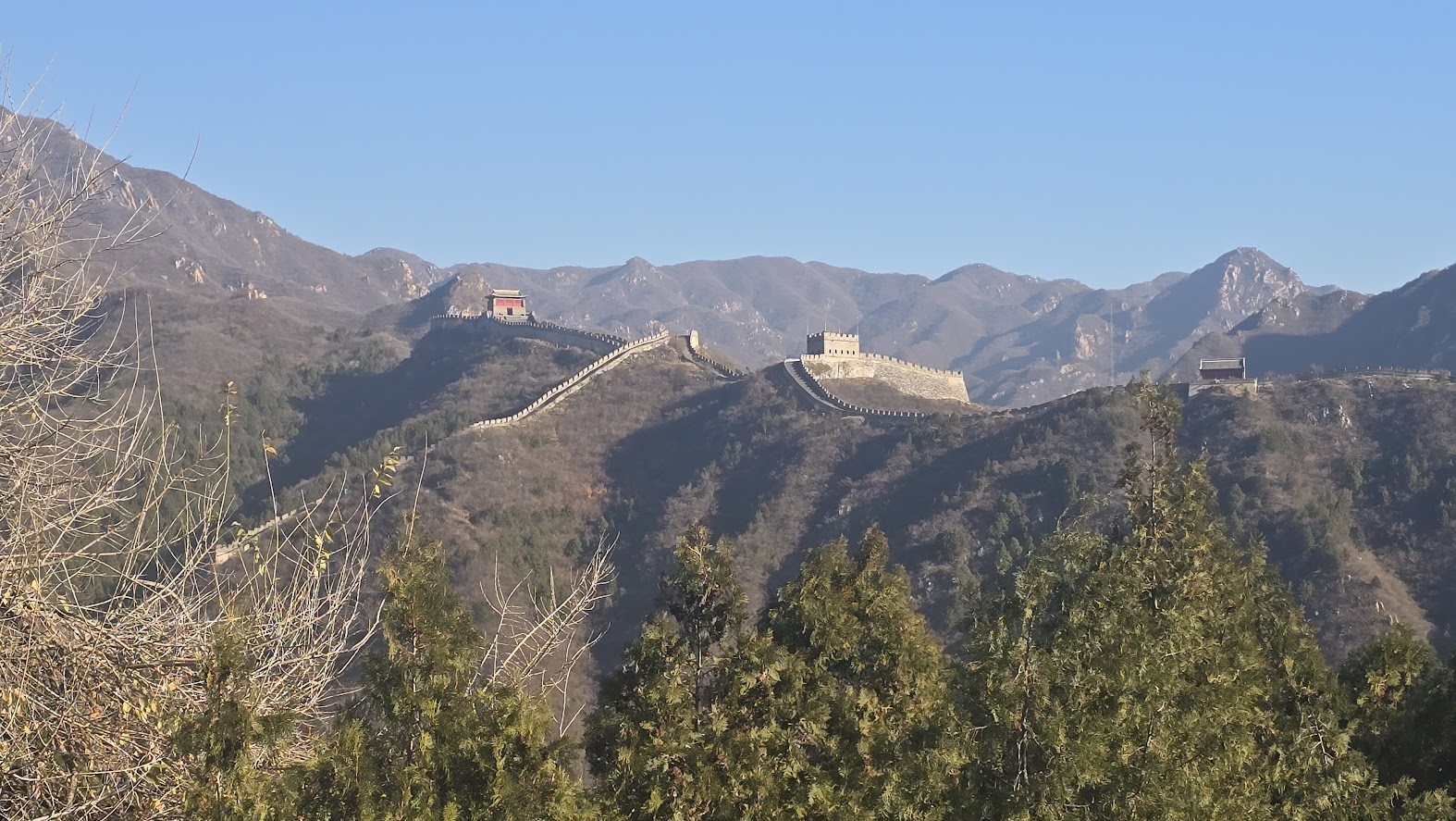
There will, of course, be more photos in my album when I get my photos organized.
Tiananmen Square
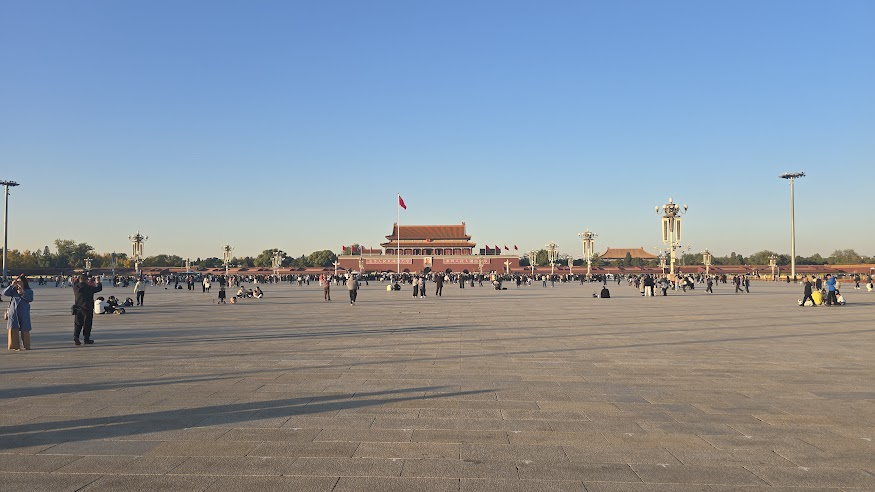
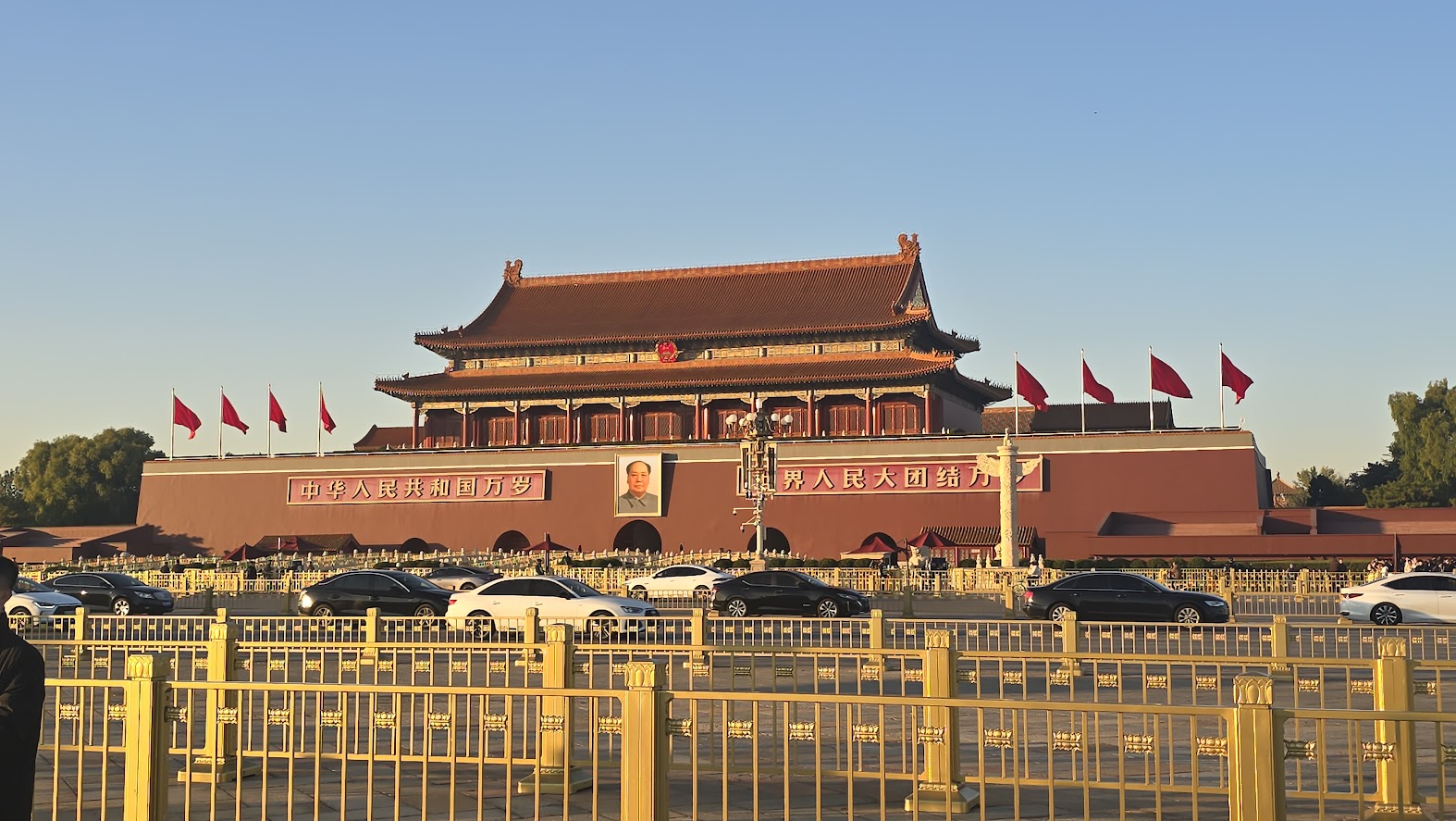
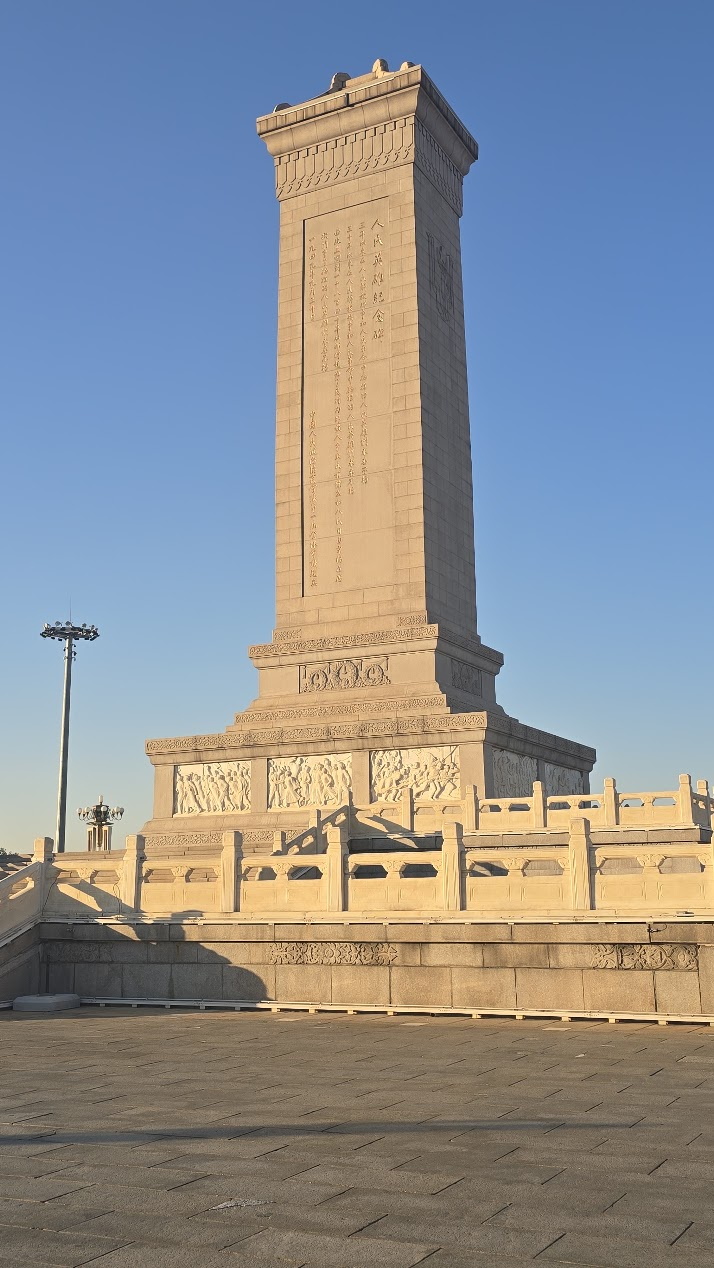
Most Chinese people have no idea what happened here on June 3–4, 1989. The families of people who went “missing” never got answers. So it was poignant to be there and see monuments to Mao and to heroes of the People’s Republic of China, but no acknowledgement of the military action that left anywhere from a few hundred to a few thousand students dead at the hands of the People’s Army.
Olympic Park
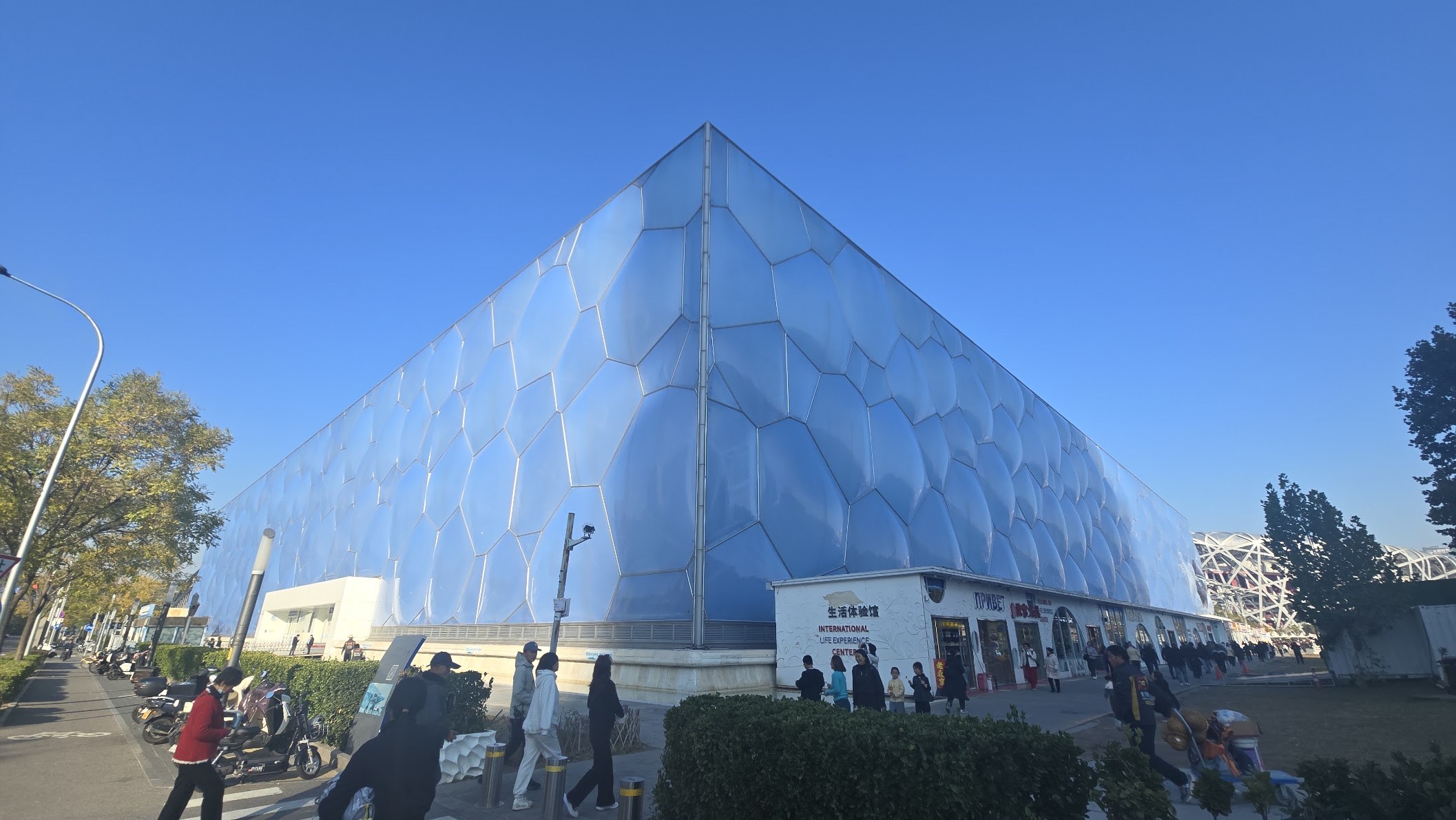
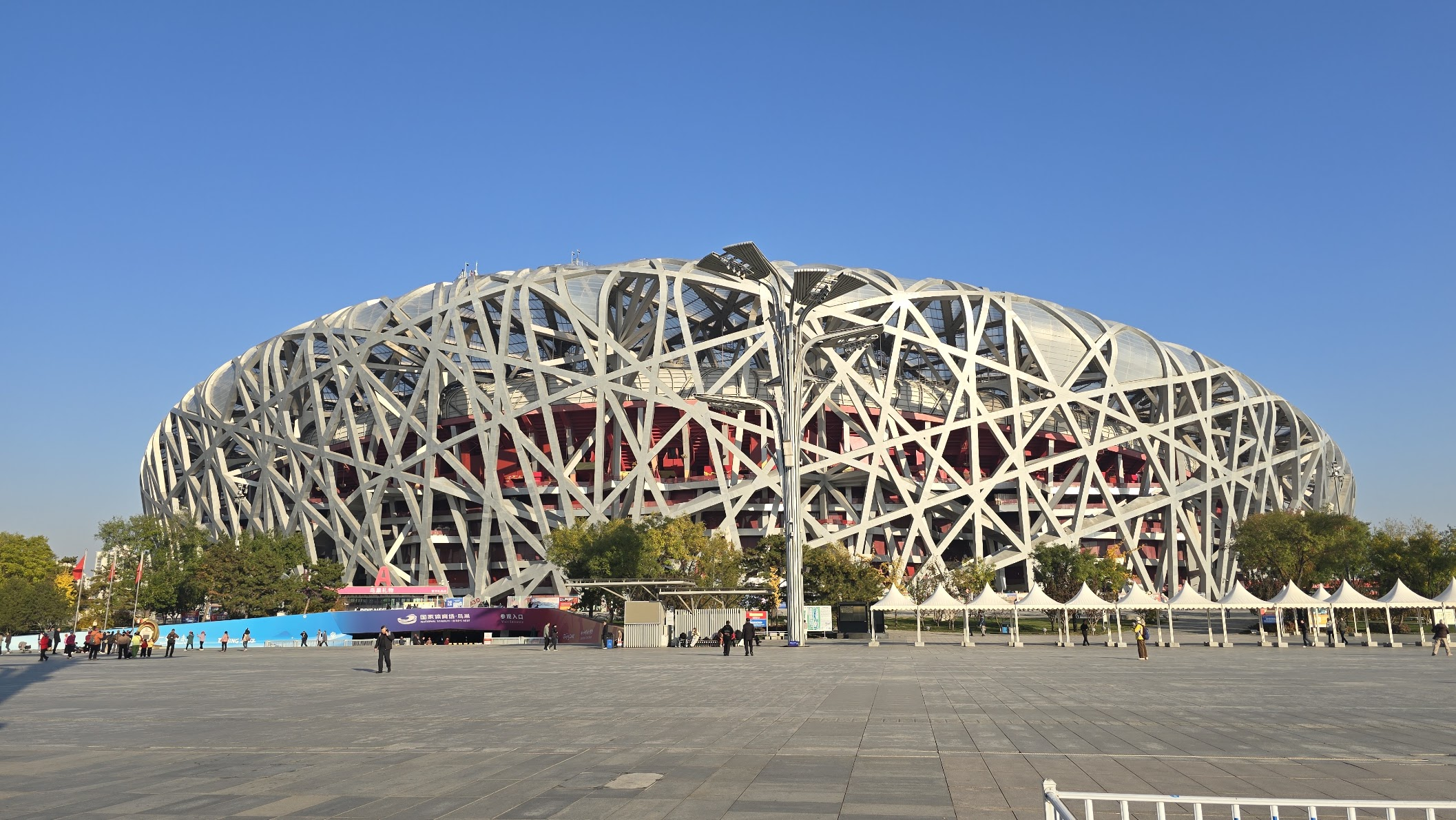
We stopped at the Olympic Park to see the Water Cube and the Bird’s Nest, built for the 2008 Olympic Games.
Summer Palace
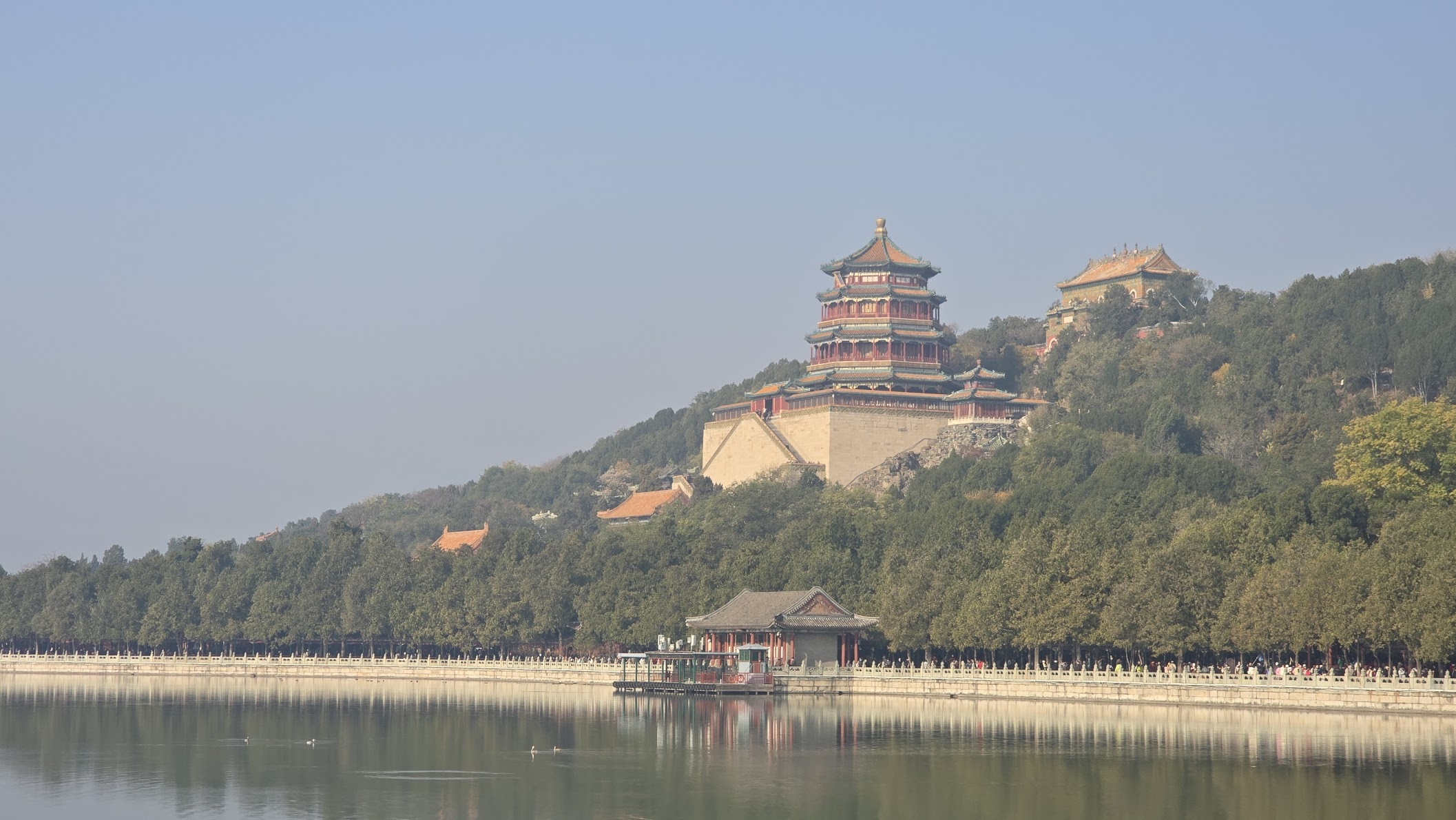
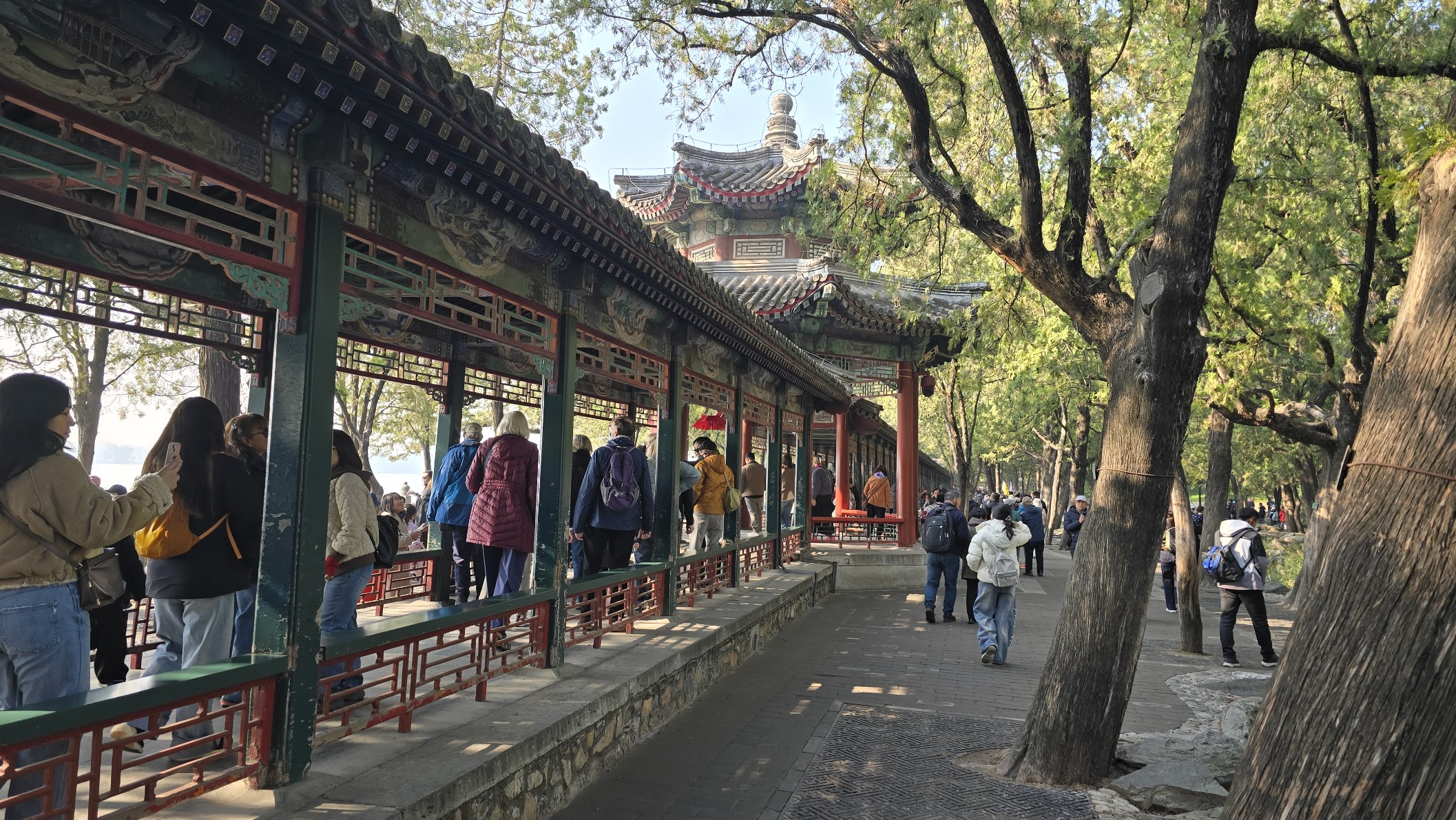
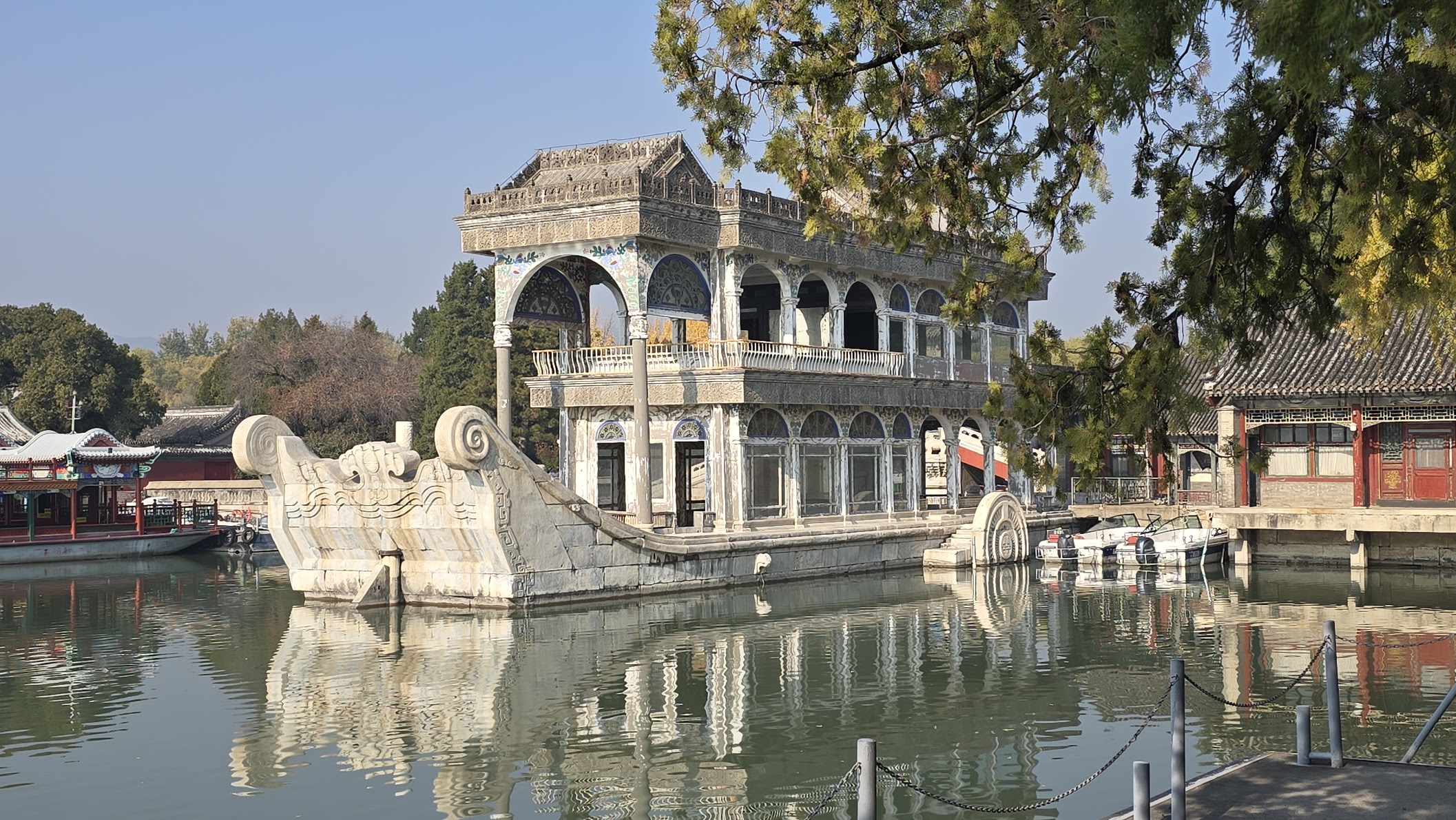
Except for the crowds, which really put a damper on our visit, the Summer Palace is stunning. It’s origins go back to the 12th century, and it was restored and expanded over the next few hundred years under the Jin, Yuan, and Ming Dynasties. Then in the 18th and 19th centuries, emperors of the Qing Dynasty got serious about it and really built it up. They expanded the lake (which is man-made), added several pavilions and the Long Corridor, a covered walkway more than 700 meters long.
There was lots of intrigue too. Empress Dowager Cixi did some of her nasty stuff here, like imprisoning her nephew the Emperor. (She eventually poisoned him.)
Other stuff
I’m about out of time, so here’s some of the other stuff I did and saw in Beijing:
- Visited a Kung Fu school
- Had a talk with a local resident who was able to share things he is not allowed to talk about outside the closed door of the room we were in
- Visited the National Art Museum
- Ate some amazing food (and much too much of it)
I’ll eventually have lots of photos to share. For now, this is it.
This morning eight of our group flew to Lhasa. We’ll be spending the next three days here in Tibet. I’m relaxing in my hotel room writing this because relaxing is the important first step in acclimating to the altitude (we’re at 12,000 feet).
I’ll be back with more.