
Madagascar Part Four: Isalo National Park
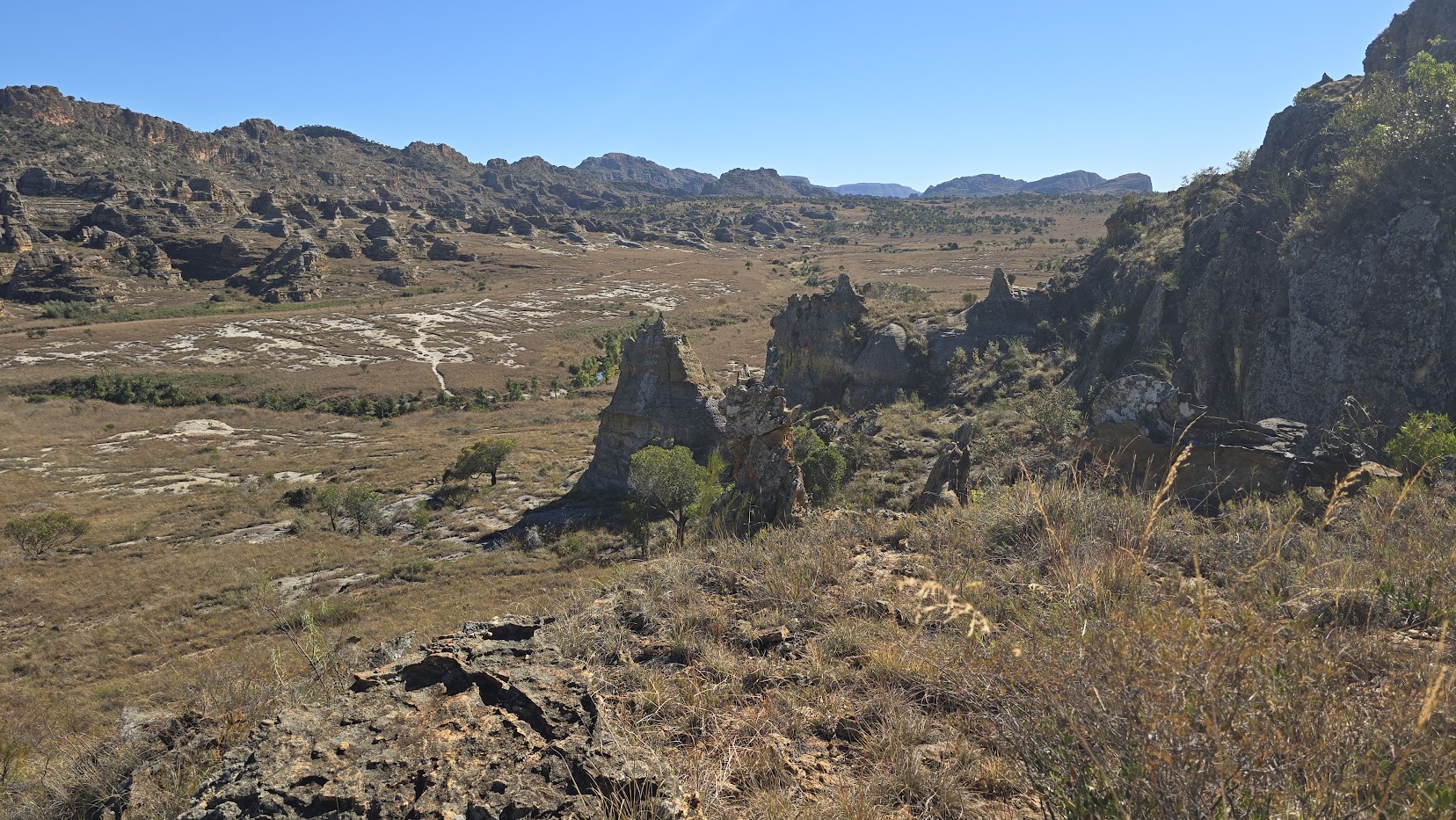
After several lemur-rich experiences, we spent a day at Isalo National Park, where the focus was on the gorgeous landscape. This was the scenic highlight of the trip (so far).
The Bara people, one of eighteen official ethnic groups in Madagascar, reside in the area around Isalo.
Isalo National Park was created in 1962. It is one of 27 parks administered by Madagascar National Parks. The semi-nomadic, zebu-herding Bara people, one of eighteen official ethnic groups in Madagascar, have resided in the area around Isalo since the 17th century.
The meaning of the word “Isalo” is unclear. I read one story that it is related to “dahalo,” a Malagasy word for bandits who hid out in the labyrinthine canyons of the park. I also read that it comes from the local Bara word salotse, the name of a plant endemic to the region.
What is far from unclear is that this park is a jewel replete with jaw-dropping vistas. We hiked for most of the day on Sunday, and it was a day-long visual feast.
First off: the hotel
Most of the places we prior to arriving her were rustic at best. They were charming in their way, though one I would describe as sub-par.
Then we got to Le Relais de la Reine. This was several notches above anywhere else we stayed. In fact, it was among the nicest hotels I’ve stayed at anywhere. The ambience, the service, the food, and the facilities were all extraordinary.


After our hike in the park, the hotel staff treated us — just the three of us — to a sunset reception, in a nearby setting among the rocks. They served beverages and hors d’oeuvres and some staff members performed some traditional music and dance.


Photos from Isalo National Park
I have an album of photos from the park, but I still have to go through it and cull out the best. As I write this, there are more than 200 photos in the album. If you want to look at them all, feel free. But here are some of my favorites.


After we left Isalo, we had a long drive on very bad roads to reach the west coast of Madagascar. In fact, we drove only about 180 km (112 miles), but minus two stops, our driving time was eight hours. You can do the math and figure out our average speed. It was grueling.
I’ll write about that, and about the lovely downtime I’m enjoying here at the beach, in my next post.
Thanks for providing such helpful information.
Beautifully captures the landscapes and adventure of Madagascar.
Thank you, and thanks for reading!