
Mongolian wrestling and a bit more
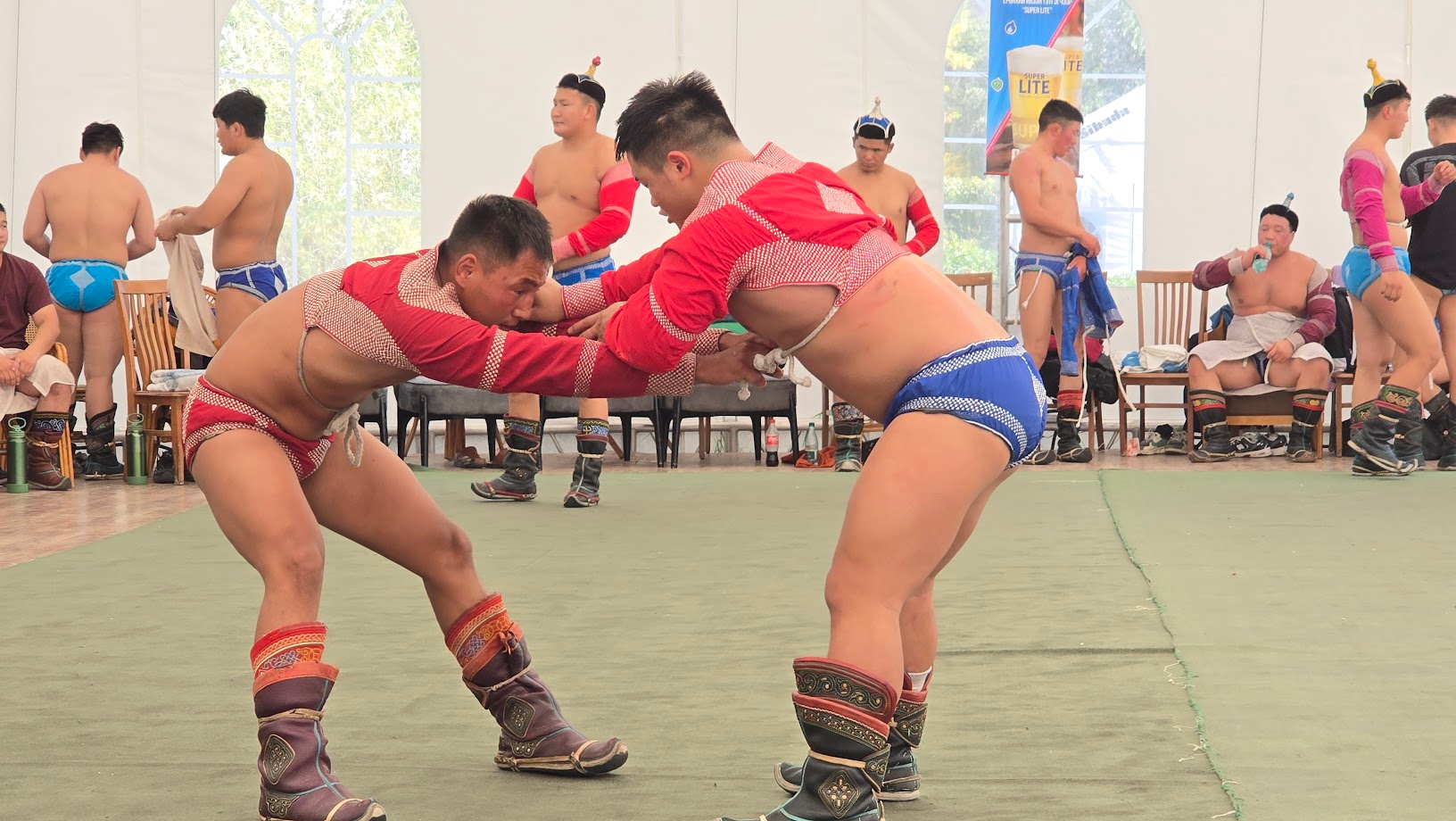
Yesterday we checked out of our hotel in Ulaanbaatar, and in the afternoon we flew to the Gobi Desert. We had plenty of time earlier in the day, and the highlight of our experience, for me, was watching some young men engage in Mongolian wrestling, one of the three “manly games.” (You’ll recall that the day before we saw some archery, another of the manly sports. And I’m hoping we’ll have a chance to see some horse racing, the third of them.)
We’re staying in gers (what we call yurts back home; ger is the Mongolian word) at a camp in the middle of nowhere, and I’ll save Gobi experiences for another post. But if you want a preview, I’ve started a photo album.
So here’s a quick rundown of yesterday’s Ulaanbaatar adventures.
Zaisan Memorial

In 1971, the fiftieth anniversary of Mongolian independence, this monument opened on a hilltop in Ulaanbaatar. It honors the Mongolian and Soviet soldiers killed in World War II. Later, the mosaic mural was added, depicting scenes of friendship between the people of the Soviet Union and the Mongolian People’s Republic.


Mongolian wrestling
From there we headed to a hotel where a tent on the grounds housed a wrestling arena of sorts. Eric, our trip leader, explained that this event was for younger wrestlers and wasn’t at an elite level of competition, though there were a few stronger competitors. The wrestlers were members of a club from western Mongolia that Eric himself used to belong to before his wrestling days were cut short by an injury.
The rules of Mongolian wrestling (Bökh in Mongolian) are very simple: no pinching, biting, or kicking. The first one to hit the ground with anything other than hands and feet loses. That’s it
The rituals around it are fascinating. They have a prescribed outfit with sleeves, a rope tied around the abdomen, briefs, and boots. Before each match they do a short falcon dance. At the end of the match, a judge puts a hat on the winner, who then does another falcon dance around the Mongolian flag.
This was so interesting to watch! I loved getting this peek at an aspect of Mongolian culture that I imagine most tourists don’t get to see.
Hot pot
From there we headed to a restaurant for lunch, where we enjoyed hot pot. When I had hot pot in Vietnam, there was one big pot, and our trip leader did all the work. At this place, we each had our own pot of bone broth sitting on individual hotplates embedded in the table. We chose our ingredients and made our own to our liking. Apparently this has become a thing in some areas of the US with a large Asian population, but this was a first for me.

From there we headed to the airport. And now our first full day in the Gobi Desert is about to begin, so I’ll sign off. Be sure to check out all my photos from UB. We’ll be back there in a few days and there’ll be lots more!