
Japan: Tokyo and Mt. Fuji
After spending four nights in Tokyo, we have moved on to Toba, where we are staying two nights in a lovely Ryokan overlooking Ise Bay. But I’m not going to try to catch up on my blogging just yet. This post will be about Tokyo and our day trip to see Mt. Fuji.
Here are my photo albums:
I already shared about how my first impressions of Tokyo were not especially positive, but how I found joy at two museums. Here’s a little more detail.
Hotel
We stayed at the Hotel JAL City in Toyosu. (JAL stands for Japan Airlines.) This was an unusual choice for OAT, because they generally put us in a central location, and this hotel was definitely not that. We had to ride by bus or taxi or public transit to get anywhere, and it took quite a lot of time, as Tokyo is very spread out. I was disappointed by this choice.
On the other hand, everywhere we went in Tokyo was crowded with throngs of tourists and local alike, so there was something relaxing about returning to this quieter corner of the city in the evening.
Dinner on OAT
Our first night in Tokyo, we were supposed to have dinner on our own. But there was a bit of a snafu with our trip leader, and at the last minute they had to scramble to find someone to lead our tour in Japan. To apologize/compensate, they offered us dinner. We ate at an izakaya in (or on) Odaiba, an artificial island that is a major commercial, residential, and leisure area. We rode the Yurikamome, an automated elevated train, to get there.
An izakaya is a kind of pub serving what I think of as the Japanese version of tapas. The place we ate, Gonpachi, had some good food, but they struggled to keep up with the demand of sixteen hungry Americans.
OAT needn’t have worried. They found us Kosei, who stepped in to fill the trip-leader role and is more than capable of doing so.
Sumo
Our first morning in Tokyo began with a visit to a Sumo wrestling center. For me it felt like an odd way to begin our short time in Tokyo. We had no city orientation. No city tour. Just jumped right in.
Sumo is the national sport of Japan and an important aspect of Japanese culture. Our guide to the world of sumo was a retired wrestler named Shirononami.

Sumo originated in ancient times as a performance to entertain the Shinto deities. Many rituals with religious background, such as the symbolic purification of the ring with salt, are still followed today.
The rules are simple: the wrestler who first exits the ring or touches the ground with any part of his body besides the soles of his feet loses. Matches take place on an elevated ring (dohyo), which is made of clay and covered in a layer of sand. A contest usually lasts only a few seconds, but in rare cases can take a minute or more. There are no weight restrictions or classes in sumo, meaning that wrestlers can easily find themselves matched off against someone many times their size. As a result, weight gain is an essential part of sumo training.
After telling us a little about the history of sumo and the rules, Shironami showed us some videos of some sumo matches. Though the biggest wrestlers usually prevail, we saw a few videos where the smaller guy was the victor. Then Shironami invited members of our group to try to to push him down. Of course, the smaller the opponent, the more successful they were.
Bonsai
Our next stop (after a hot-pot lunch) was the Shunkaen Bonsai Museum. Owned by bonsai artist Kunio Kobayashi, the museum has over 1,000 trees on display. The oldest is said to be about a thousand years old.


Shibuya
Next Kosei took us to the world’s busiest intersection.

Compared to many other places in Tokyo, this was not atypical. It’s a crowded city.

Taiko
Our second day in Tokyo started with a demonstration of taiko drumming at Miyamoto Unosuke Shōten. This is a shop and studio run by one of Tokyo’s foremost drum makers. After an explanation about the making of the drums from Japanese zelkova wood and animal skin, we enjoyed this amazing demonstration of the skill and artistry of the drummer, and the extreme volume of sound.
Sensō-ji Temple
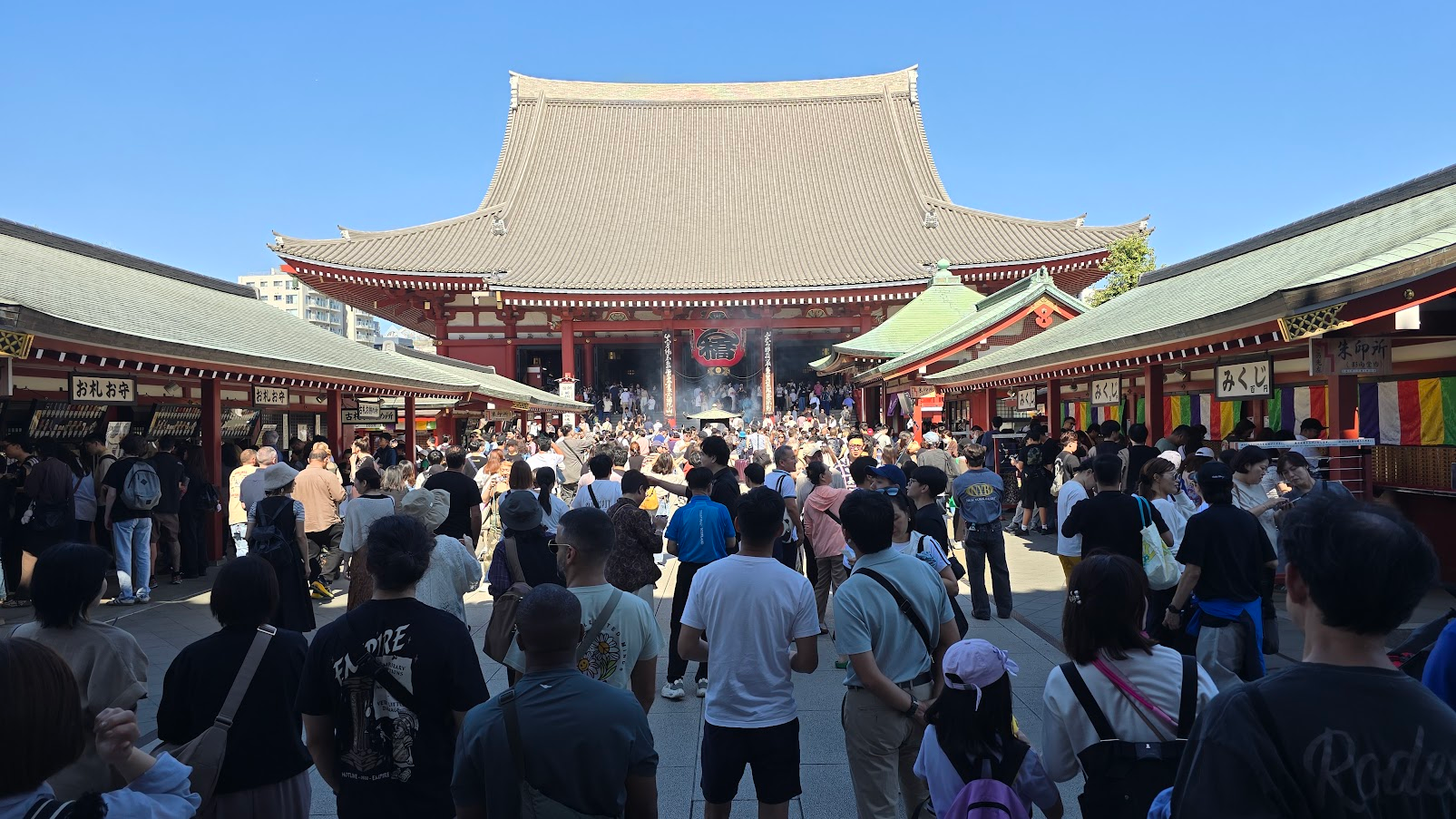
Sensō-ji Temple in Asakusa is Tokyo’s oldest Buddhist temple. Its founding dates from 628 CE.
It’s a very popular tourist attraction, as the photo at the top of the page illustrates.


Not all the visitors were from afar.


Tokyo National Museum
After our visit to the temple we had a group lunch, and then the rest of the day was free. I figured out how to get to the Tokyo National Museum, and here I discovered and fell in love with Japanese art.
The collection comprised sculpture, ceramics, painting, prints, calligraphy, and textiles. It’s hard to select favorites to share, but here are a few. (Lots more are in my album.)

Kofun period, 6th century


By Ninnami Dōhachi (1783–1855)
Stoneware with overglaze enamel

from Volume 3 of Illustrated Handscrolls of Noh and Kyōgen Plays
18th century, artist unknown
Perspective drawing is relatively unusual in Japanese art. You’ve probably seen lots of art from Asia where more distant figures are at the top of the canvas and all are the same size. (The scroll above is a good example.) Utagawa Toyoharu (1735–1814) was one of the first Japanese artists to employ perspective, and was also the first to depict landscapes as the subject of a painting, rather than as a background.

by Utagawa Toyoharu
Woodblock print

by Utagawa Hiroshige II (1826–1869)
Woodblock print

Hōryū-ji Treasures
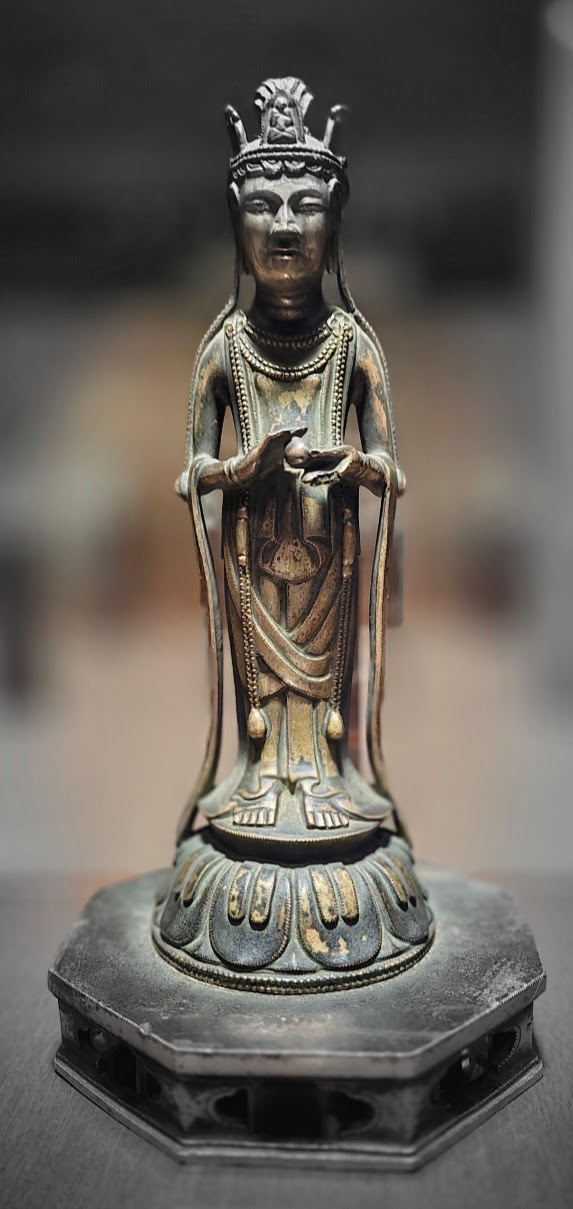
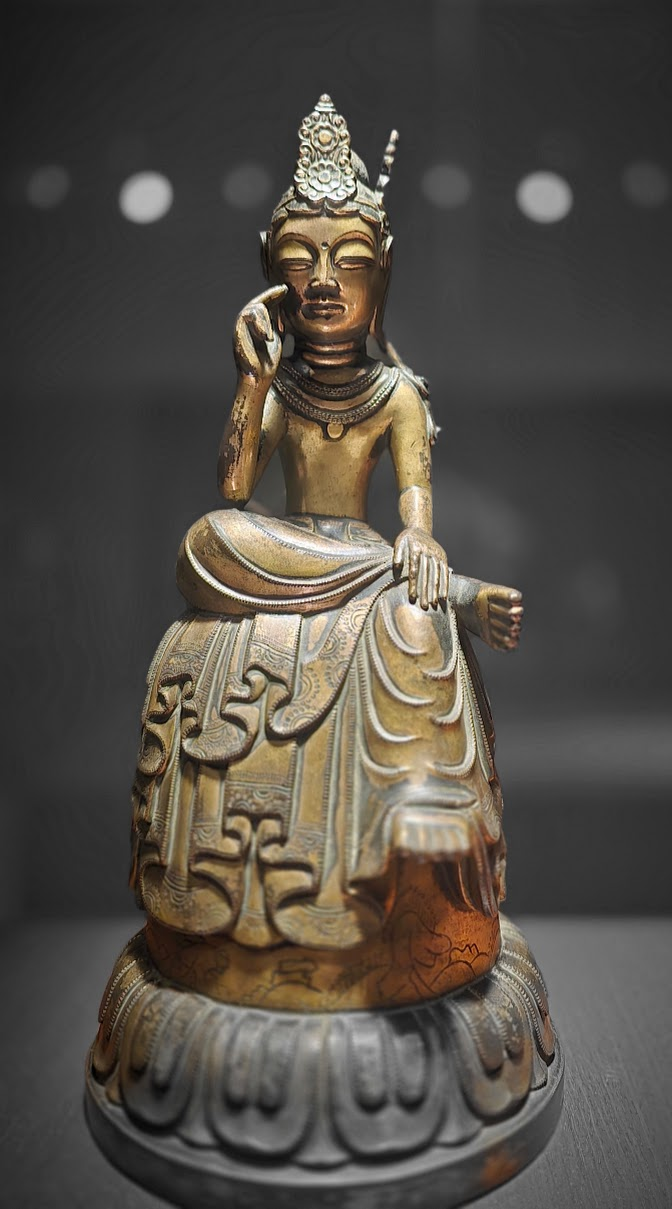
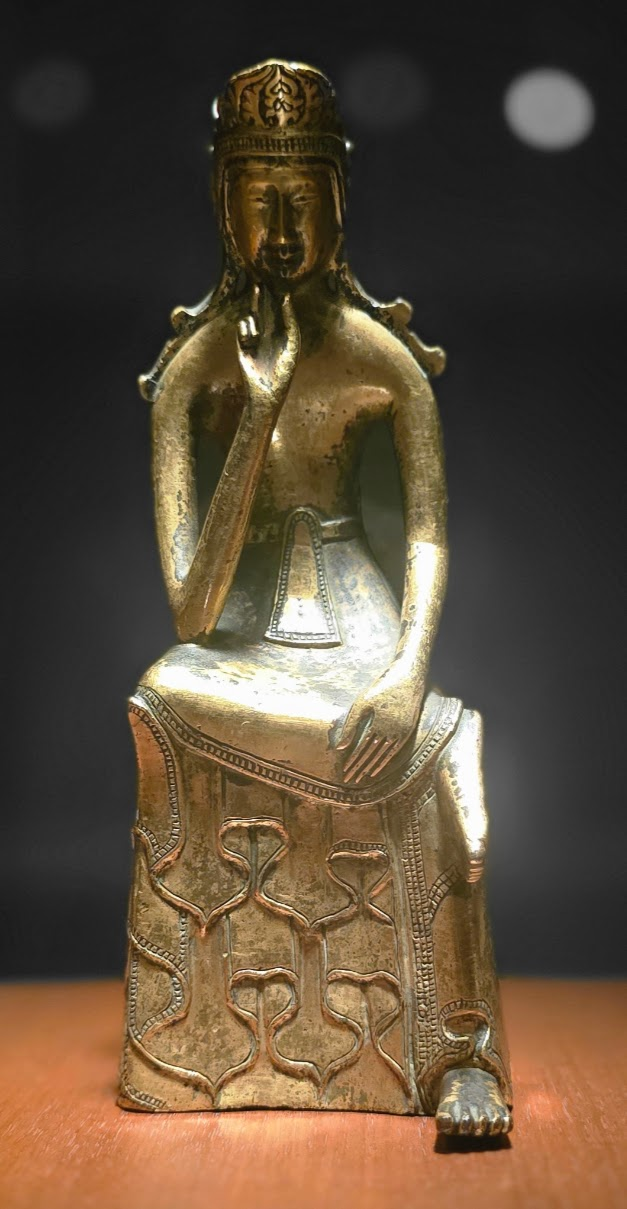
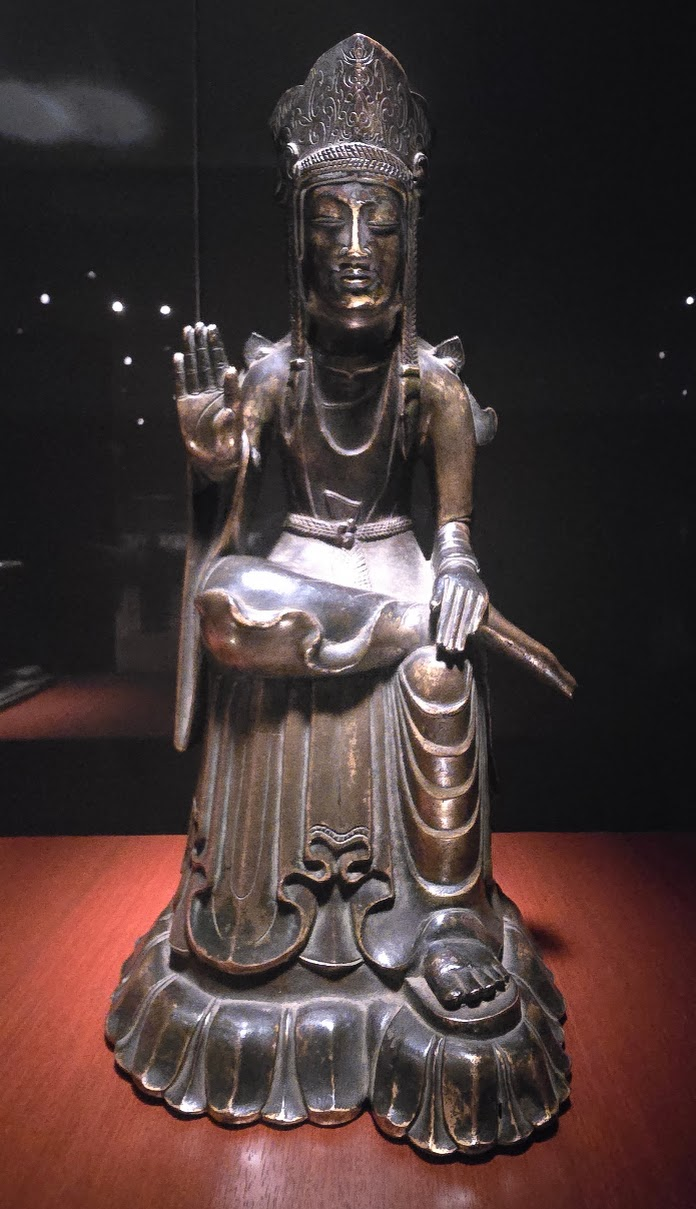
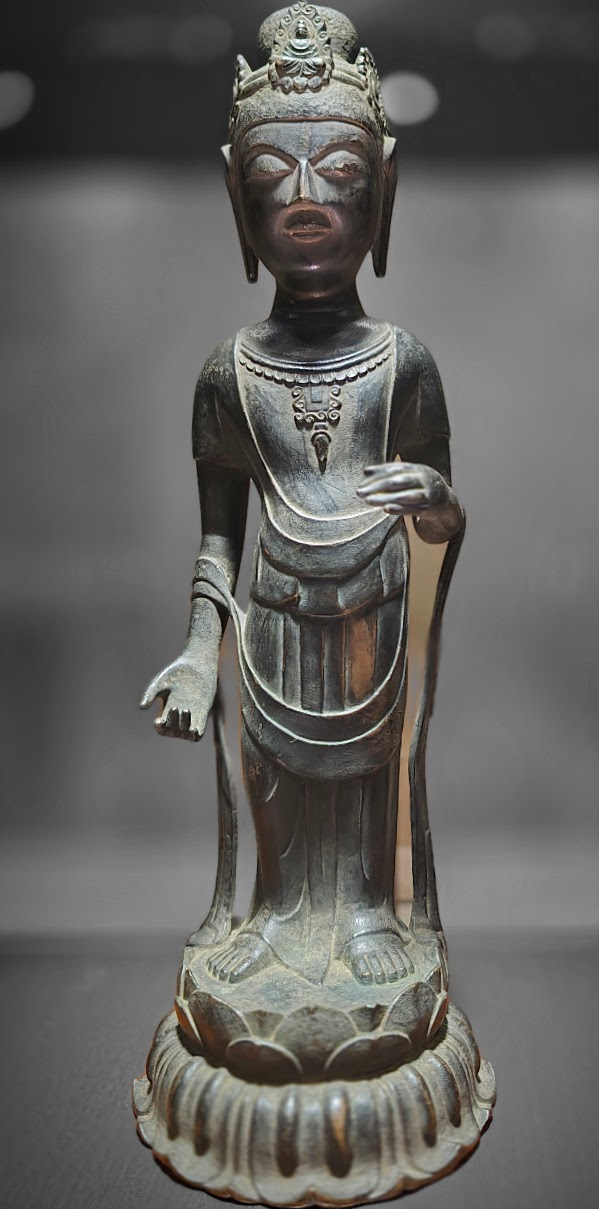
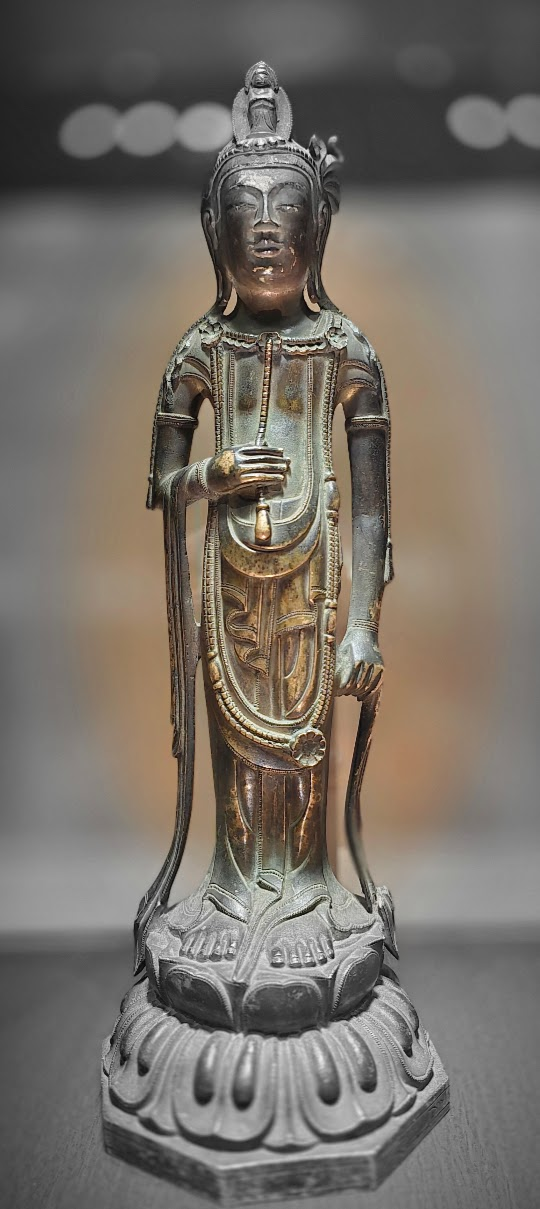
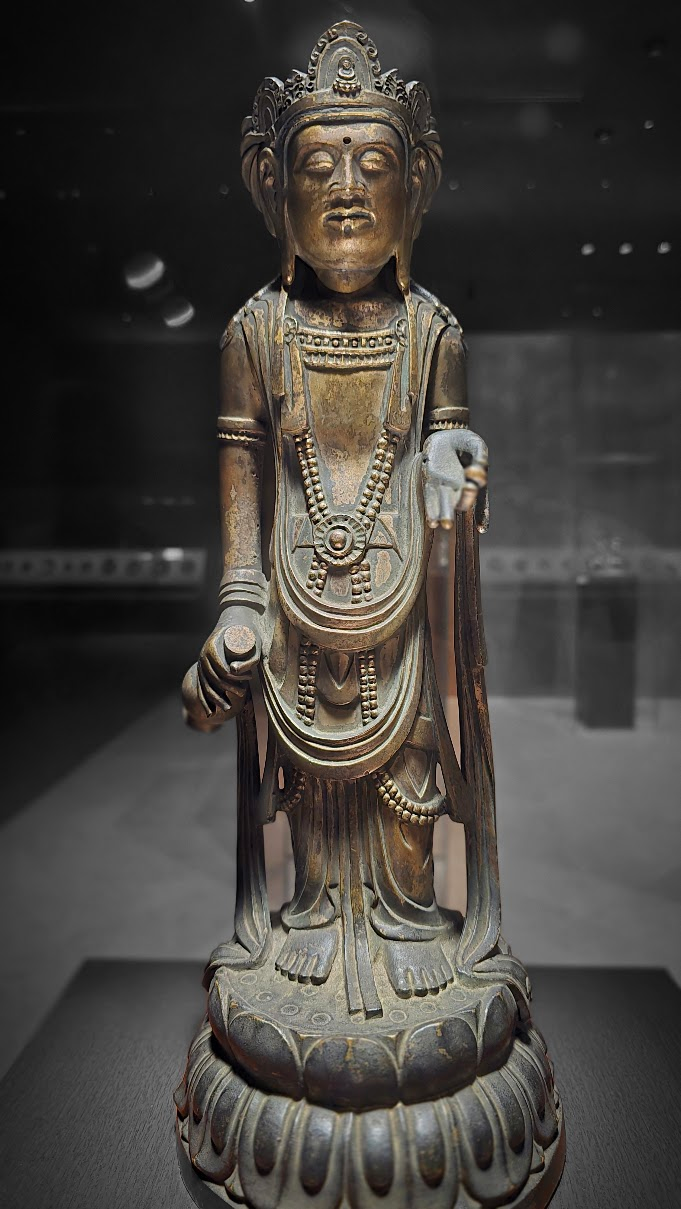
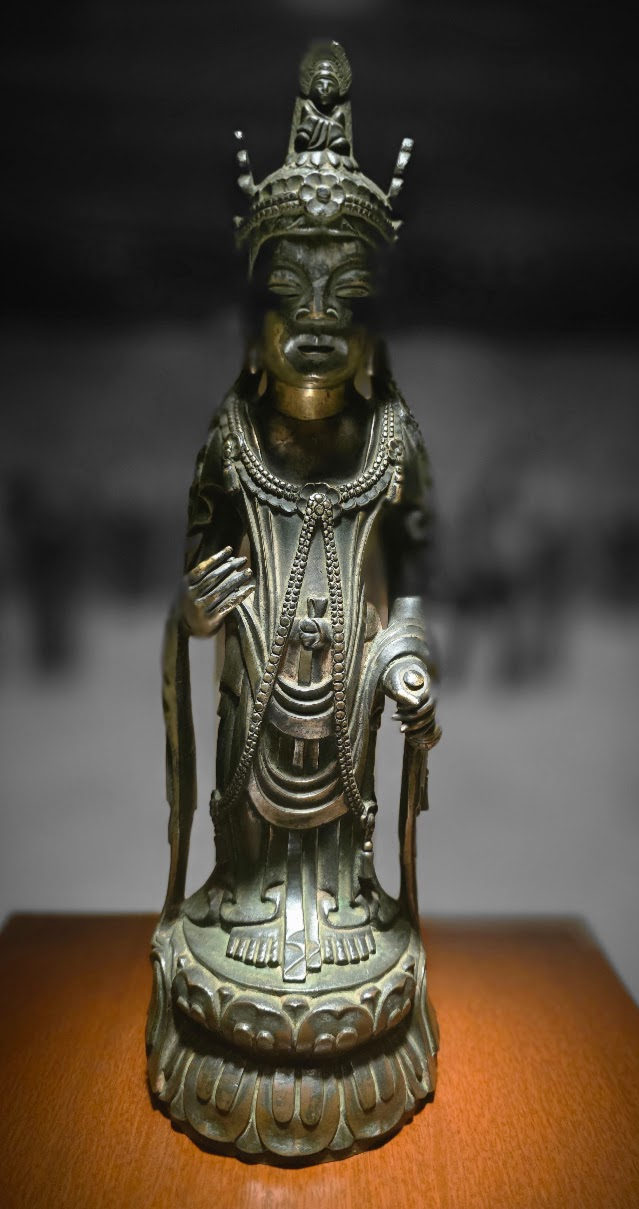
Perhaps the most stunning collection was the Gallery of Hōryū-ji Treasures. The building is a design of architect Yoshio Taniguchi (1937–2024) and opened in 1999.

The collection consists of over 300 ancient artifacts donated by Hōryū-ji Temple in Nara to the Imperial Household in 1878 (and later transferred to the state). The highlight for me was 48 small gilt-bronze Buddhist statues (30–40 cm tall) probably used for private worship. These date mostly from the 7th century.
National Museum of Western Art
After I spent three hours in the Tokyo National Museum, I wasn’t done! Nearby is the National Museum of Western Art. Unfortunately, I only had about 45 minutes before the museum closed, but I took advantage of the time to enjoy some great works by some of the great masters of Europe from the 19th and 20th centuries. You’ll find them in the album, but here are a few highlights.

Claude Monet (1840–1926)

Paul Gauguin (1848–1903)

Pierre Puvis de Chavannes (1824–1898)
Mt. Fuji
My third and final day in Tokyo was taken up by a day trip to Mt. Fuji (or to some places where we could see Mt. Fuji). This was an optional add-on to the tour, but 12 out of 16 of us opted in.
Oshino Hakkai
We stopped first at this village, famous for its eight crystal-clear ponds and traditional houses, set against a backdrop of the mountain.


Kitaguchi Hongu Fuji Sengen Shrine
We stopped for lunch at a restaurant adjacent to this Shinto shrine.

Itchiku Kubota Art Museum
Our next stop was this unique museum. Itchiku Kubota (1917–2003) was a textile artist who revived the lost art of tsujigahana, a technique from the 15th and 16th centuries of dyeing fabric for kimonos. His kimonos on display were stunning. Unfortunately, he did not pass on his knowledge, so there is no one to continue his work.


Lake Kawaguchi
This is the premier spot to capture views (and photos) of Mt. Fuji. Lovely flowers are planted all along the lake to serve as a foreground for images of the picturesque and photogenic mountain.


Don’t miss all the photos from this Mt. Fuji outing in my album.
Lane is capturing our OAT travels
to Seoul and Japan so perfectly through his thoughtful reflections and beautiful photography! Greatly appreciated
Gamsahamnida
Arigato
Laurie and Jim
Thank you Laurie and Jim! I’m enjoying traveling with you. I hope our paths cross again, maybe in another exotic location.
You are bringing back memories from a favorite trip of mine. Thanks!
Raeanne