
Discovering Plovdiv
Before this trip I’d heard a lot about Plovdiv when I read about places to visit in Bulgaria. But I had no idea what I would discover here.
It turns out that everything I did discover was a delightful surprise.
I’m mostly going to let the photos do the talking, but it wouldn’t be me if I didn’t offer at least a little history.
History of Plovdiv
Evidence of civilization here goes back at least 8,000 years to Neolithic times. Over the millennia it has been conquered and ruled by at least fourteen civilizations or empires, and has had that many different names. Most notably, Philip of Macedon (father of Alexander the Great) founded the city of Philippopolis here in 342 BCE. For the next two centuries it was alternately part of Macedonia and part of Odrysia, an ancient Thracian state, until the Roman Republic conquered Macedonia in 168 BCE. Emperor Marcus Aurelius built a fortification around the city in the second century CE.
Philippopolis was sacked first by the Goths and then by the Huns, but the Romans resisted and rebuilt. It finally fell to the Bulgars in 863. The city thrived in spite of ongoing sieges and occupations; it was repeatedly destroyed and rebuilt. It was the third largest city in the Byzantine empire after Constantinople (now Istanbul) and Thessalonica (now Thessaloniki).
The city was conquered by the Ottomans in the 1360s, and was part of the Ottoman empire for 500 years, until Russia liberated Bulgaria in 1878.
The meaning of the name “Plovdiv” is unknown. It acquired the name gradually, possibly as a derivation of Philippopolis or possibly from Thracian. This became the commonly accepted name after World War I.
Today Plovdiv is the second largest city in Bulgaria (after Sofia). It is generally considered to be the fifth oldest continuously-inhabited city in the world.
What I saw in Plovdiv
Roman ruins


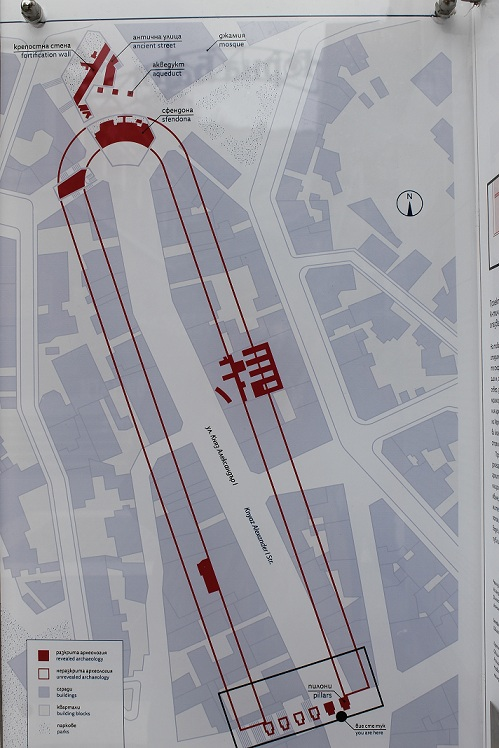
The Stadium was about 250 meters (820 feet) long and 50 m (160 ft) wide and could seat up to 30,000 spectators.


Nowadays, the theatre operates as a stage for opera, music and drama.
National Revival Houses
The style of houses built by wealthy Plovdiv merchants in the 19th century is called National Revival. These houses tend to be symmetrical, with overhanging upper floors (because taxes were based on the ground-level footprint). They have vibrant color schemes, intricate wooden carvings, internal courtyards, painted murals, and decorated ceilings. The style is a mix of Ottoman and European influences.


Bishop’s Basilica
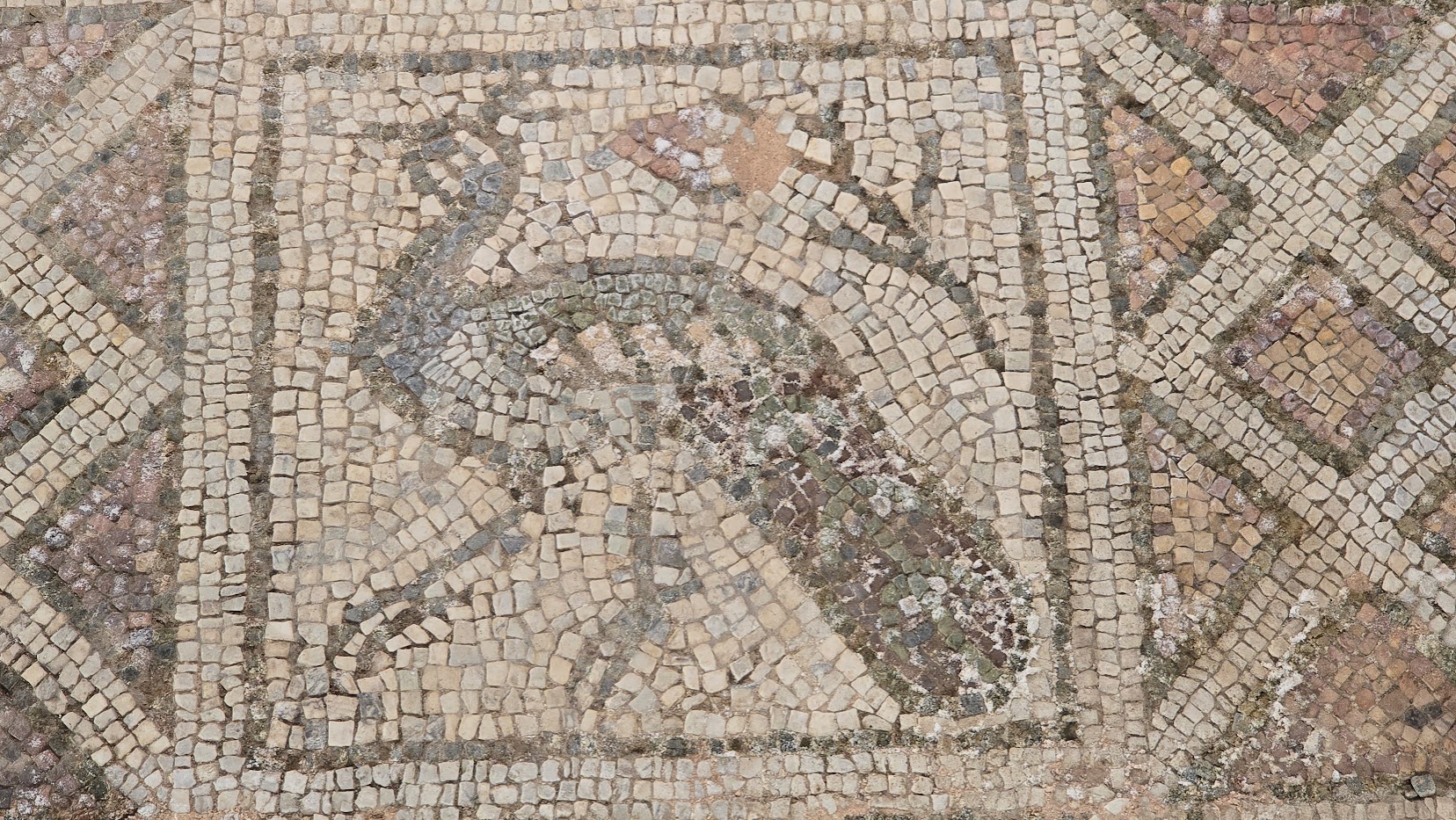
The ruins of the Bishop’s Basilica, a church dating from 4th-century Philippopolis, were discovered in the 1980s during the construction of an underpass. Today a museum sits at that location, housing stunning, colorful mosaics that were the floor of the church. They span an area of 22,000 square feet. The mosaics feature geometric patterns, eternal knot symbols, vases pouring water of eternal life, and most notably, birds, including many exotic species that wouldn’t have lived in the region.


More
There was so much more to see in Plovdiv that I’m sharing here. And certainly more to see than I had time to take in with just one day to explore.
Check out all my photos of this fascinating and surprising city.
Lane, I am envious and enthusiastic regarding your wonderful travels — your appreciation of history and culture. Thank you for sharing it with us, especially those of us who are less adventuresome than you! Take care. Love, Sheila
Lane -
When I see your pics matched up with your narrative, I feel like I am there!
Thanks for sharing.