
Veliko Tarnovo
We had just one full day in Veliko Tarnovo, and just like Sofia and Plovdiv, it felt like one day too few.
Here’s a quick rundown.
But first, of course, some history.
History of Veliko Tarnovo
The earliest evidence of humans in this area dates from about 5,000 years ago. During the First Bulgarian Empire (7th-11th centuries), the city here, then called Tarnovgrad, was an important stronghold. It served as the capital of the Second Bulgarian Empire (1185–1422), during which time the fortresses on Tsarevets and Trapezitsa hills were built.

By the 14th century Tarnovo became a cosmopolitan city, with many Armenian, Jewish, and Frankish merchants in addition to the dominant Bulgarian population. After the Ottomans captured the city in 1393, Bulgarian resistance centered here. The Ottomans established Sofia as their administrative headquarters for the region.

During Communist rule, Veliko Tarnovo underwent significant urbanization. Today, tourism is the main economic driver of the area. It is a popular weekend getaway for both Bulgarians and Romanians, as it is just a few hours from both Sofia and Bucharest.
Sights
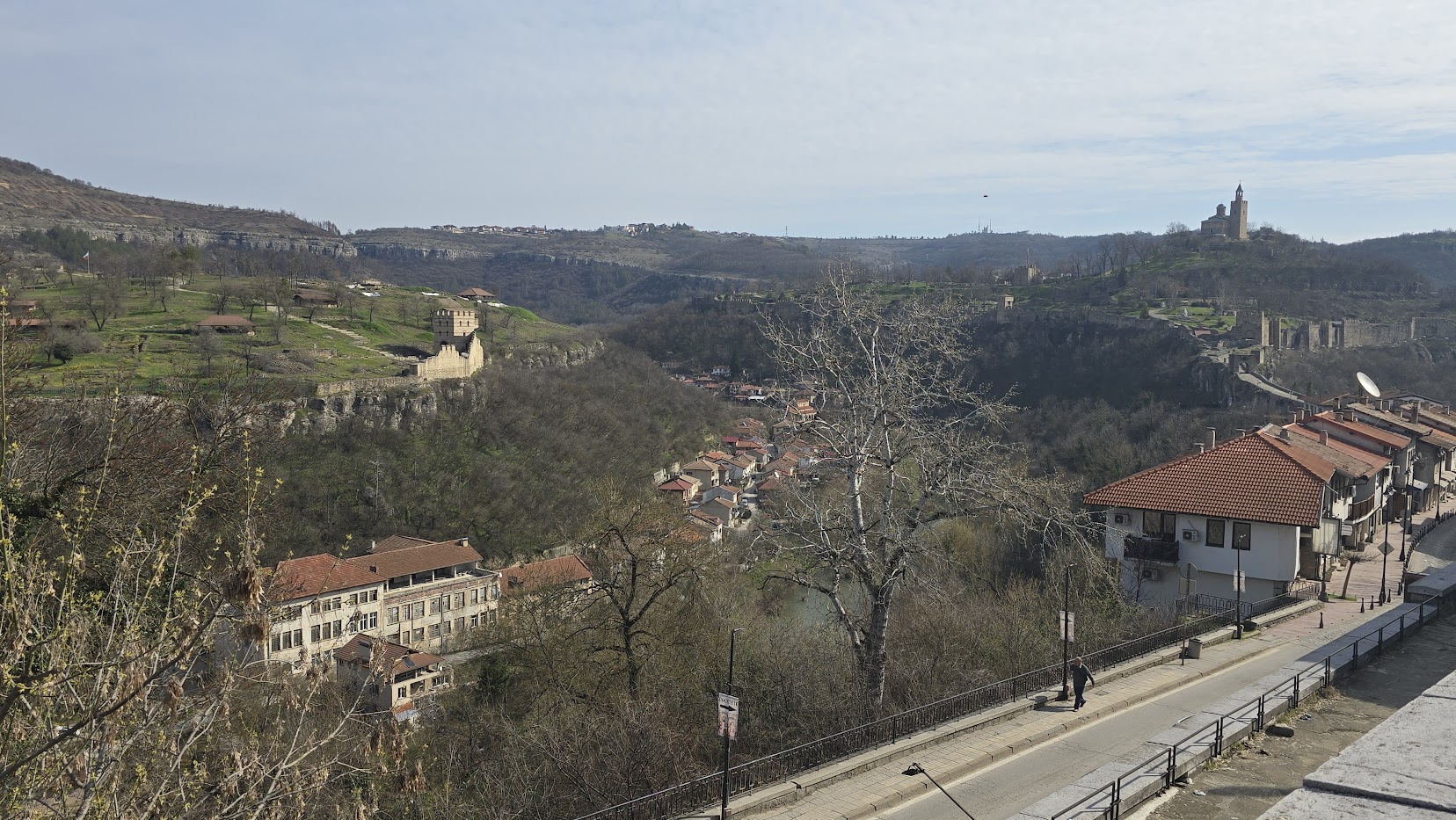
The hills and the river make Veliko Tarnovo quite picturesque. In addition to the two hills shown on the map above, the main part of the city today sits on a third hill, Sveta Gora. Much of the city, including our hotel, is built on cliffs.

There aren’t a lot of important sights in Veliko Tarnovo. It is a city that is pleasant to explore. We had a walking tour in the morning with a nice local guide named Sophia, but I don’t know that I learned a lot from her. And in the afternoon Florin, our Trip Leader, took us to Tsarevets Fortress, which was more interesting to see from a distance than up close.
I would have liked more time here to wander and explore on my own. I think that would have been easier, and moving at my own pace would have been more efficient. For example, there is an art museum I didn’t find time to get to.
So I’ll leave you to explore my photos of the city on your own.
Arbanasi
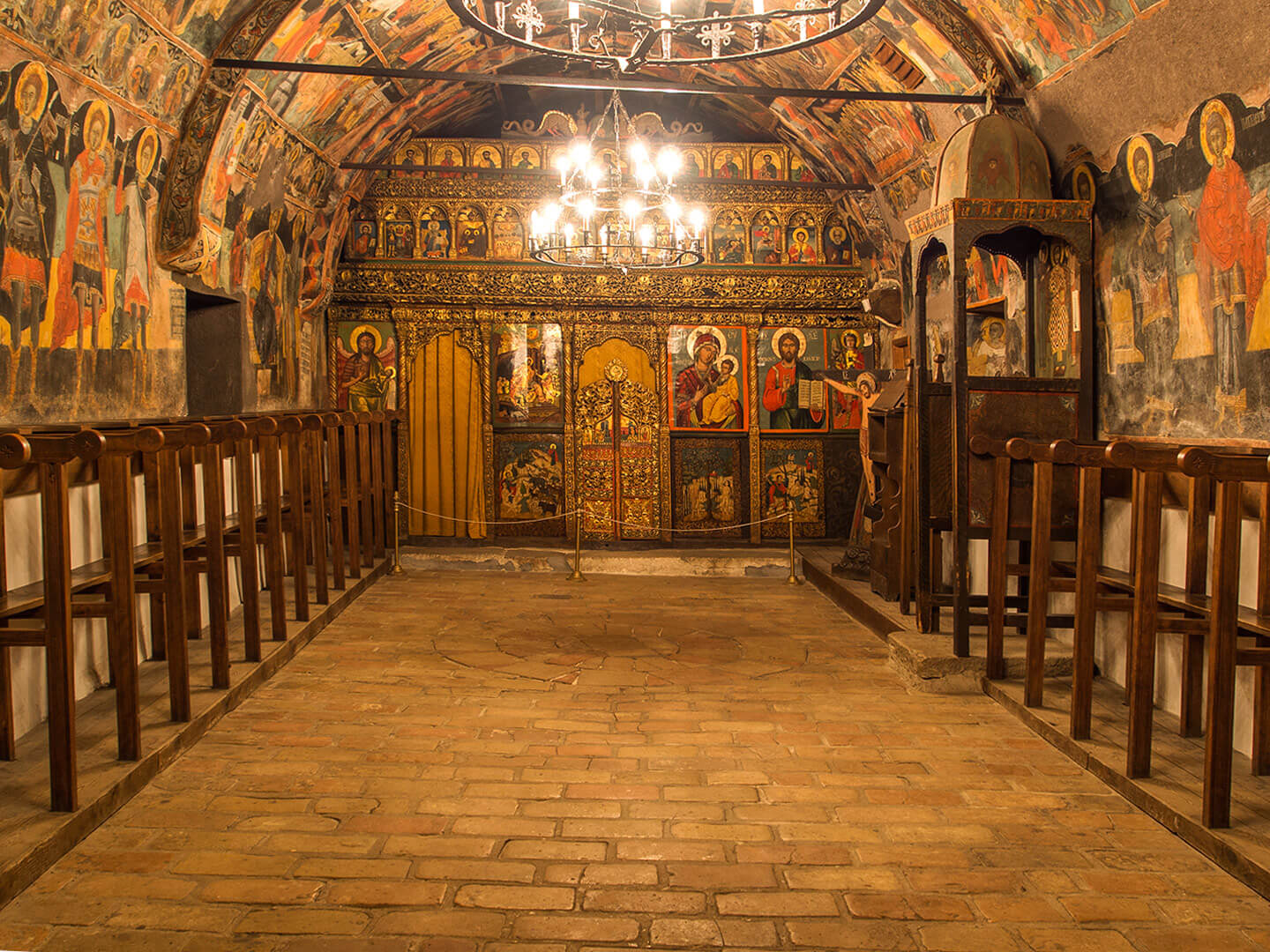
For me, the highlight of our time here was our visit to the Church of the Nativity in the nearby village of Arbanasi. Built in the late 16th and early 17th centuries, this is the oldest church in the area. Richly painted murals in the nave date back to 1597. Those in the narthex (the women’s section) were completed in 1638.
Photos weren’t allowed inside, but I found these on the internet.

You can enjoy a virtual tour of the church, and you can check out all my photos from Arbanasi.
Home-hosted dinner
OAT does a home-hosted dinner on every tour. Most of them are a wonderful chance to meet a local family, sample home cooking, and learn about everyday life. The one we did here was one of the especially enjoyable ones. We were hosted by twin sisters, Tsanka and Rosita, who didn’t speak any English (except for the words “problem” and “super”). The Tsanka’s grandson, Boris, and later his sister, Nya, translated for us. We shared a lot of laughter and good conversation, and I even managed to understand a word or two of what they were saying.

Today we end our time in Bulgaria and head to Bucharest. Unfortunately, it looks like rain is in the forecast for our entire time there. Hopefully it won’t dampen our spirits.
See you there!
Absolutely love the pic of you and the Bulgarian family.
I always enjoy your narratives of your travels!