
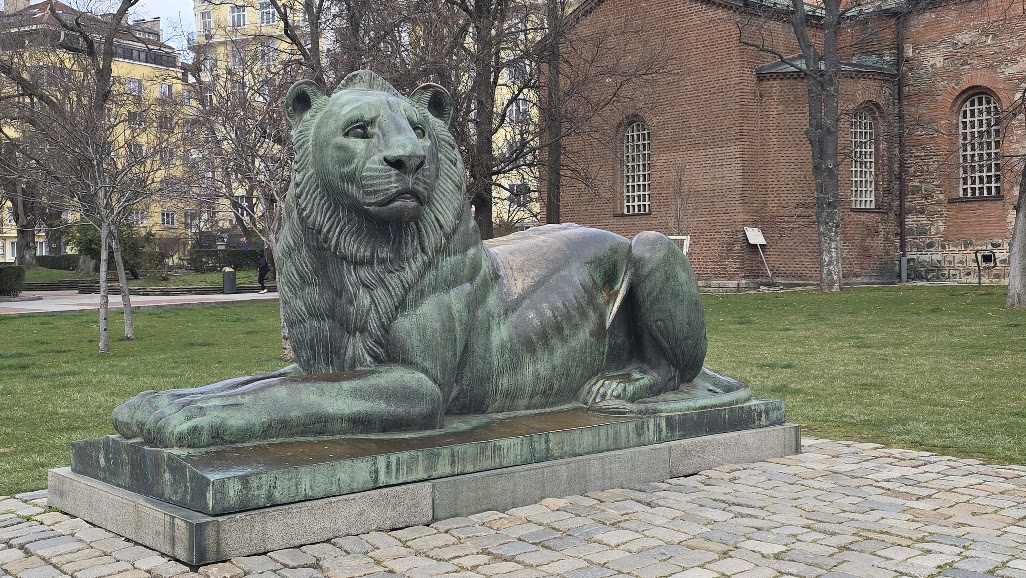
One day in Sofia with OAT
In my previous post I wrote about the two days I had in Sofia prior to the start of my OAT tour. I wasn’t really thinking, though, because the tour only had one day in Sofia. We did a walking tour in the morning and then had free time before our group welcome dinner. And the walking tour actually duplicated some of the things I already saw on my own. Of course, seeing it with a guide provides context I wasn’t able to provide for myself, so I managed to learn a few things. And we did hit a few sights I previously skipped.
I’ve completed my online photo album, so you can skip there first if you want. When you finish looking at photos, come back and read about the highlights. Or you can read first and look at photos later. Your choice. As OAT likes to tell us, you have freedom to customize your tour.
But first…
A quick history of Bulgaria
This part of the Balkans was a hotbed of conflict among various civilizations until the Romans conquered the region in 45 CE. After the fall of Rome, conflict resumed. Eventually the region became a home for Slavic people who came from somewhere (but historians aren’t exactly sure where), and later, in the 7th century, the Bulgars who came from central Asia or the Ural region (historians aren’t exactly sure about this either). They established the First Bulgarian Empire in the 680s.
In the 11th century the Byzantine empire conquered the region. A successful Bulgarian revolt in 1185 led to the establishment of the Second Bulgarian Empire. But by the end of the 14th century the Empire had disintegrated, and in 1396 the region fell under Ottoman rule.
The Russo-Turkish War of 1877–1878 ended with the liberation of Bulgaria, though true independence didn’t come until 1908. From then until the 1940s, Bulgaria repeatedly found itself on the wrong side of military conflicts. They lost territory in the First and Second Balkan Wars in 1912 and 1913, when they fought against Serbia, Greece, Romania, and the Ottoman Empire. Then they allied with the Central Powers (Germany, Austria-Hungary, and the Ottoman Empire) in World War I. And they allied with Germany in World War II, though they refused to participate in the invasion of Russia, and they protected their Jewish population from deportation to death camps.
Toward the end of the war, a communist regime took power in Bulgaria, and they switched sides. After the war, they fell under Soviet influence. That ended in 1989, though in the first free elections, held in 1990, the communists, rebranded as the Bulgarian Socialist Party, were victorious. Not until the 2000s did the economic situation in Bulgaria begin to recover. They joined NATO in 2004 and the EU in 2007.
Walking Tour
As I said, our local guide, Jurdana, did a nice job of providing context, though most of the above history is a summation of stuff I researched on the internet. She took us inside Saint Alexander Nevsky Cathedral, which I only saw on the outside. It being Sunday, a service was in progress, but tourists seemed to outnumber worshippers.

There are a number of Roman ruins in Sofia. They don’t rival ruins in other places I’ve visited, but it’s interesting how they intermingle with the modern city. Some are in underground passages adjacent to metro lines and government buildings.



Boyana Church
At the end of the tour, with free time in the afternoon, I wanted to visit Boyana Church, in the hills on the outskirts of Sofia. Ray and Marcia, a couple from Portland, Oregon, joined me. Our hotel provided a car and driver to take us there.
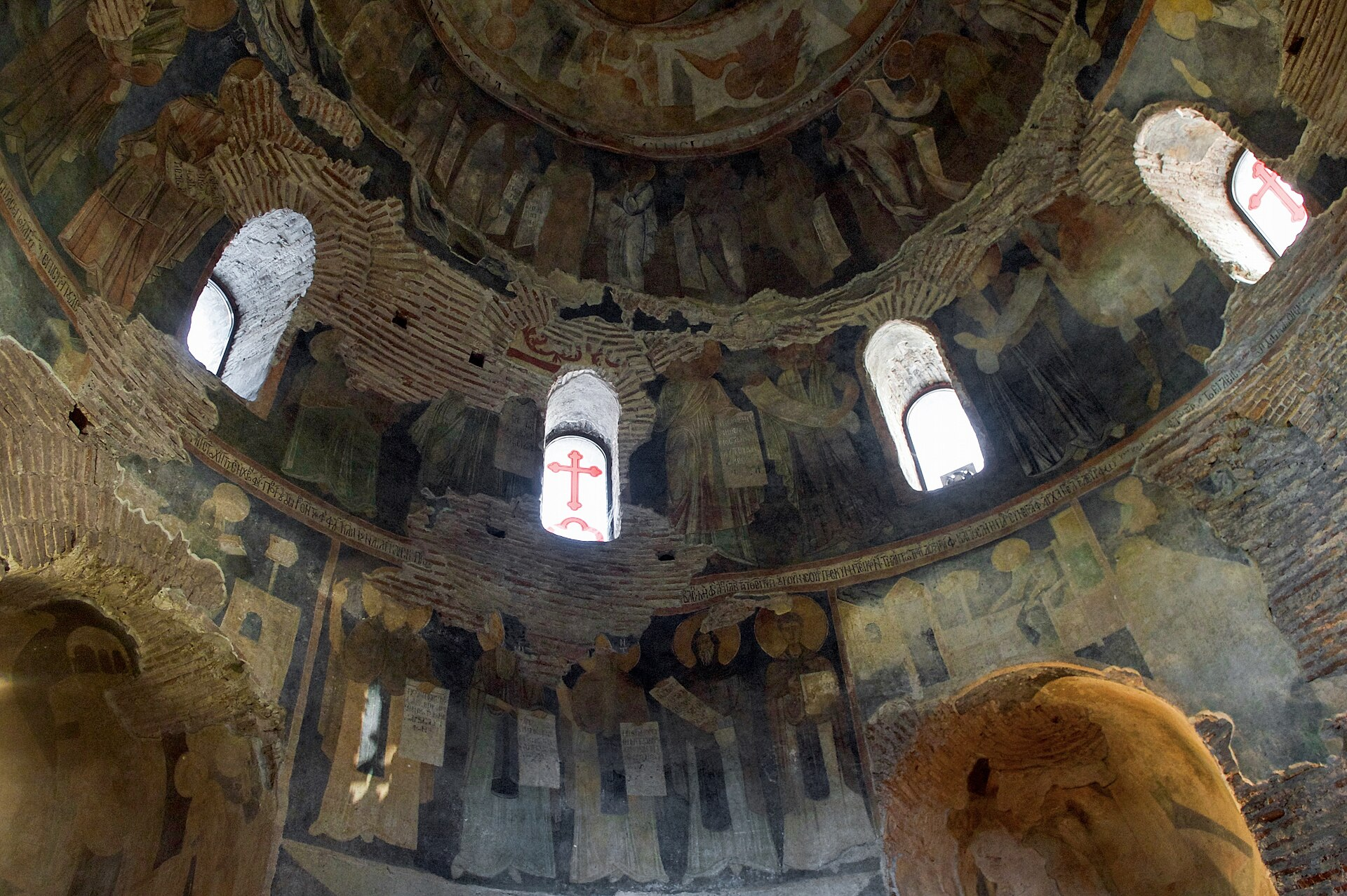
This church is a UNESCO World Heritage Site, important for its frescoes, which date mostly from the 13th century.


The church closed for conservation and restoration in 1954, and only reopened to the public in 2008. Only nine people can visit at one time, and for only ten minutes.
I was planning to post photos of the frescoes and talk about how extraordinary and moving it was to see them. But photos weren’t allowed inside. And, sad to say, neither were we. We got there at 1:30 and discovered that the next available time slot to enter was at 3:30. So we didn’t get to see them. But here are some photos from the internet.


Sofia City Art Gallery
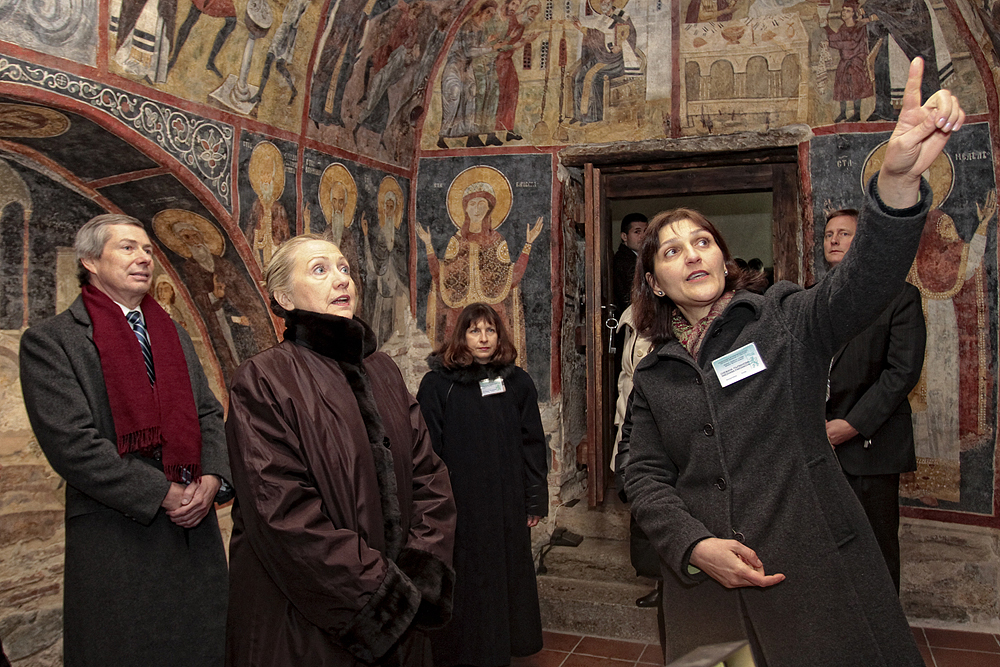
Having returned to our hotel disappointed, I took the opportunity to visit the Sofia City Art Gallery, which is right next to the hotel. Currently they are hosting the exhibit “Nadezhda Kuteva. Places and Rituals.” Kuteva, born in Sofia in 1946, studied at the Corcoran School of the Arts and Design in Washington, DC, and has exhibited around the world. I really admired her work. The exhibit ranged from early student work to more recent paintings, and it was interesting to see the evolution of her technique.


Today we leave Sofia. Jurdana will be with us in the morning for our first stop, Rila Monastery. From there we head to Plovdiv. I’ll see you there!
If you haven’t looked at all my photos from Sofia yet, now’s your last chance!