
Sofia before the tour
I’ve been in Sofia for two days now, and the tour starts tomorrow. So I’ve had time to do some things here in Sofia before the tour, and now here’s a quick rundown.
I’ve already taken plenty of photos, and I’ll share some here, but if you want to skip the narrative, you can check out my album.
Grand Hotel Sofia
Out tour group is staying at the Grand Hotel Sofia, and “grand” is an apt way of describing it. The hotel is lovely and perfectly located. Everything of interest on a short visit is within easy walking distance (even though it’s been very cold and easy walking distance isn’t as easy as it might be). The staff is very friendly and helpful, and my room is huge and comfortable and really nice.

National Gallery of Art
I was a bit confused, because there are actually three museums under the “National Gallery” umbrella. Yesterday I went to one which I thought was The National Gallery, and today I went to another one which I then believed was The National Gallery. But neither is “The.” Nor is the Museum of Christian Art (which I didn’t visit).
The Palace
The Palace, which I visited yesterday thinking is was The, didn’t have a very large collection, but I was very impressed. Here’s the thing: I know nothing about Bulgarian art and artists. So many countries in Europe have great and well-known painters and sculptors. But I’d never heard of a single Bulgarian artist. So this museum was a perfect introduction.
It’s called “The Palace” because it is housed in a former palace (which also houses the National Ethnographic Museum, which I didn’t visit).

The collection here was almost entirely Bulgarian painters and sculptors from the late nineteenth and early twentieth centuries.
Kvadrat 500
I have no idea why this other location is called Kvadrat 500. That is not the street address.
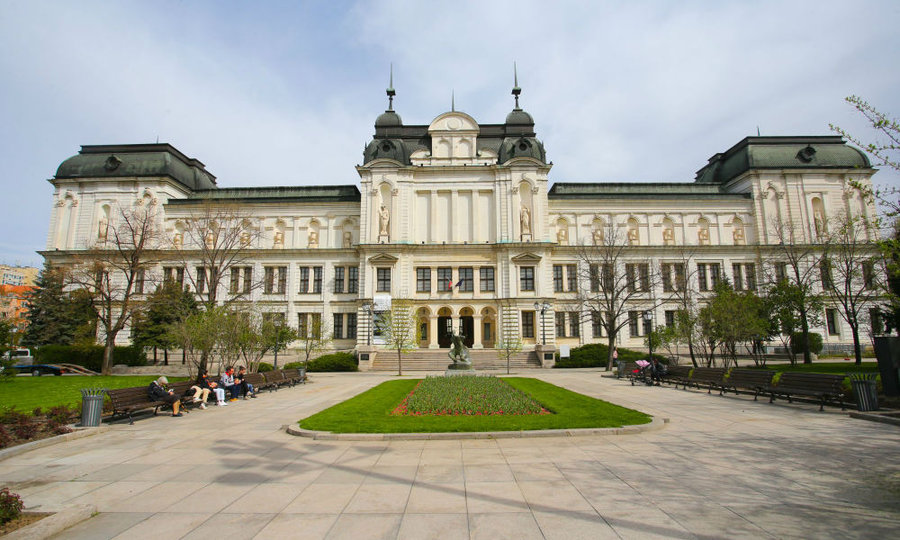
The building shown in this photo is only part of the museum. A newer building behind this one, accessible by a doorway I almost didn’t notice or bother to go through, houses the bulk of the collection, which is more international in scope than the Palace, and which includes quite a bit of mid- and late-twentieth-century works.
The Art
I tried to focus my attention on Bulgarian artists, because, as I said, this is a completely new topic for me. And I made some joyful discoveries.
Photos of art
I take a lot of photos in art museums. Sometimes I think I go overboard. But I love to have the opportunity to reminisce about art that moved me, impressed me, surprised me, or fascinated me. And maybe you’ll have the same response. Here is just a small sampling; there are a lot more in my album. And please leave a comment and let me know if you like seeing photos of my favorite art works. Do you also respond to these as I do? Or do you just scan quickly through these and skip ahead to other stuff?

The Evening Star, circa 1919

A Walk By Lake Constance, 1914

Bust of Vladko Vazov, 1932

The Old City of Plovdiv, 1938
(We’re going to Plovdiv after we leave Sofia, so I’m eager to see how much it resembles this.)

Shepherd, 1927

Return from the Field, ca. 1938

The Most Handsome Drowned Man

Japanese Landscape, 1920s
Sofia Cityscape
I haven’t yet done any kind of organized exploration of Sofia. We’ll be doing a guided walking tour, and I’m sure I’ll see lots more of it and have some context to add. But my first impressions are very positive. There is a mix of architectural styles, including some Ottoman-era buildings, some Social Realism (i.e. Communist era), and some more modern stuff.
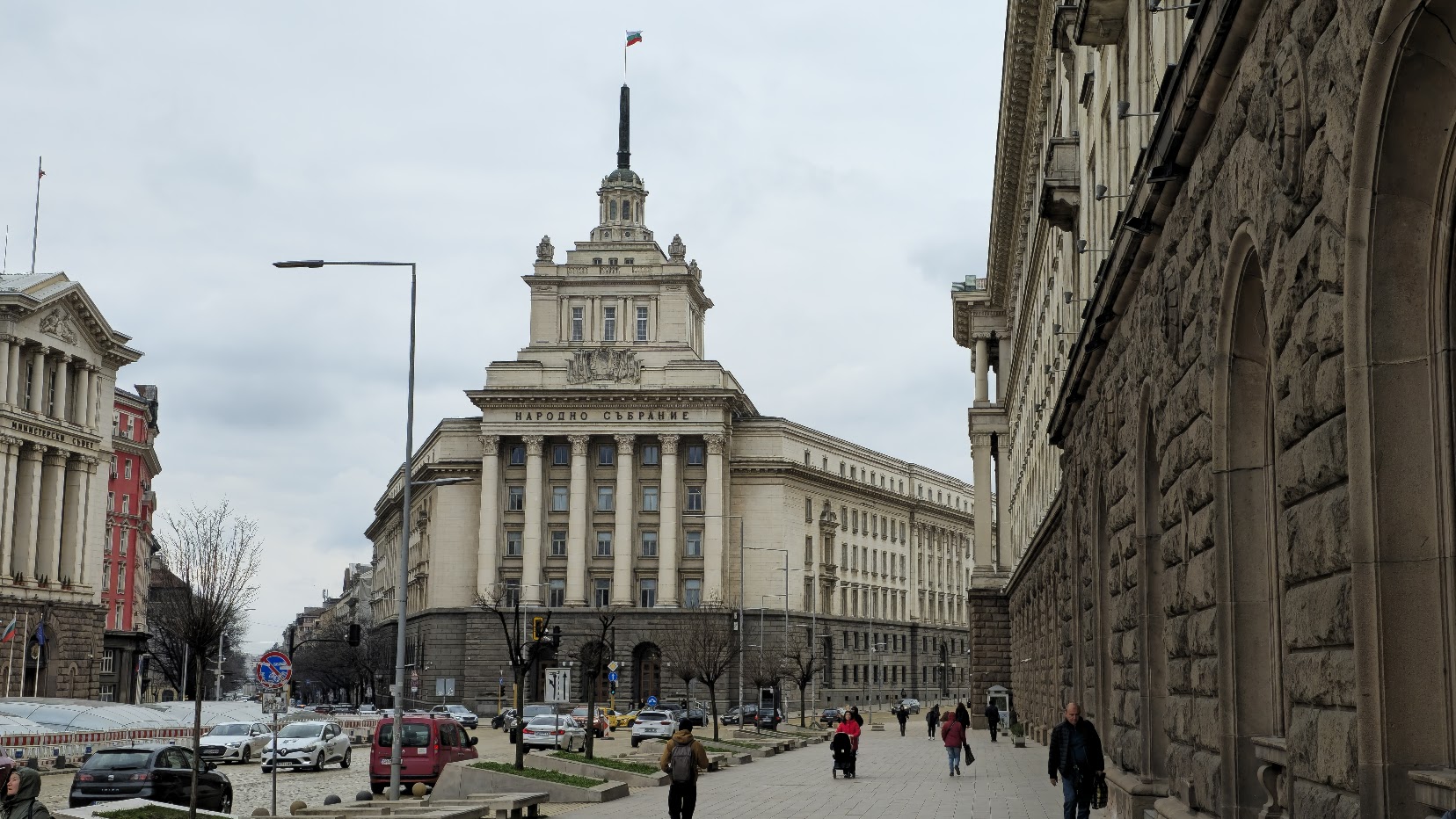
The photo at the top of the page is a trio of government buildings called the Largo. At the left is just a fragment of the Council of Ministers; in the center is the National Assembly (formerly Communist-part headquarters); on the right is the Presidential Palace. All were built in the 1950s.


Sofia Synagogue

Bulgaria had a thriving Jewish presence after the Inquisition, when expelled Spanish Jews came here. They built the Sofia Synagogue in 1909, replacing an older synagogue at the same location. It is the largest Sephardic synagogue in Europe.
Although Bulgaria was allied with Germany during World War II, most of the 50,000 Jews in the country survived thanks to the resistance of church and civic organizations that played a role in stopping deportations to death camps. Most of the Jews in the country emigrated to Israel after the war, and only about 2,000 Jews remain in the country, mostly here in Sofia. The synagogue remains active today.


Graffiti
Sofia is one of several cities I’ve visited that celebrates graffiti. (Most notably, Medellin, Colombia, is another.)
This afternoon I took the Sofia Graffiti Tour. Our guide, Antoan, walked us through several areas showcasing a wide range of murals.
Did you know that graffiti is defined as the painting of the artist’s name? And there are four distinct styles of graffiti? I didn’t until today.
- Tagging: The simplest form, tagging is the artist’s signature (or nickname) done quickly in one color, often with a marker or spray paint.
- Throw-up: A more complex, yet fast version of a tag, often called a “flop”. It features bubbly, rounded letters outlined in one color and filled with another, designed to be executed quickly to maximize visibility.
- Blockbuster: Large, blocky, often 3D letters designed for maximum visibility and to cover large surface areas quickly, often painted with rollers.
- Wildstyle: An intricate and highly stylized form where letters are intertwined, embellished with arrows, spikes, and other, often unreadable, elements.
Anything that isn’t some form of a signature is more correctly considered street art. Much of the work we saw on the tour is curated by Sofia Graffiti Tour, a cultural organization established in 2016 that runs the tour of the same name. They work directly with the artists to create and maintain the work. (Unlike in Medellin, where old murals are replaced by new ones every few years, the murals in Sofia have a longer life span.)


If you haven’t already seen my album, you can go look now. I’ll be back with another post soon.
Interesting!!! Loved the “tagging” lesson! My favorite art works are “The Old City…” and “Shepherd”.
Thank you for great memories of Sofia. LOVE Bulgaria!
The “Old City” painting also my favorite. Love this blog.
Quite the itinerary! Thanks for the blog and taking us with you. Enjoyed the art photos (museums and street), and the lovely synagogue. Onward…
Dear Lane,
I’ve been so busy that I am now catching up with your travel blogs. I love them!
I do love to see photos of your favorite museum pieces, so keep ‘em coming
?Joy