
What I learned in Budapest
Normally I write about what I’m doing in each place I visit, preferably while I’m doing it. But for a change, I’m going to skip over a daily rundown of my activities in Budapest, and instead I’m going to share some of the things I learned in the last six days. Of course, some of this will tie into my activities, but it won’t be strictly chronological. I hope it all comes together cohesively. (I say this, of course, as the content from here down is as yet unwritten.)
If you want to see what I did, you can check out my photo album. And there’s a separate photo album for the works of art I saw and loved at the Hungarian National Gallery.
And I guess that’s where I’ll begin.
Learning #1: Hungary produced some outstanding visual artists
If you tried to list all the greatest painters and sculptors of the western world, would you ever come up with the name of a Hungarian artist? I certainly wouldn’t. Or at least I wouldn’t have before spending a few wonderful hours exploring the collection at the Hungarian National Gallery.
Even now, it would be difficult to come up with any names, partly because there are so many, and partly because Hungarian names are really hard to remember.
But here is the one that I was most taken with:
Tivadar Csontváry Kosztka (1853–1919)
Trained as a pharmacist, at the age of 27 Csontváry had a vision that he would become a great artist. He embarked on a series of epic journeys all over Europe and beyond. While he achieved some renown during his lifetime, in Hungary he was considered a crank for his eccentric views. (He was anti-smoking, anti-alcohol, vegetarian, and pacifist.) When he died, most of his paintings were left rolled up in his pharmacy in Gács (then part of Hungary, now in Slovakia). His heirs almost sold them as tarps. Fortunately, they were discovered by an architect who rented the space. He bought them and preserved them, but they gathered dust in his apartment in Budapest until the 1970s, when they underwent restoration and finally found their way into a museum in Pécs dedicated to his work.
Some examples
In Budapest I got to see a number of Csontváry’s works. I don’t know why he isn’t better known.

Csontváry never exhibited this work; it turned up only after his death in the attic of his pharmacy in Gács.

Csontváry’s vision was that he would surpass Raphael. On his first trip, he went to Rome and studied Raphael’s works at the Vatican. A biography of Raphael from the 1820s tells that when he was still a child, he painted a picture of the Virgin on the wall of his parents’ courtyard. The Virgin in Csontváry’s painting is clearly borrowed from Raphael’s Sistine Madonna.

Between 1904 and1905, Csontváry spent six months in the Sicilian town of Taormina. He needed a large canvas to capture these ruins: this painting measures 3 meters (10 feet) high and nearly 6 meters (20 feet) wide.
There are a lot more photos of Csontváry’s paintings in my album. I’d love to share more here, but I’ve already been writing for an hour. So I will move on.
Other favorites among favorites
My album contains 99 photos of my favorite works from the Hungarian National Gallery. Picking a few more to share here is a near-impossible task. But I’ll give it a shot.
Oszkár Glatz (1872–1958)

This seemingly straightforward painting gives me so much to ponder. Where did the wood come from? There are no trees anywhere to be seen. Why is the woman barefoot, while the child wears sturdy boots? And what is this barren landscape that seems almost like dead grass?
Róbert Berény (1887–1953)

I love the huge swaths of strong colors: the red dress cut in half by the orange cello and punctuated by her white skin and black hair. And even though it’s a photo, you can tell how Berény used different techniques to apply paint to the canvas, especially if you zoom in.
László Mészáros (1905–1945)

That this is the work of a 25-year-old sculptor is astonishing. Moreover, the Museum of Fine Arts in Budapest purchased it in 1932. The title juxtaposes it as a work on a biblical theme and at the same time a work of Hungarian contemporary life.
Béla Pállik (1845–1908)

Have you ever seen sheep’s wool depicted so precisely? It’s almost photographic. I expect to see the sheep start moving around at any moment!
Aurél Bernáth (1895–1982)

I love the way Bernáth uses shapes to create detail. Everything is abstract and at the same time vividly realistic.
Others
On another day I might have selected a completely different set of artists to highlight. If you haven’t looked at all the photos I took, do it now, and leave a comment to let me know which are your favorites.
Learning #2: Election drama isn’t confined to the USA
Today, as I am writing this, Hungarians are going to the polls. If all goes well, they will thrown Viktor Orbán out of office after sixteen years. This is my opinion, but it is also the opinion of every Hungarian I met in Budapest.
Orbán is a lot like the US pretender-in-chief, only more intelligent and more cunning. Where POTUS distracts with bumbling, making it hard to keep track of his incompetence and corruption because he keeps throwing new nonsense at us, Orbán is laser focused, carefully managing the messaging.
Here’s what Cameron Hewitt, coauthor of many of Rick Steves’ guidebooks (including RS Budapest) had to say on Facebook yesterday:
Orbán possesses both greater intelligence and a much higher degree of self-control than his American counterpart. If Trump is a caveman’s club, Orbán is a surgeon’s scalpel. And during his reign, Orbán has shrewdly and systematically remade every aspect of Hungarian governance and public life. A summary of Orbán’s meddling includes changing the constitution to consolidate and fortify his personal power; using a combination of broad media regulation and a symbiotic partnership with oligarch media-outlet owners to transform the Hungarian “news” landscape into an exclusively pro-Fidesz [his political party] platform; shifting the judiciary into, effectively, a wing of the executive branch; and overhauling the way that history must be taught in schools, with a sanitized and decidedly pro-Hungarian slant. Meanwhile, Hungary has become the poorest country in the European Union, recently tumbling past Bulgaria and Romania on several key metrics.
On my first day in Budapest, last Monday, I had lunch at Goli, a wonderful restaurant. My server asked me if I was staying over the weekend. I told her I was leaving Sunday morning. She told me that’s a shame, because she thinks Sunday will be a day of celebration when they finally get rid of Orbán.
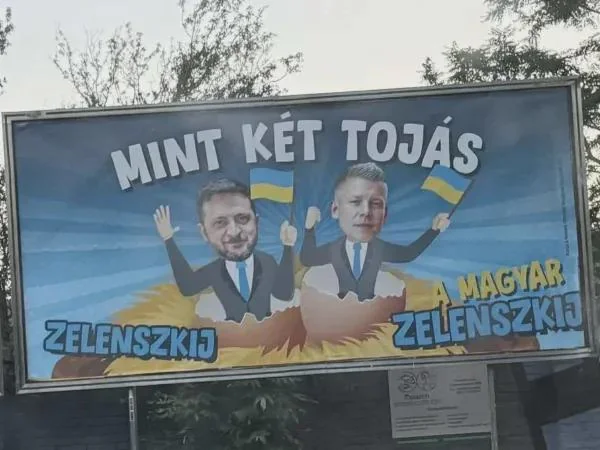
On Tuesday I did a food tour. The guide, Zoltan, spent more time talking about the dictator who is in charge in Hungary than he did takling about food. He was optimistic, but also concerned that Orbán will overturn or not abide by the will of the people. He suggested the strong possibility of ballot-tampering. We saw all the posters showing Péter Magyar, the opposition candidate, with Volodomir Zelensky, all paid for with taxpayer dollars
I’m going to be checking the news tonight as I fly from Istanbul to Dushanbe. Keep hope alive!
Learning #2a: Hungary’s economy
As Cameron Hewitt mentioned above, Hungary has fallen to the economic basement of the EU. Not only is it the poorest country in the EU, but it has the highest VAT (Value-Added Tax, like a sales tax): 27%. This is, in fact, the highest VAT in the world. Next is Finland, a wealthy country, at 25.5%.
Learning #3: Hungary is much smaller than it once was
Hungary has been on the losing side of every war they’ve ever fought in.
The Kingdom of Hungary existed from the year 1000 until 1946.
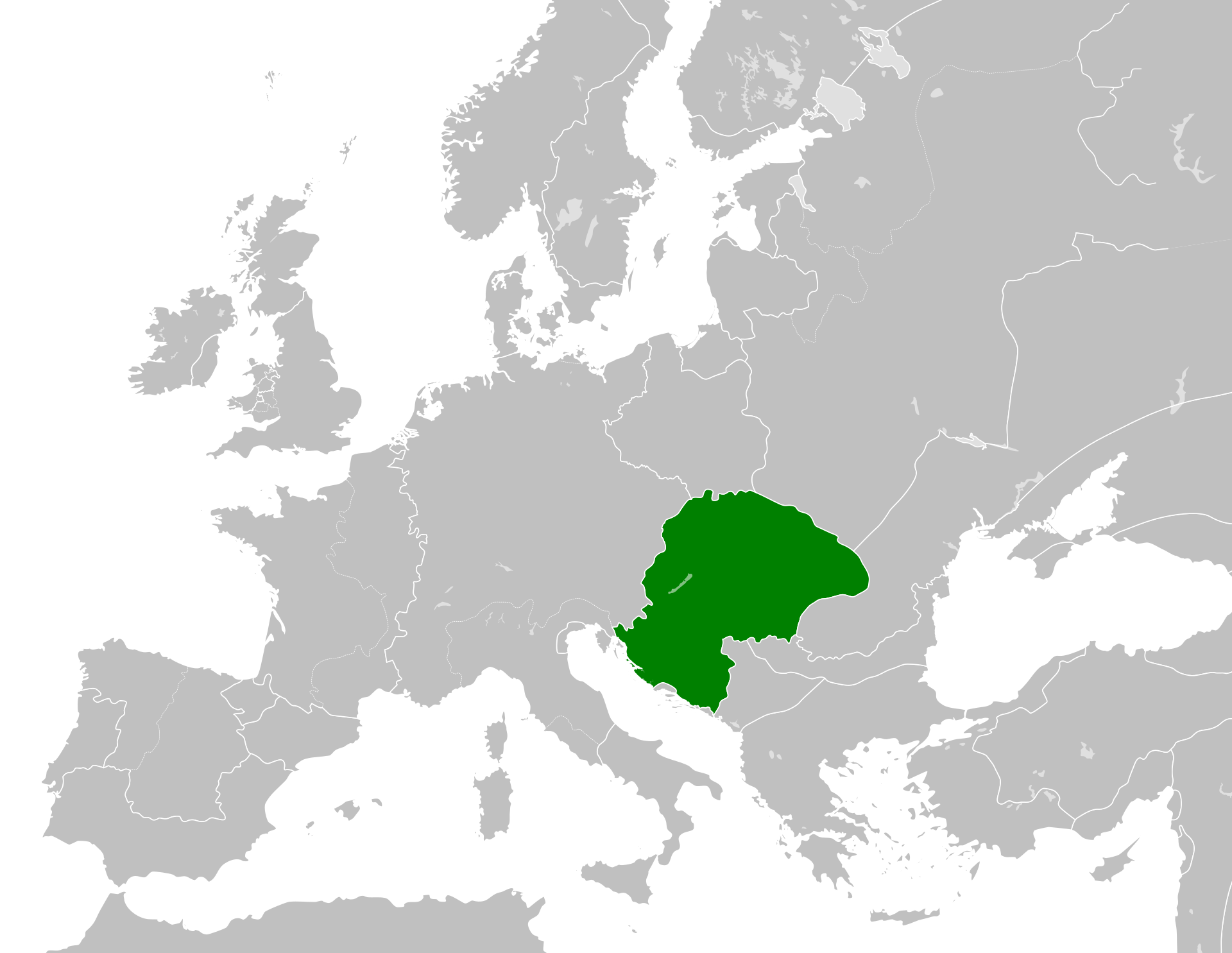
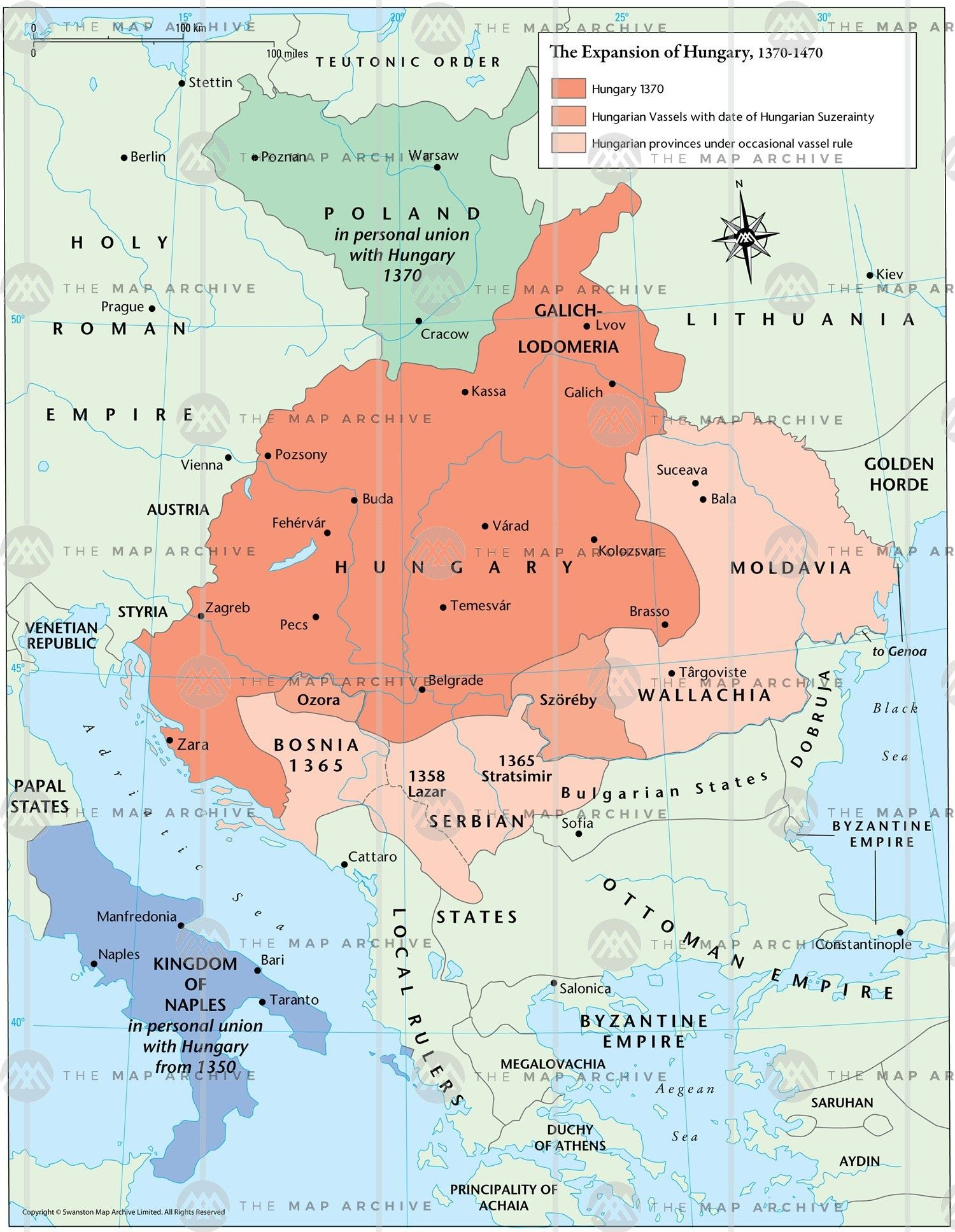
Hungary expanded during the Middle Ages. It had coastlines on the Black Sea and the Adriatic.
Between 1867 and 1918 it was part of the Austro-Hungarian Empire, ruled by the Habsburg dynasty.
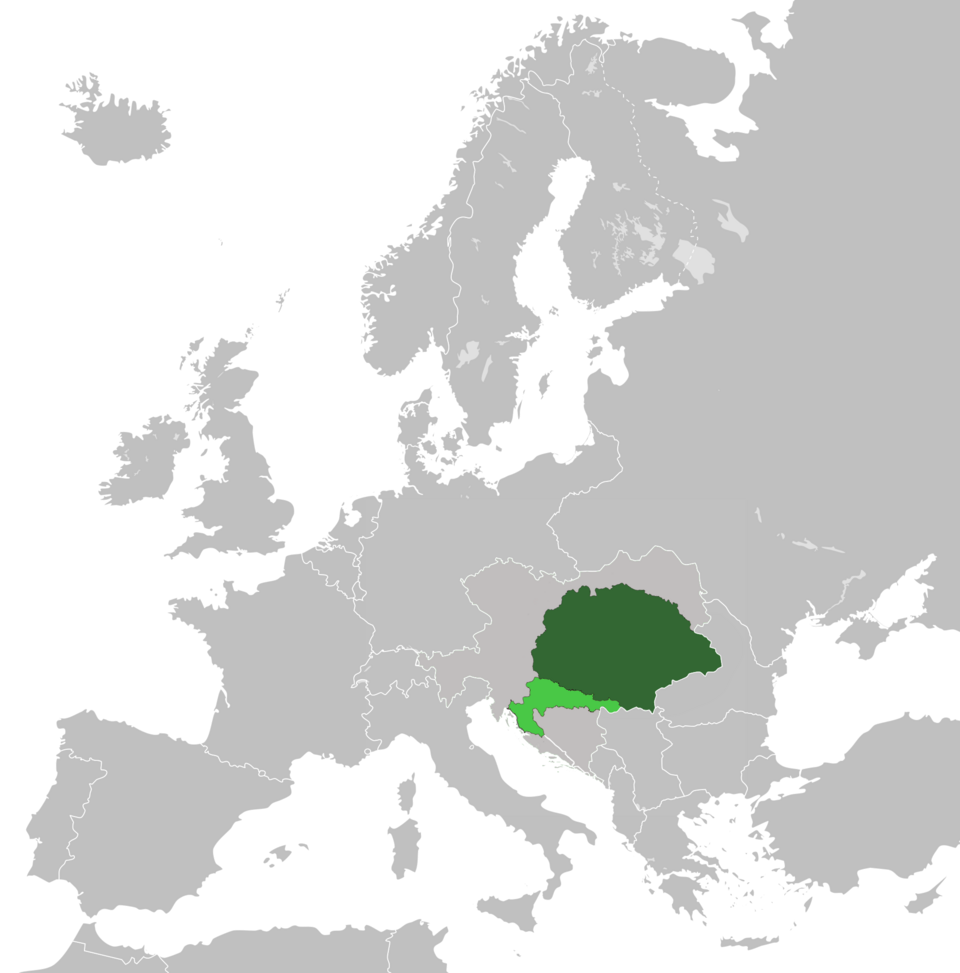
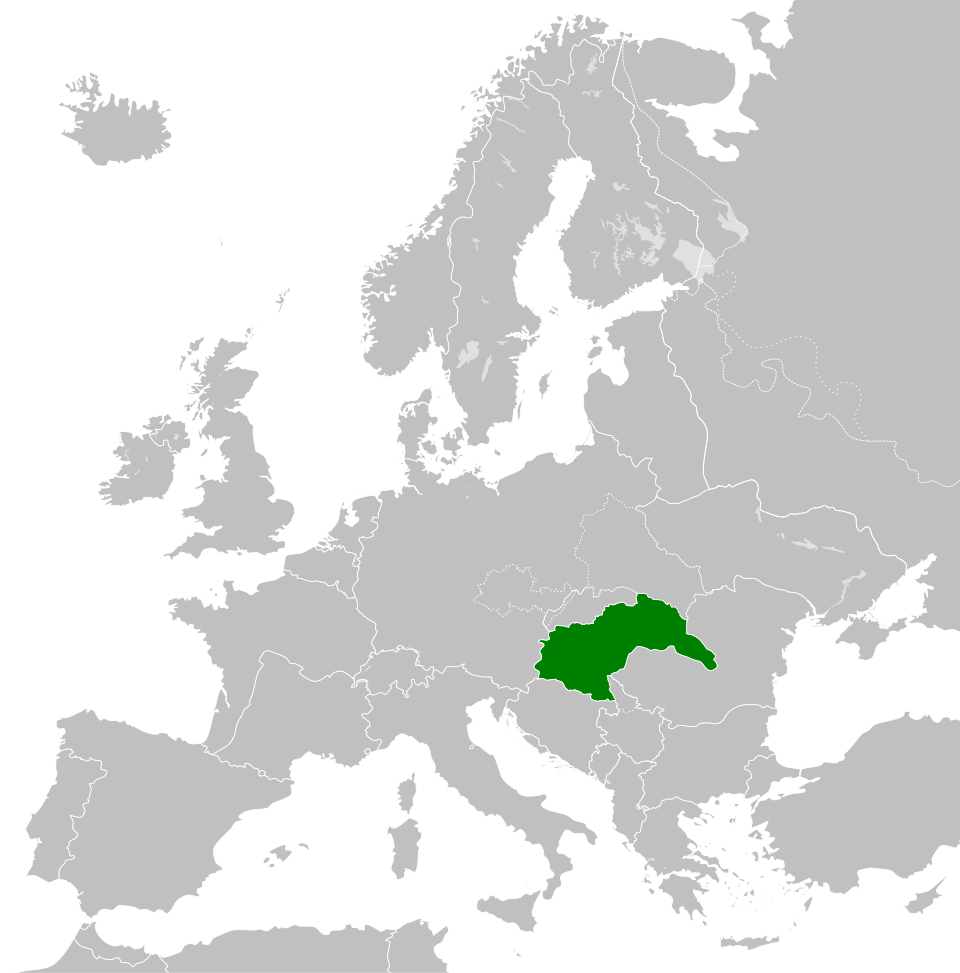
At the end of World War I, The Habsburg dynasty came to an end. Austria-Hungary was dissolved. While the rest of the world was subject to the terms of the Treaty of Versailles, Hungary was forced to sign a different treaty, the Treaty of Trianon. As a result of this treaty, Hungary lost about 72% of its territory and 60–65% of its population. Of the approximately 22 million Hungarians before WWI, less than 8 million lived in Hungary afterwards. The land and the people overnight became parts of Czechoslovakia, Yugoslavia, Romania, and Ukraine.
Learning #4: Hungary is trying to rewrite the narrative about its role in the Holocaust
In 2014 Viktor Orbán’s government installed this monument in Budapest’s Liberty Square:

Here’s how Rick Steves (or Cameron Hewitt) describes it:
This heavy-handed Fidesz production commemorates the German invasion of Hungary on March 19, 1944. Standing in the middle of a broken colonnade, an immaculate angel holds and orb with a double cross (part of the crown jewels and a symbol of Hungarian sovereignty). Overhead, a mechanized-looking black eagle (symbolizing Germany) screeches in, its talons poised to strike. In case the symbolism isn’t clear enough, the eagle wears an armband that says 1944.
Like so many recent additions to this area, this monument was instantly controversial for the way it whitewashes Hungarian history. Viewing this, you might imagine that Hungary was a peaceful land that was unwittingly caught up in the Naxi war machine. In fact, the Hungarian government was an ally of Nazi Germany for more than three years before this invasion. While many Hungarians today emphasize that Jews here were not executed before the Germans arrived, tens of thousands of Jews did die from forced labor or by being exported to Nazi-controlled lands. And there’s no question that, after the invasion, many Hungarians enthusiastically collaborated with their new Nazi overlords.
In front of this government-sanctioned monument is a people’s monument, a makeshift counter-memorial.


Learning #5: There is a way to make a museum about music that actually brings music to life
I’ve visited various museums related to music in other cities, but Budapest’s House of Music is the only one I’ve ever visited that presents actual music along with its stories.
Before entering the permanent exhibit, I received special headphones. These have a location sensor. As I walked through the exhibit, the music I heard was contextualized for the displays I was seeing. I looked at traditional folk instruments and listened to them being played. I listened to Gregorian chant as I looked at notation and saw the notes on the page light up synchronously. A set of four chairs in front of music stands beckoned. I sat in one of them and watched the notation of a string quartet while I heard the cello part. When other people sat in the other three chairs, the other instruments became audible. I watched a map light up showing the travels of Charles Burney, who wrote the first book on the history of music, and I heard music from each city he visited. Plus there were videos of interviews with composers and performers, and much more.
The exhibit included a particular emphasis on the music of Hungary. Folk music, the Hungarian National Anthem, Franz Liszt, Bela Bartok, Zoltan Kodaly, and more recent composers were highlighted. And at the end of it all, there were hands-on exhibits illustrating various ways technology is changing our experience of music.
All in all, I spent 2 1/2 hours immersing myself in this brilliant experience. This museum has taken its place at the top of my list of the best non-visual-art museums I’ve ever visited.
Coda
I coud write so much more about things I learned and discovered in Budapest. The beautiful opera house, the amazing synagogue, largest in Europe. The food. The stunning architecture. The viewpoints. Riding public transportation for free (because it’s free for everyone over 65).
And I just wish I had a recording of the extraordinary tour guide who took me and a large group through the Jewish quarter. This young man, just 25 years of age, spoke so eloquently about the history of the Jews in Budapest and so much more. I was mesmerized. It’s all lodged deep in my heart, but it has escaped my brain.
I’m in the midst of a long day of travel. I had a morning flight from Budapest to Istanbul, and tonight I continue to Dushanbe, where I arrive at 1am. So forgive me for not doing a better job of writing about my experiences in Budapest. My photos will have to take up the slack.
Again: general photos of Budapest and the Hungarian National Gallery.
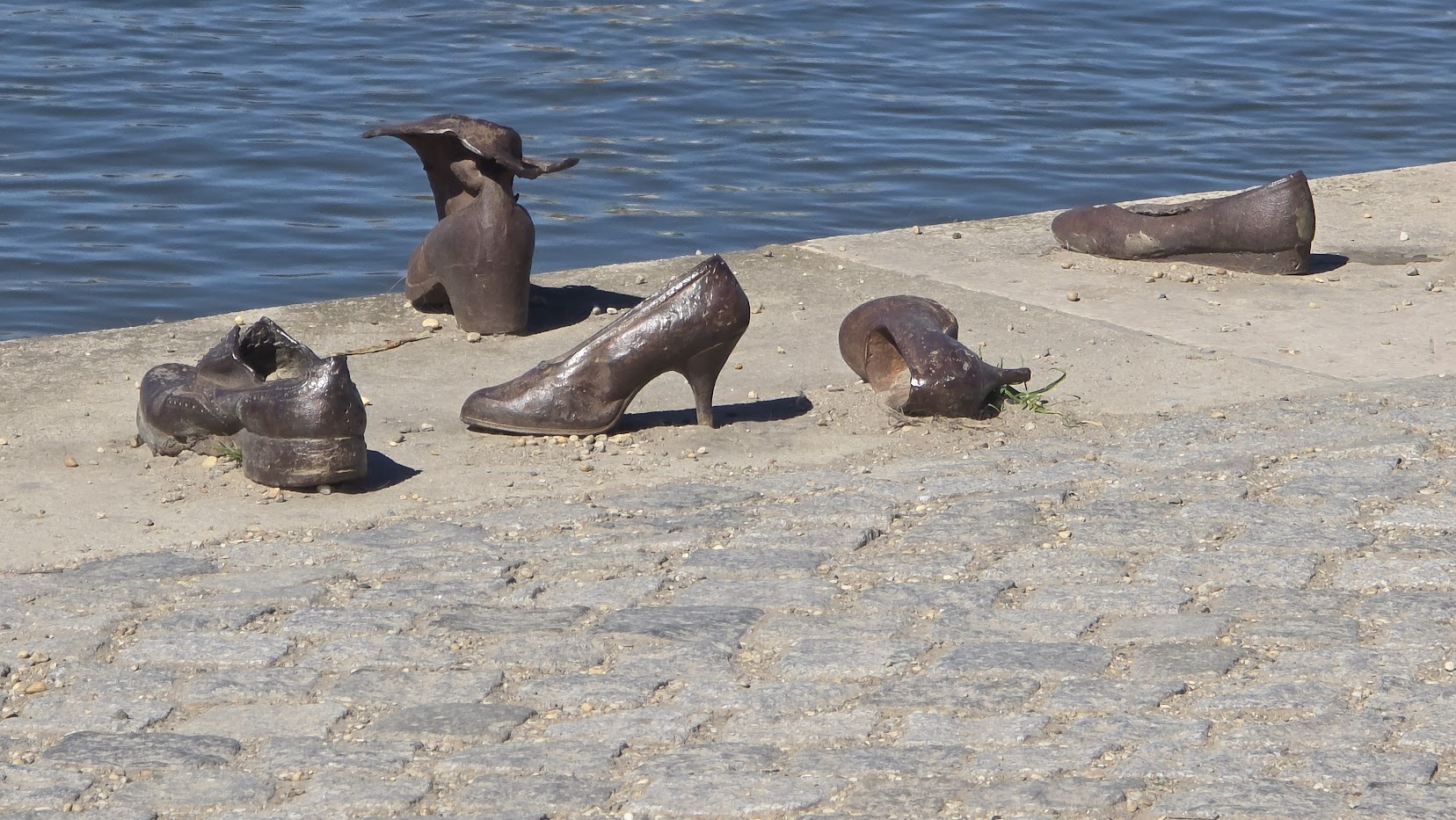
If you go through the photos, you’ll learn about the picture of shoes at the top of this page.
Enjoying reading about this. The music museum sounds great. Thanks for the Holocaust info. I attended Rosh Hashana services in that giant synagogue. My father’s family comes from the areas that Hungary lost after the wars (northern Romania, western Ukraine). OMG, did you leave before the celebrations?!
Thank you for reading, Rich!
Yes, I left the morning of the election and missed the festivities in Budapest. It looked like it was quite the celebration.
Wow, really makes me excited to get to Budapest! Lane, have you been to the Musical Instrument Museum in Phoenix? If you haven’t, try to go. It’s astonishing!
Hi Tammy, no I haven’t made it to the museum in Phoenix. I checked their website and it looks like they do something similar to the House of Music in Budapest. Very cool!