
Xi’an: Where you have to be a warrior
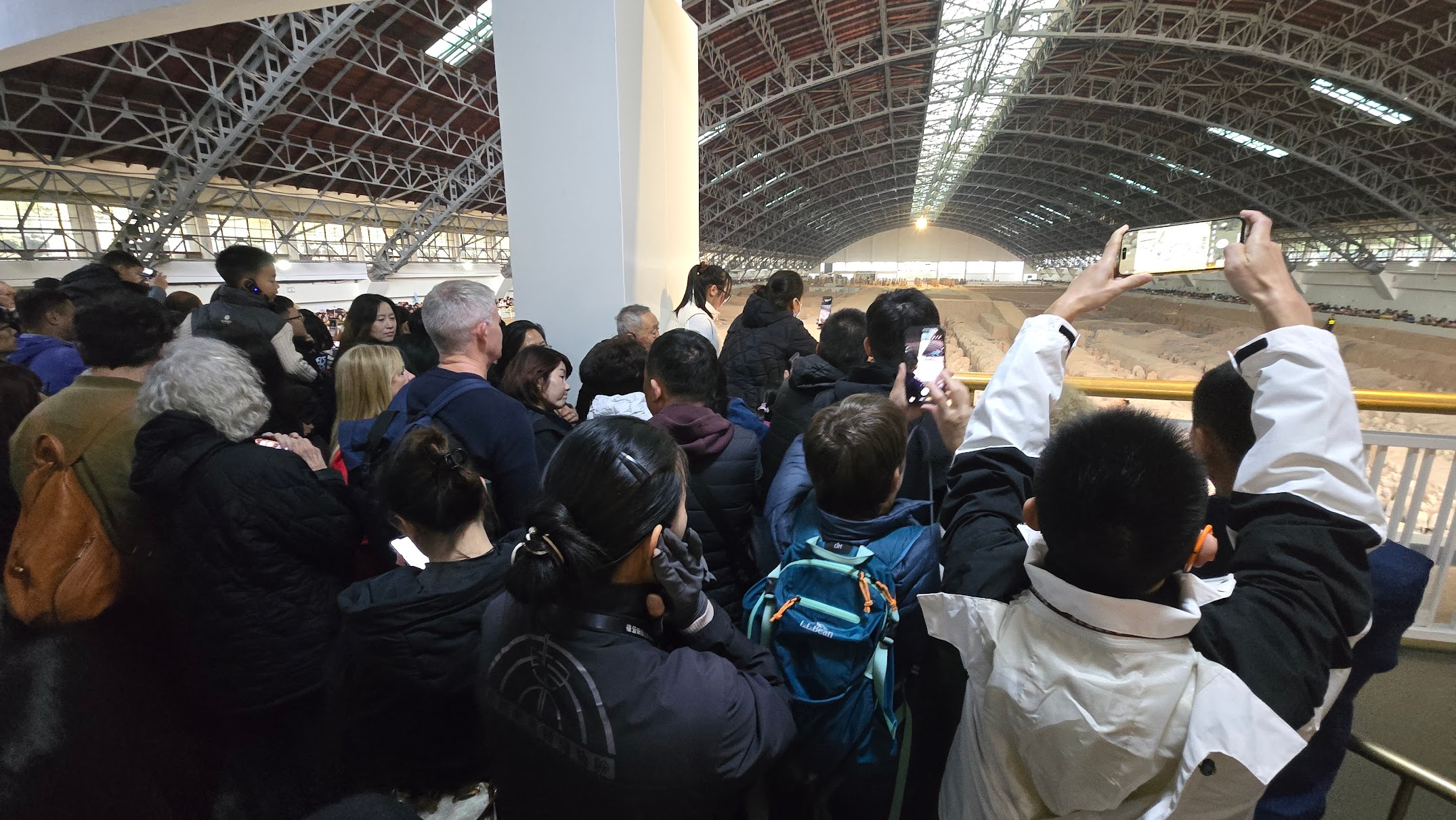
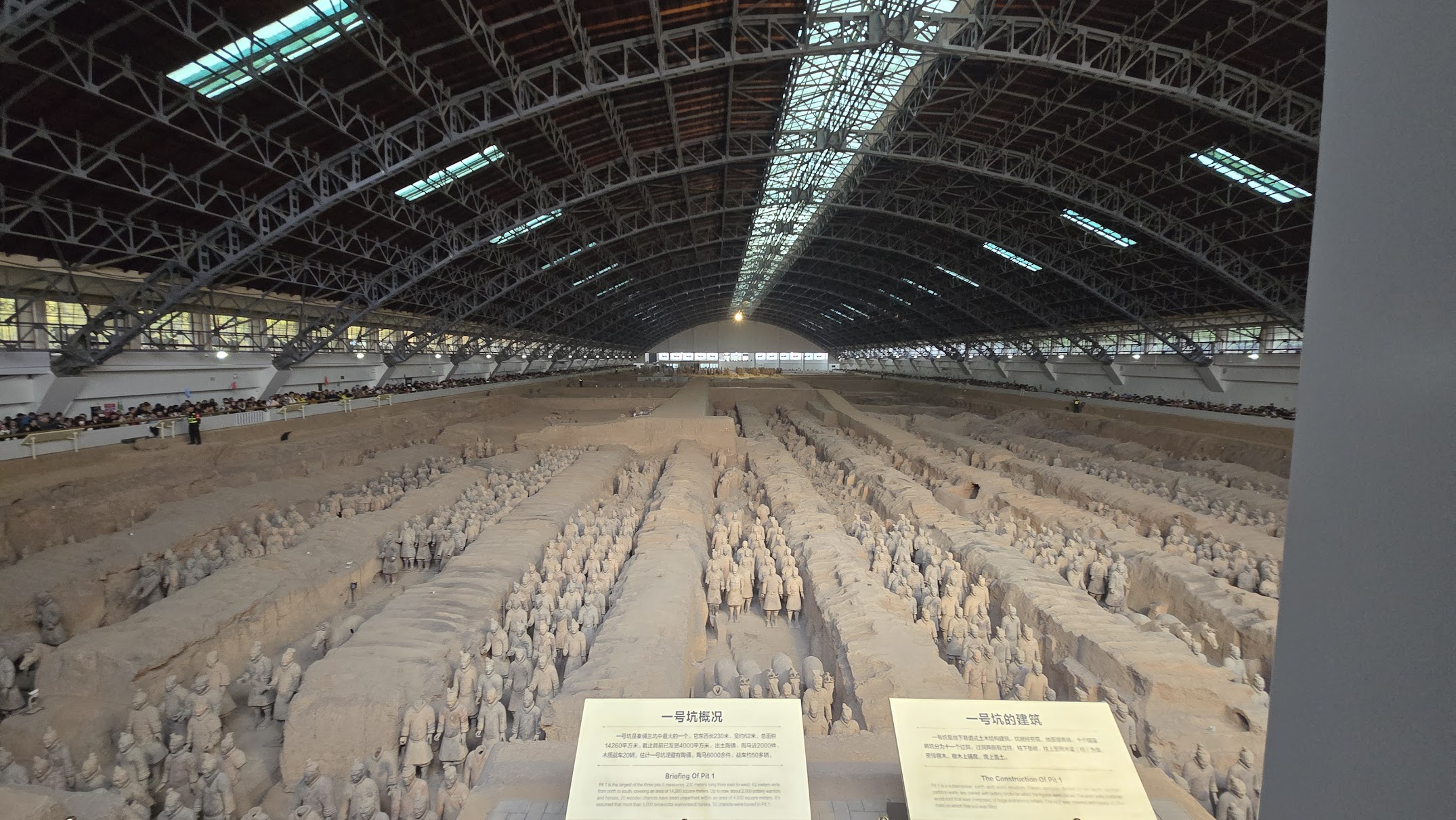
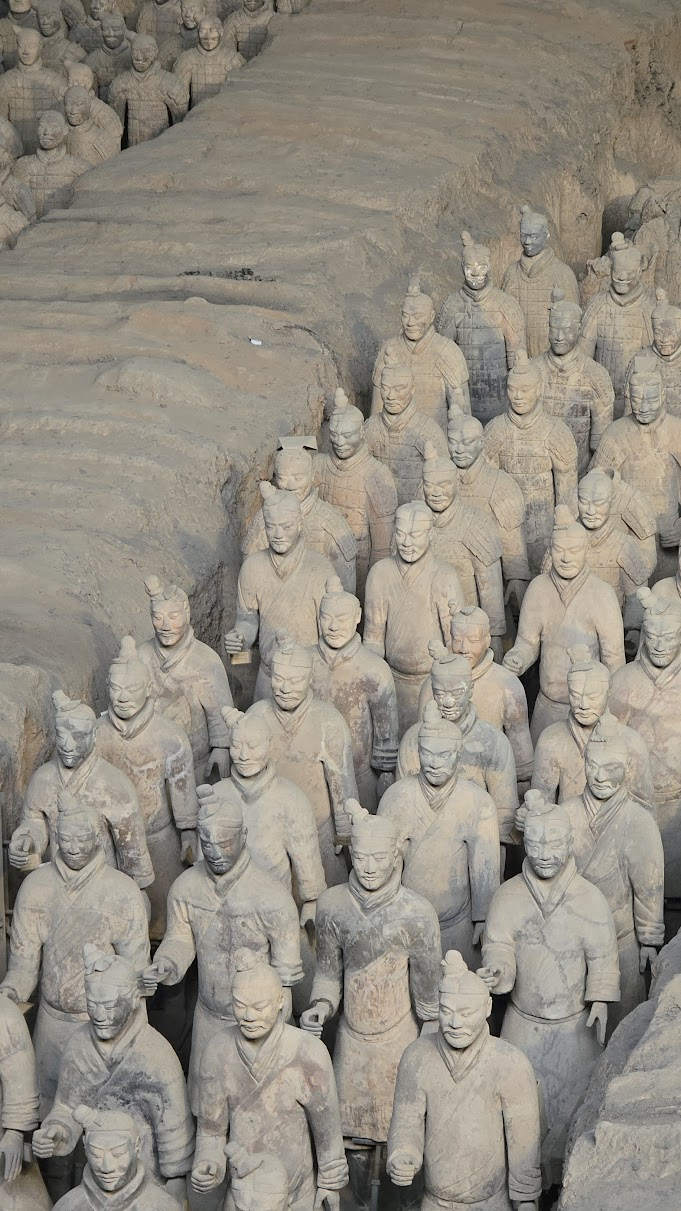
For sure, the highlight of visiting Xi’an is seeing the Terracotta Warriors. But you have to be a warrior yourself to see them. As the photo above suggests, a few other people were visiting Emperor Qinshihuang’s Mausoleum, where this army was buried to protect the emperor and allow him to fight his enemies in the next world.
I’m not a fan of crowds, but our trip leader, Jenny, told us the only approach that works is to push your way forward into the crowd until you reach the railing. If you don’t do that, someone else will, and you will never see anything
The warriors and more
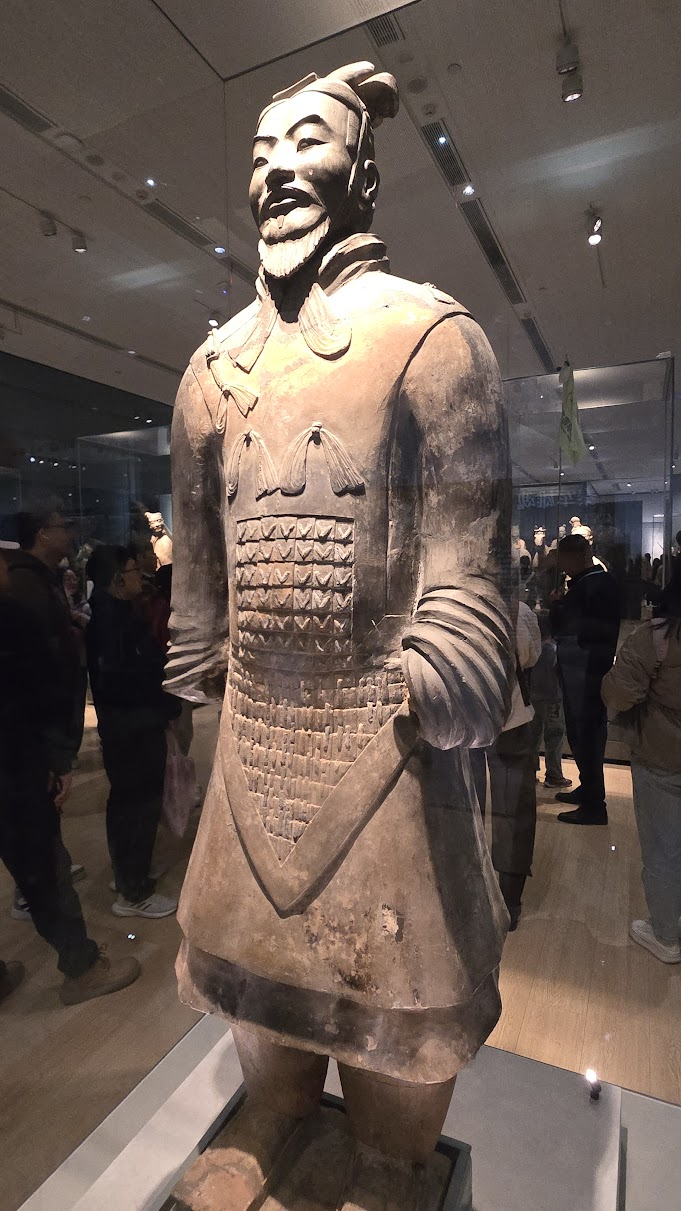
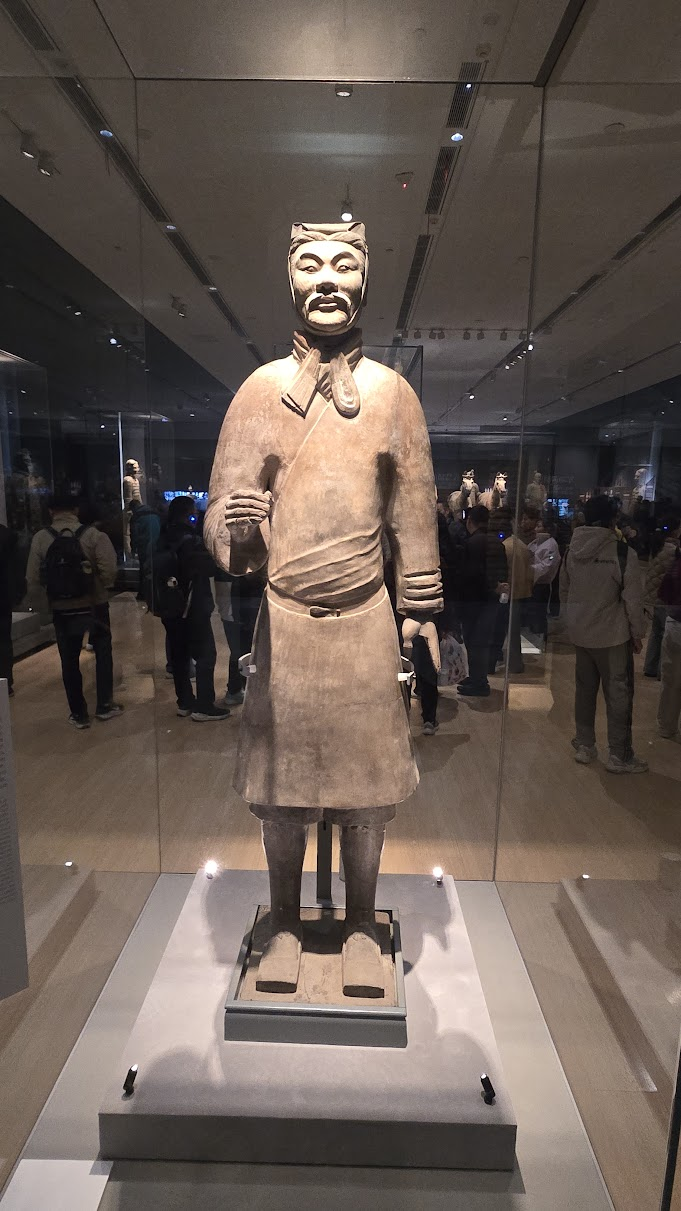
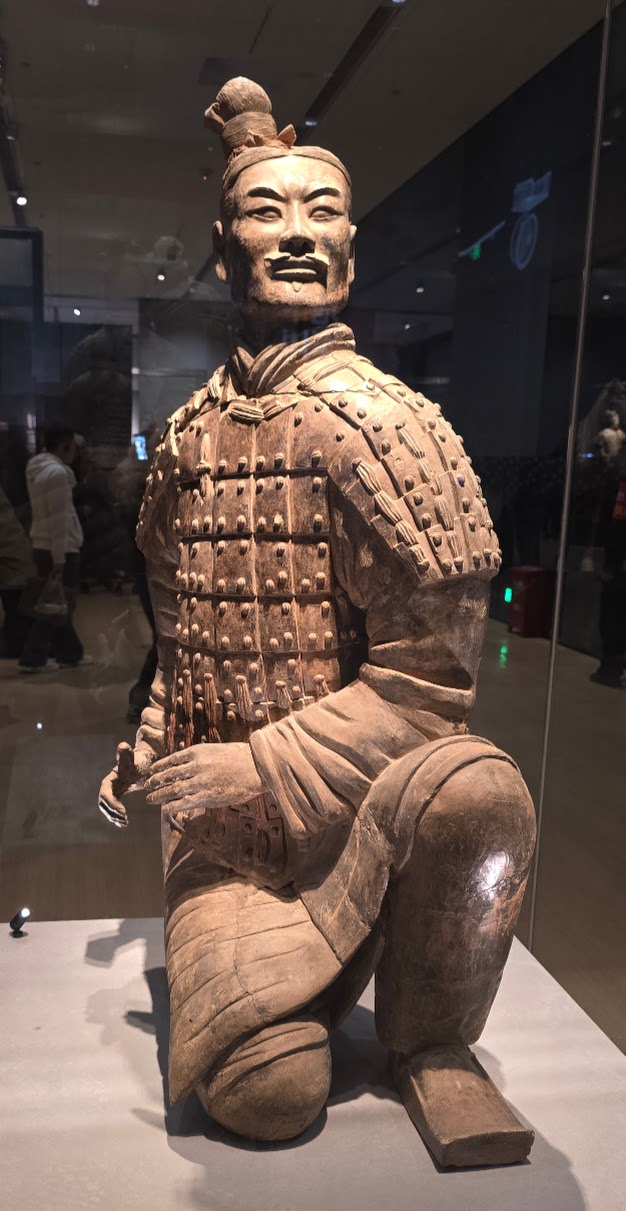
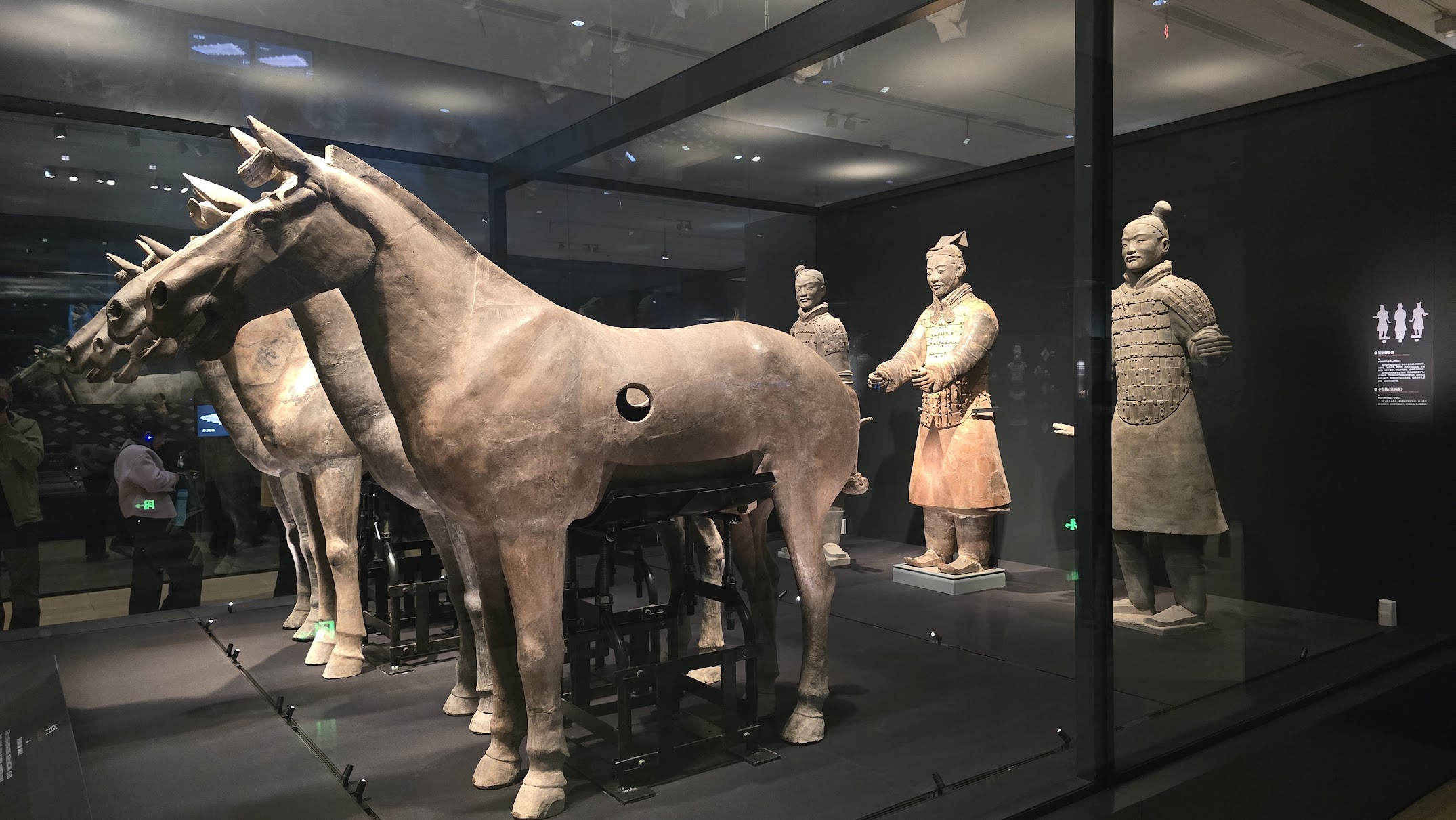
The entire underground burial complex and necropolis spans an estimated 56 to 60 square kilometers (about 22 square miles). There are roughly 8,000 life-sized soldiers, including infantrymen, archers, cavalrymen, and high-ranking generals. Then there are 520 chariot horses, harnessed in teams to pull wooden chariots that haven’t survived the centuries, and 150 cavalry horses ridden by soldiers.
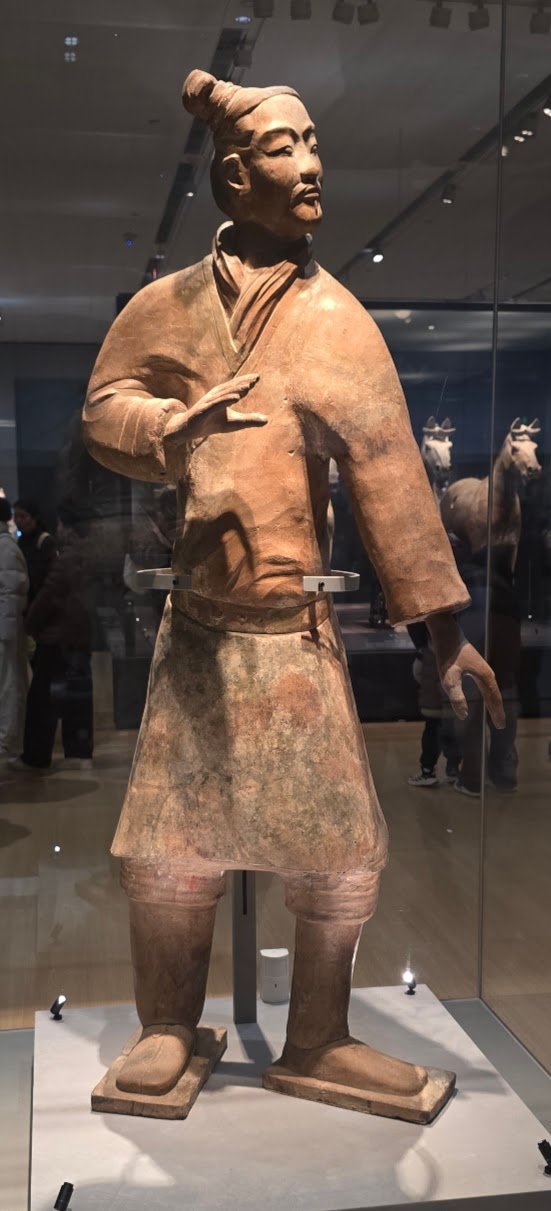
To my astonishment, there are so many more figures than just the army. They have discovered acrobats and strongmen in dynamic, fluid athletic poses. These figures wear simple kilts, exposing muscular bare chests and legs. Musicians and dancers are there to provide entertainment. Government officials wearing long robes with wide sleeves, representing scribes, administrators, and politicians were found alongside small clay writing tools.
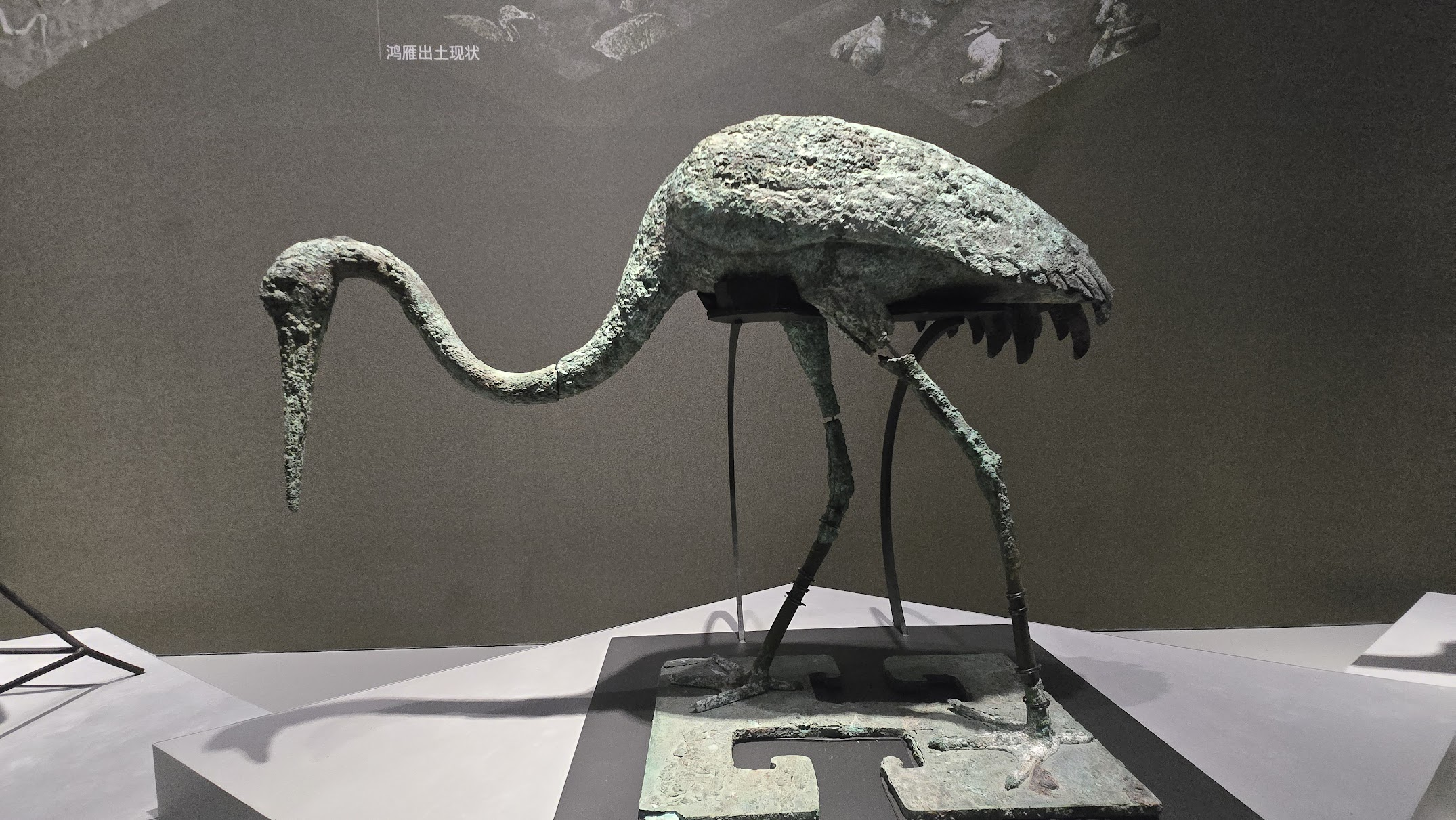
There are also birds and animals. One pit contained an entire water basin pit with beautifully detailed bronze geese, swans, and cranes, posed realistically as if wading along a shoreline. Another had a zoo with both clay animals and skeletal remains.
I didn’t get to see all of this, of course. Such a vast underground city will take a long time to excavate. Because the technology does not yet exist to ensure new finds can be properly preserved, much remains unexcavated.
The history
The period from 475 to 221 BCE in what is now China is known as the Warring States Period, a violent era of independent rival states fighting for dominance. One of those states was Qin (pronounced “Chin”).
Qin Shi Huang (259 — 210 BCE), whose birth name was Yin Zheng or Zhao Zheng, was the son of King Zhuangxiang of Qin. When his father died in 246 BCE, Zheng became king at the age of 13. A wealthy merchant named Lü Buwei assisted him until he assumed full power in 235 BCE.
By 221 BCE, King Zheng of Qin had conquered all the other warring states and unified China. (“Qin” is the source of the modern name of China.) At that time, he elevated himself to the position of emperor (huang).
Though he died at the age of 49, he accomplished much in his short reign. He abolished the feudal system that had led to the long period of warring states. He standardized weights and measures, standardizing currency, and also standardized the characters of written Chinese. In order to prevent the resurgence of feudal lords, he destroyed walls between the feudal states and ordered new walls to connect the fortifications along the empire’s northern frontier. These new walls were the precursor to the Great Wall of China.
Shortly after he became king, King Zheng ordered the construction of his mausoleum. The project continued for 38 years.
A group of farmers digging a well famously discovered the first fragments of the terracotta army in March 1974. By May, excavation had begun.
The museum
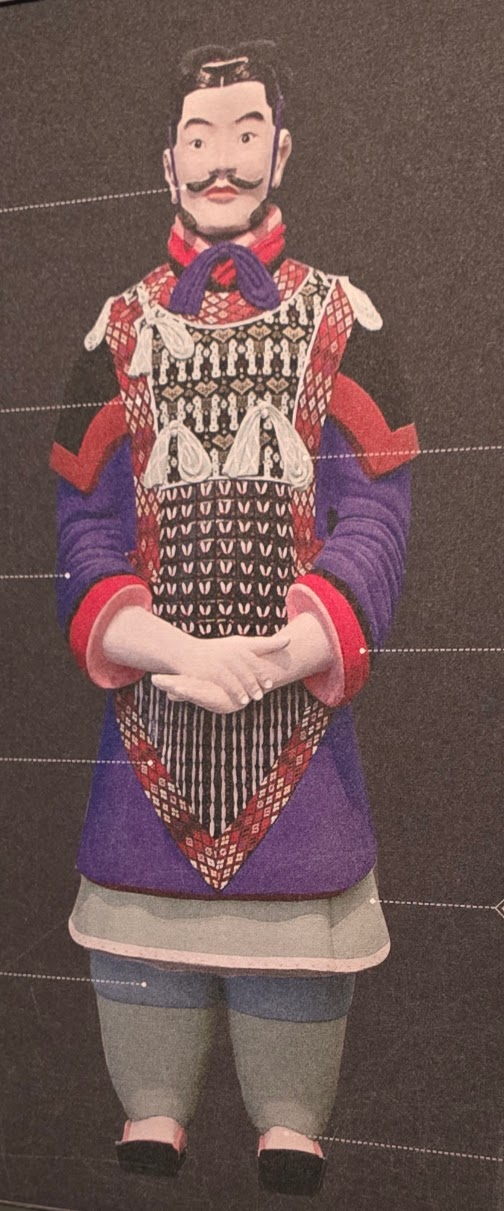
A museum adjacent to the three open pits displays a lot of artifacts where I was able to see them up close.
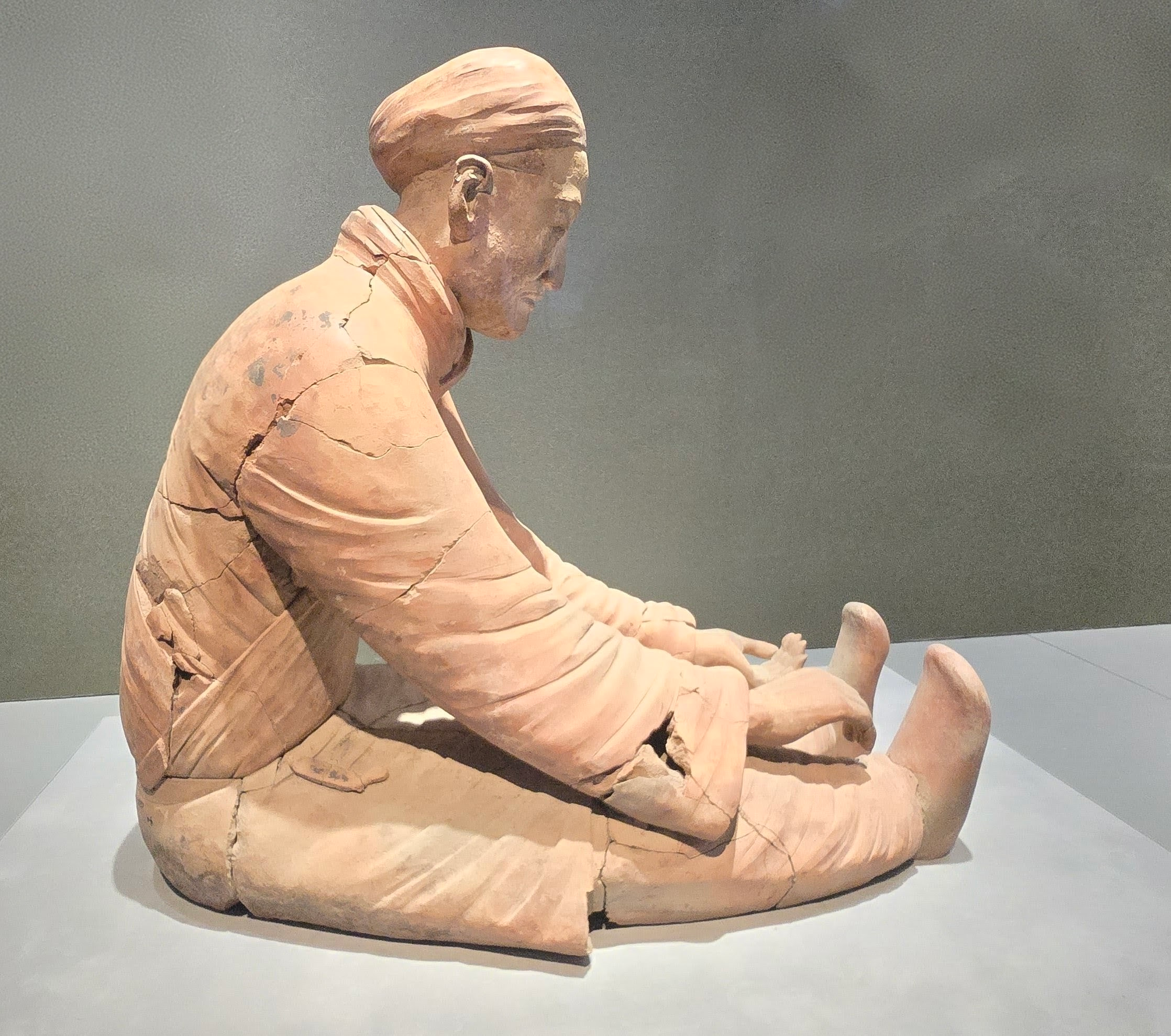
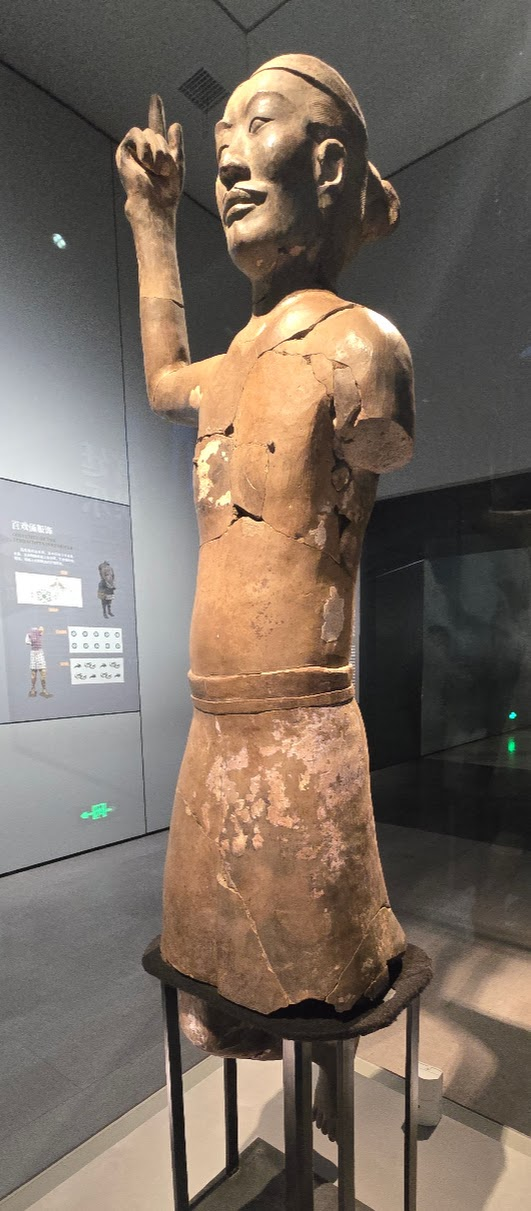
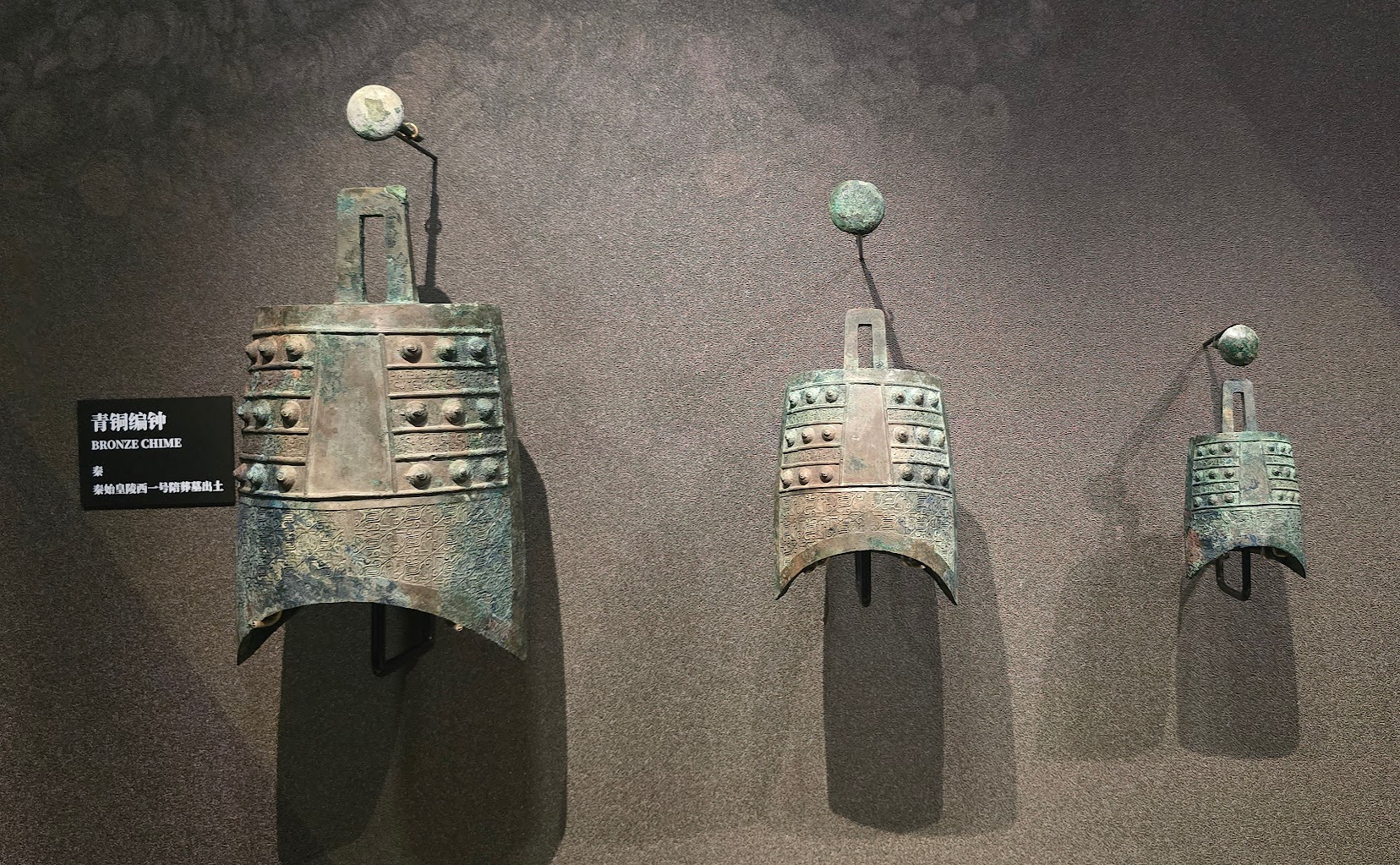
Pit 1
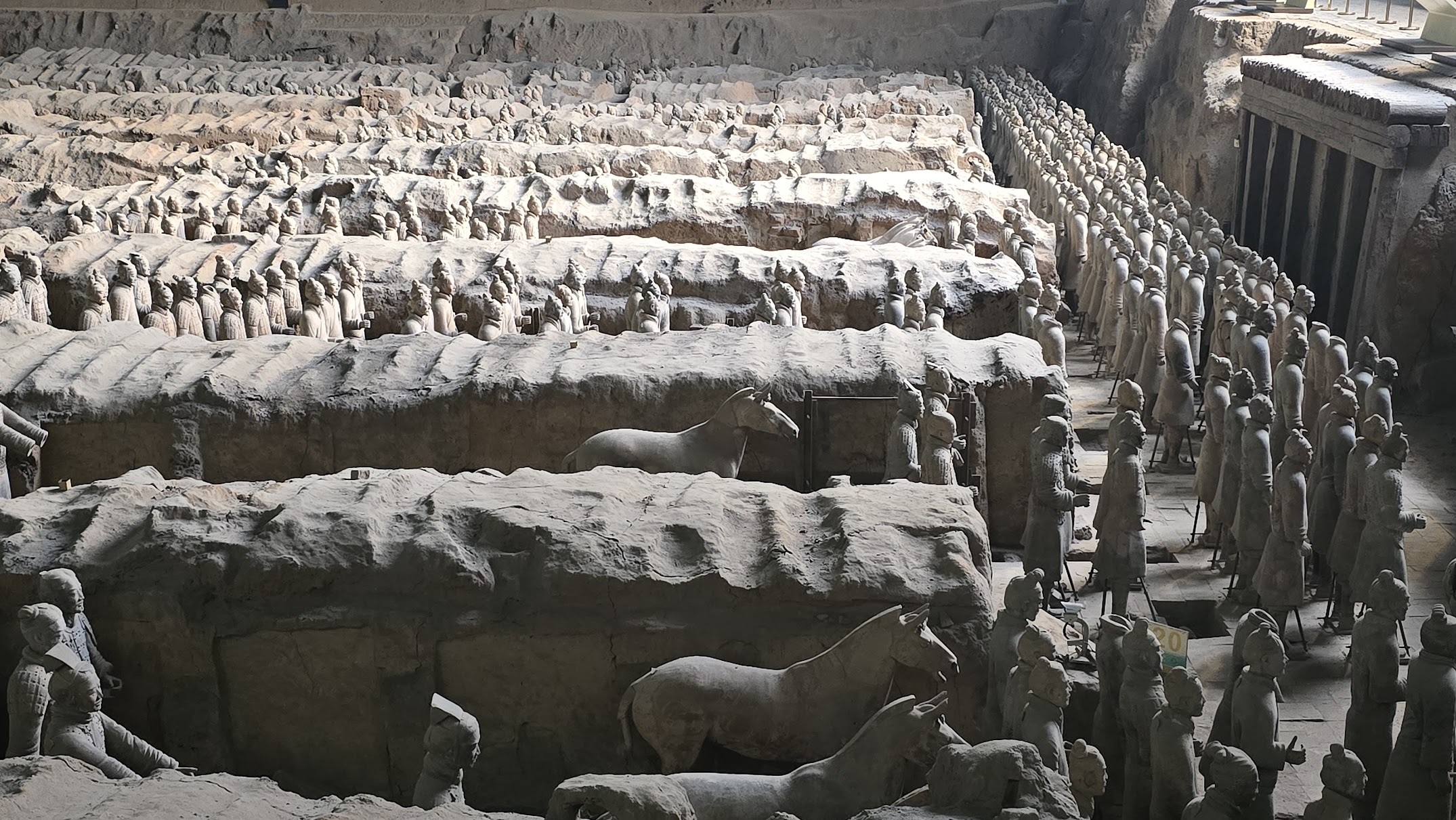
Pit 1 is the largest of the three pits open to the public. And as you can see from the photo up top, it is huge and very popular.
Only about 2,000 of the estimated 6,000 soldiers and horses buried in Pit 1 have been excavated.
I did manage to push my way to the railing a few times to get some good photos.
Pits 2 and 3
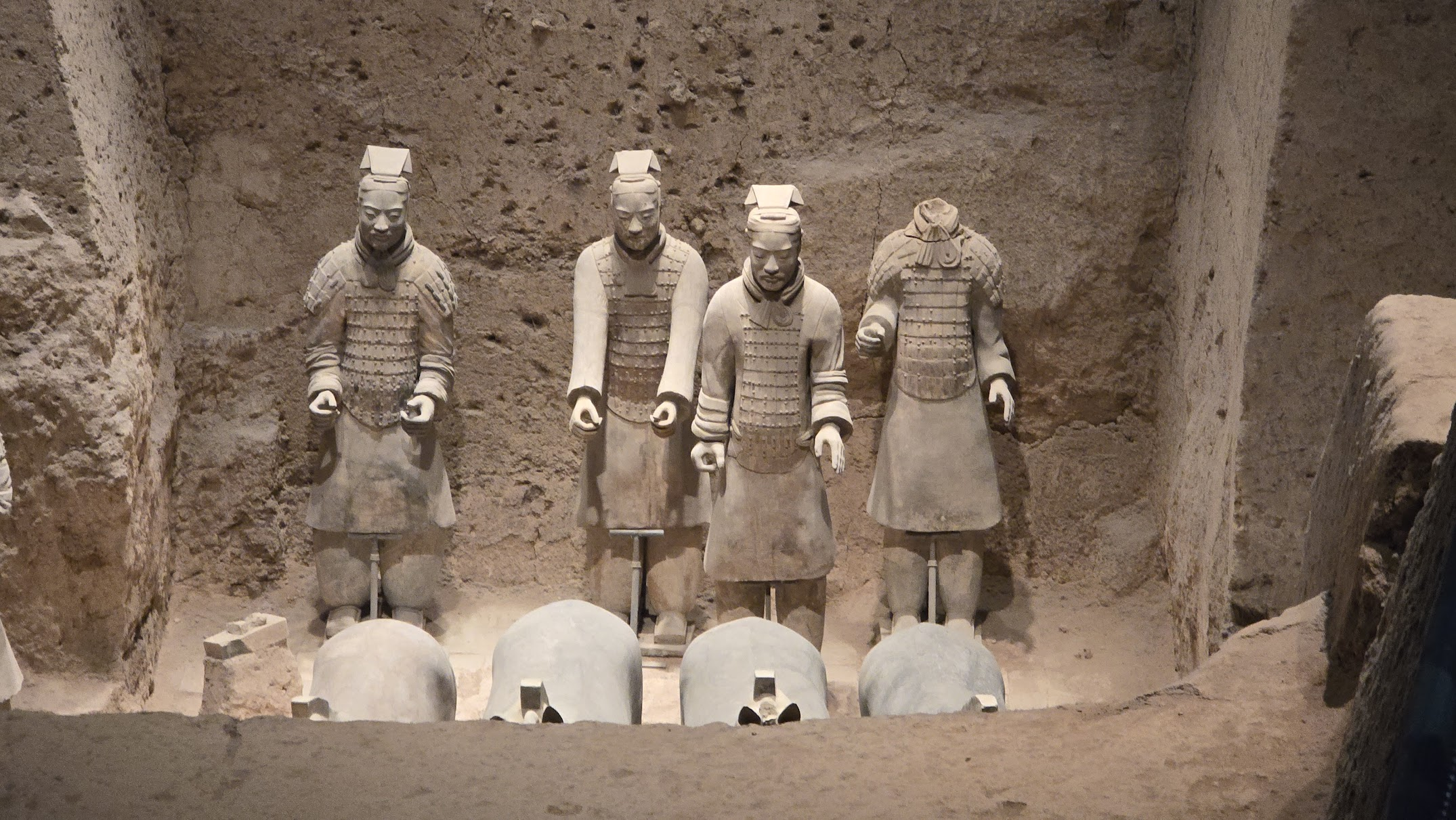
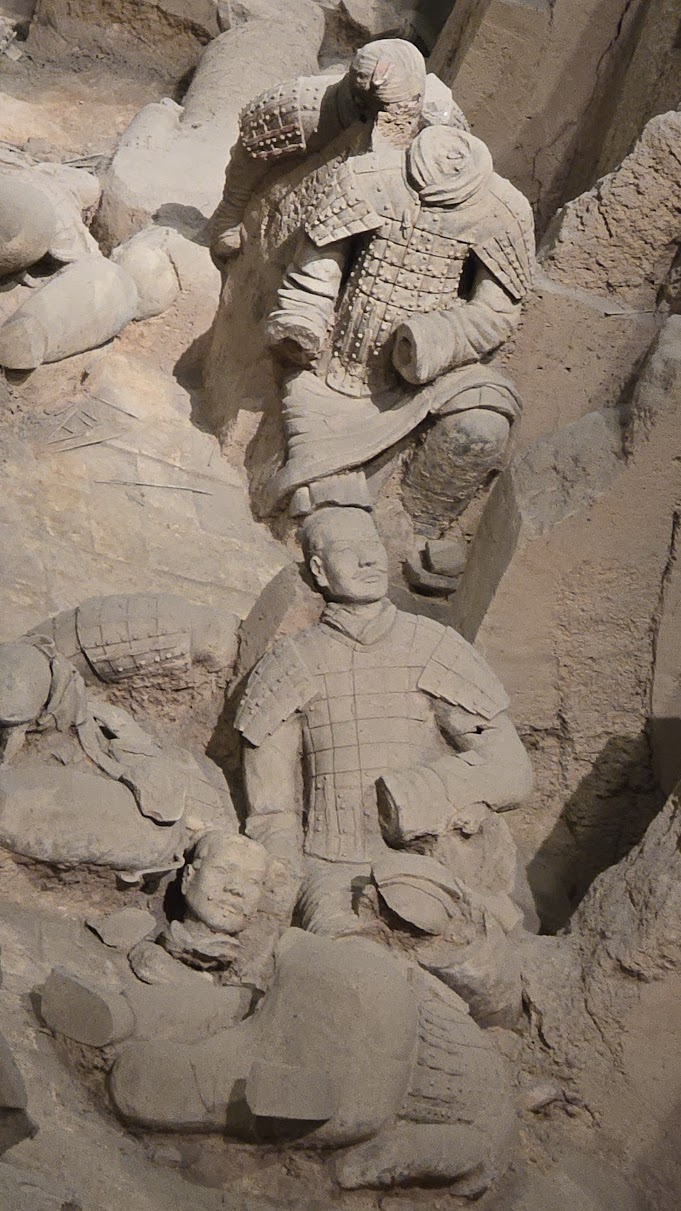
These pits are much smaller than Pit 1. Pit 2 has a complex array of cavalry units, standing and kneeling archers, and chariot squads totaling about 1,300 figures. Pit 3 is the strategic “brain” of the military formation, housing 68 high-ranking officers, a single war chariot, and ceremonial weapons.
Of course, I have a ton more photos. The good news is I was able to connect to the VPN using the hotel WiFi, meaning I was able to upload all my photos from Chengdu and Xi’an. The bad news is I have somewhere around 700 photos to organize, so I won’t be able to share them all until later. (Don’t worry, most of them are likely to be deleted.)
Other things to see in Xi’an
Xi’an is one of the oldest cities in China. It served as the capital to thirteen imperial dynasties and spent over 1,100 years as the political, cultural, and economic center of the Chinese empire, longer than any other city in Chinese history. So there’s lots of interesting things to see here.
Walls
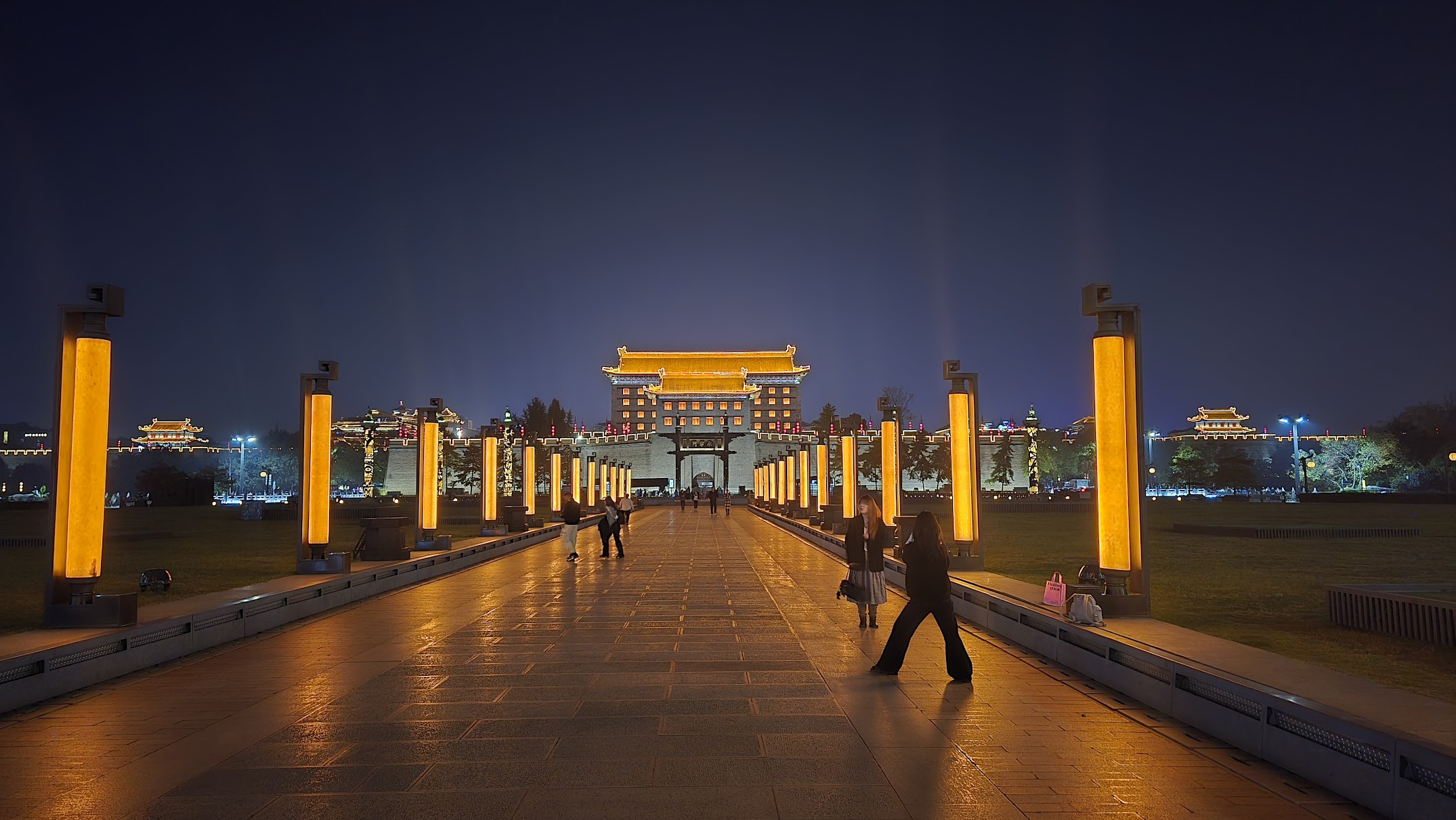
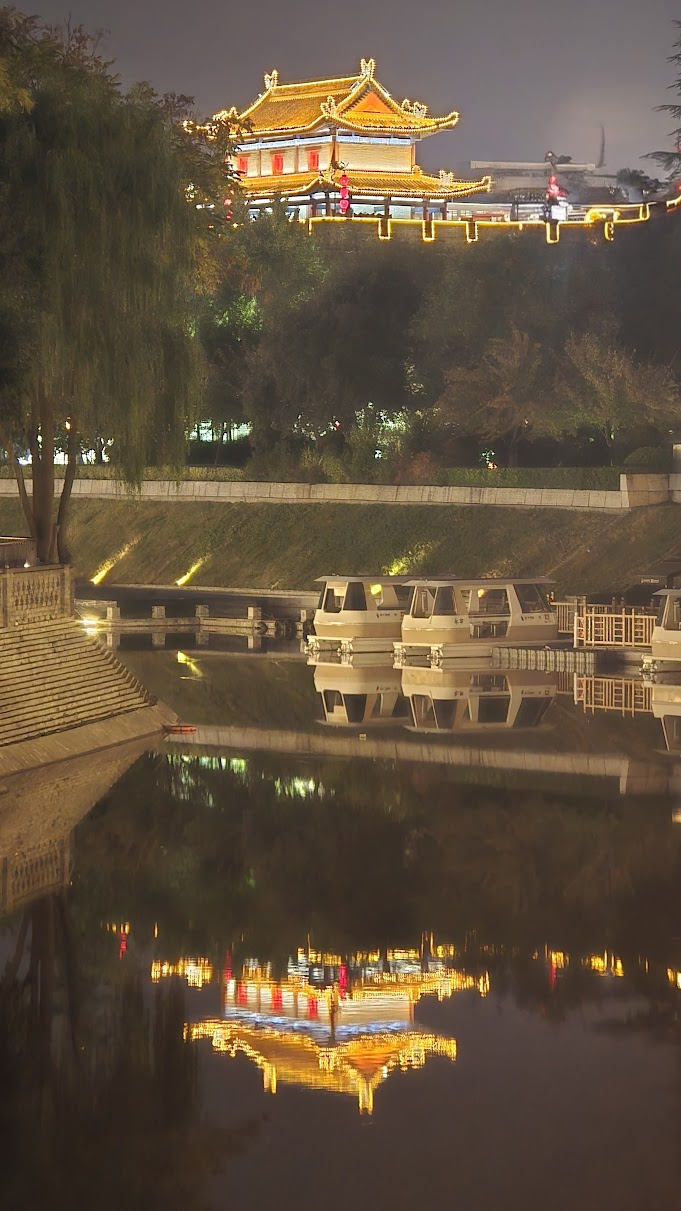
The old city of Xi’an is surrounded by walls that have been beautiful restored, with elaborate gates on each side.
Bell Tower and Drum Tower
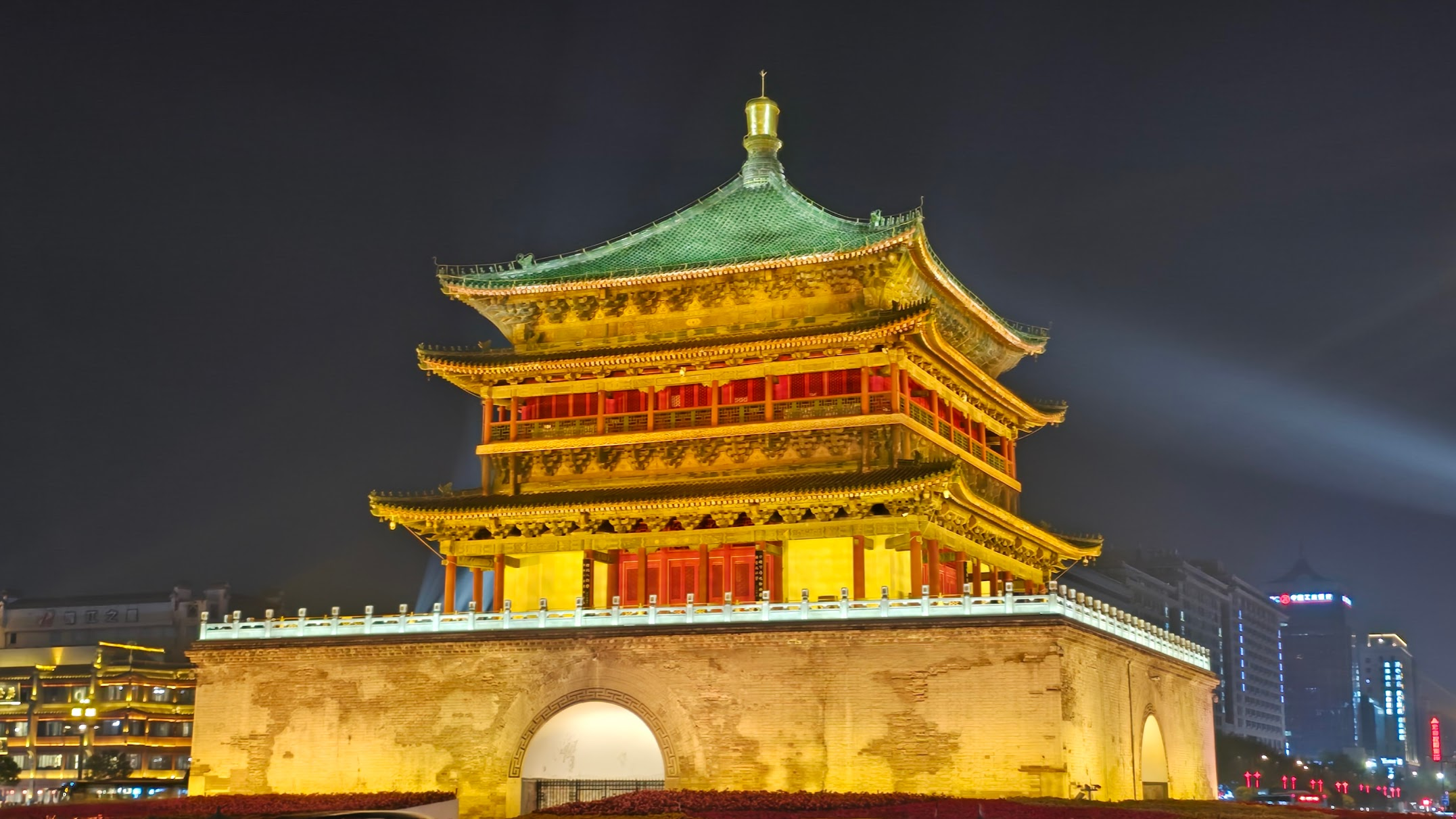
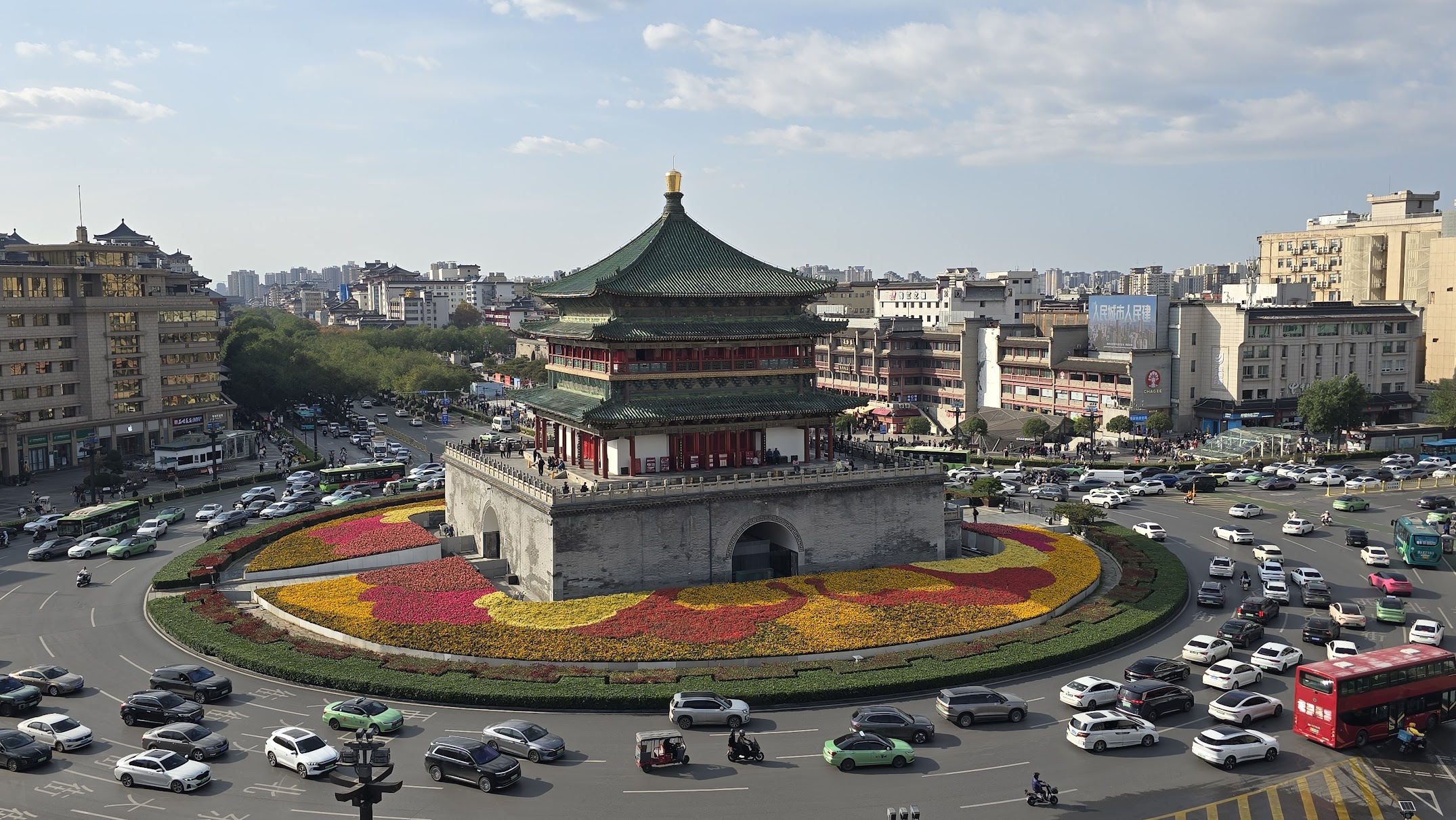
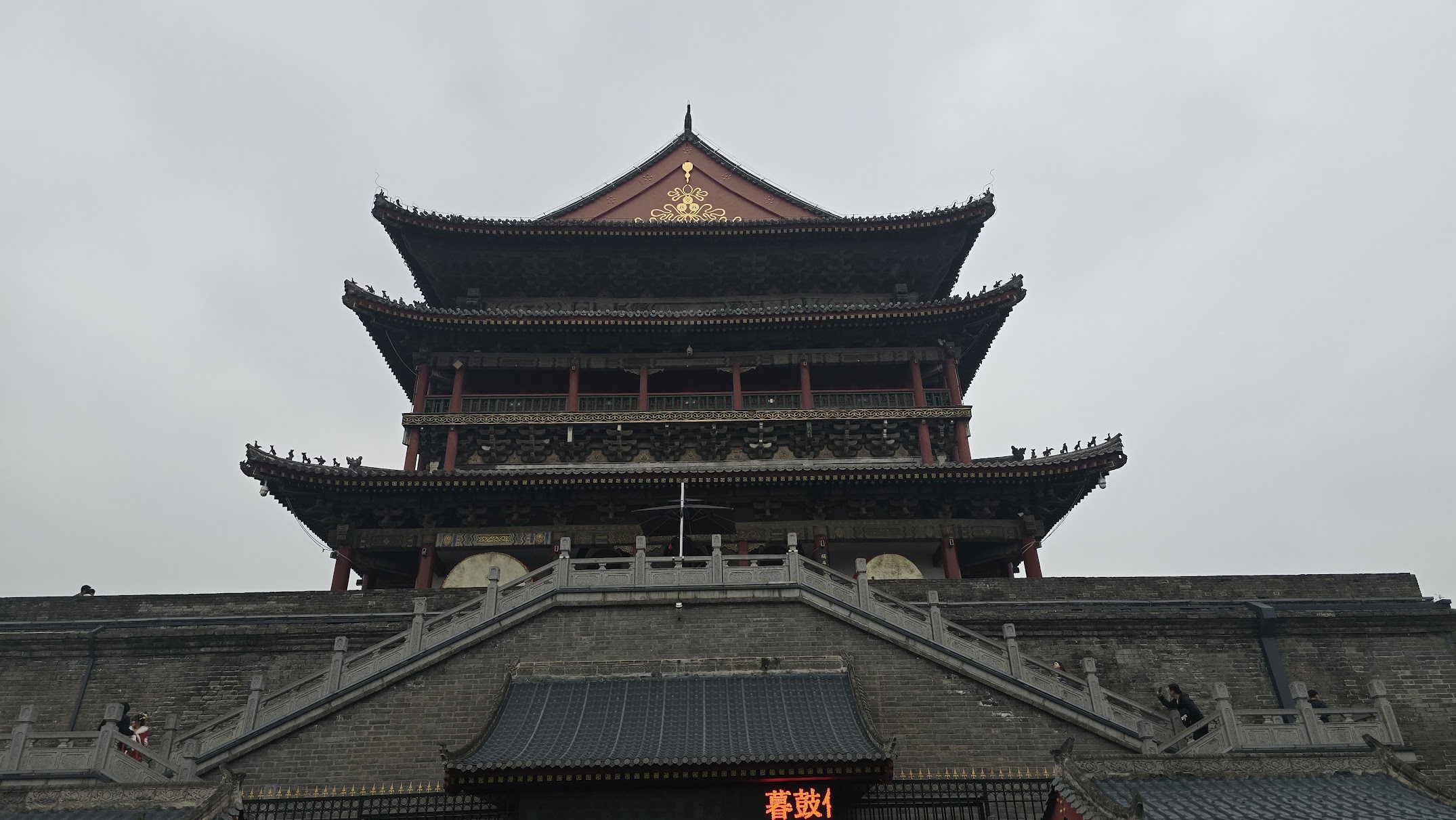
Medieval Chinese cities had a bell tower that signaled the start of each day and the opening of the city gates. And they had a drum tower. The beating of the drum indicated the closing of the gates.
The Great Mosque of Xi’an
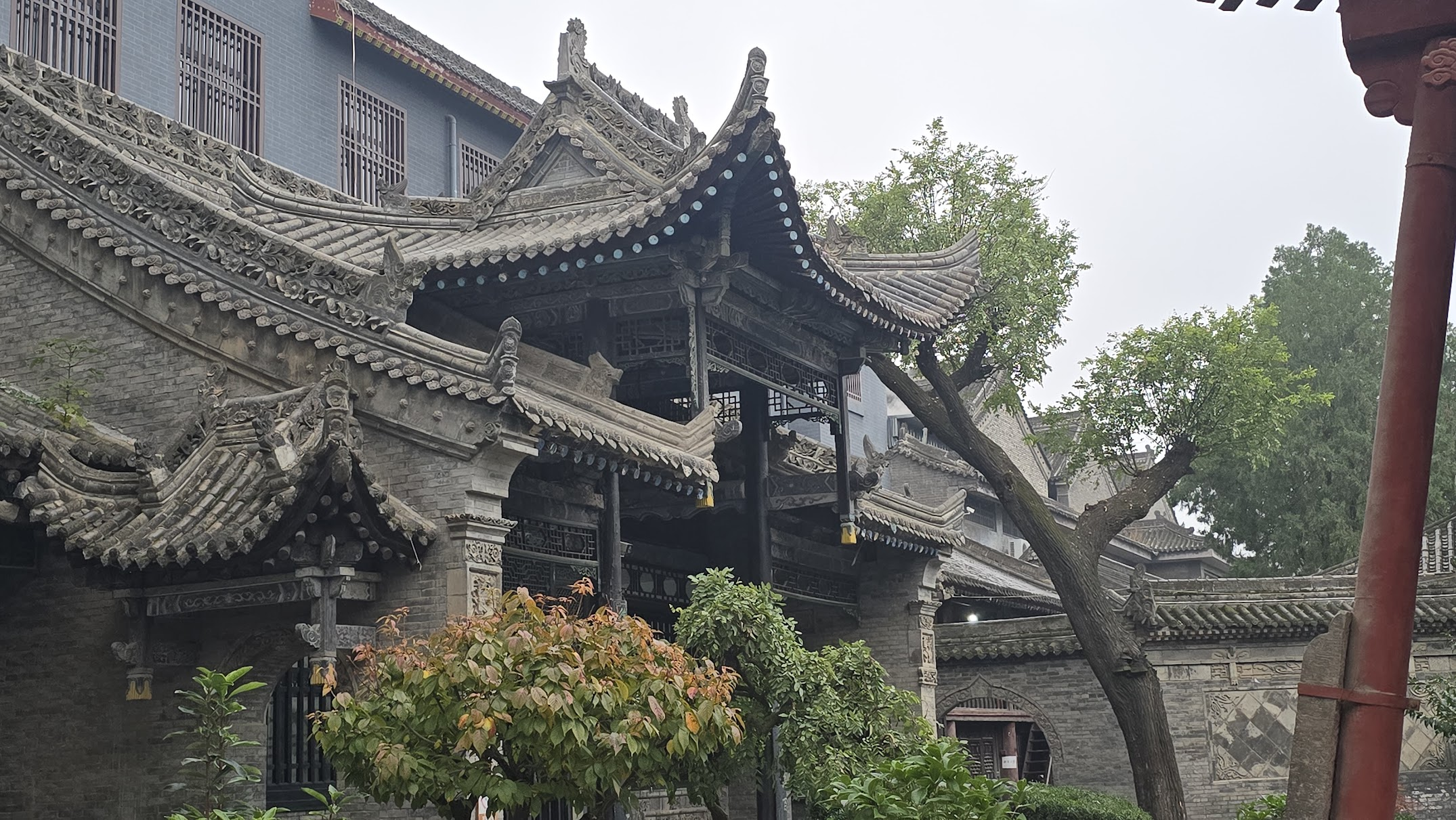
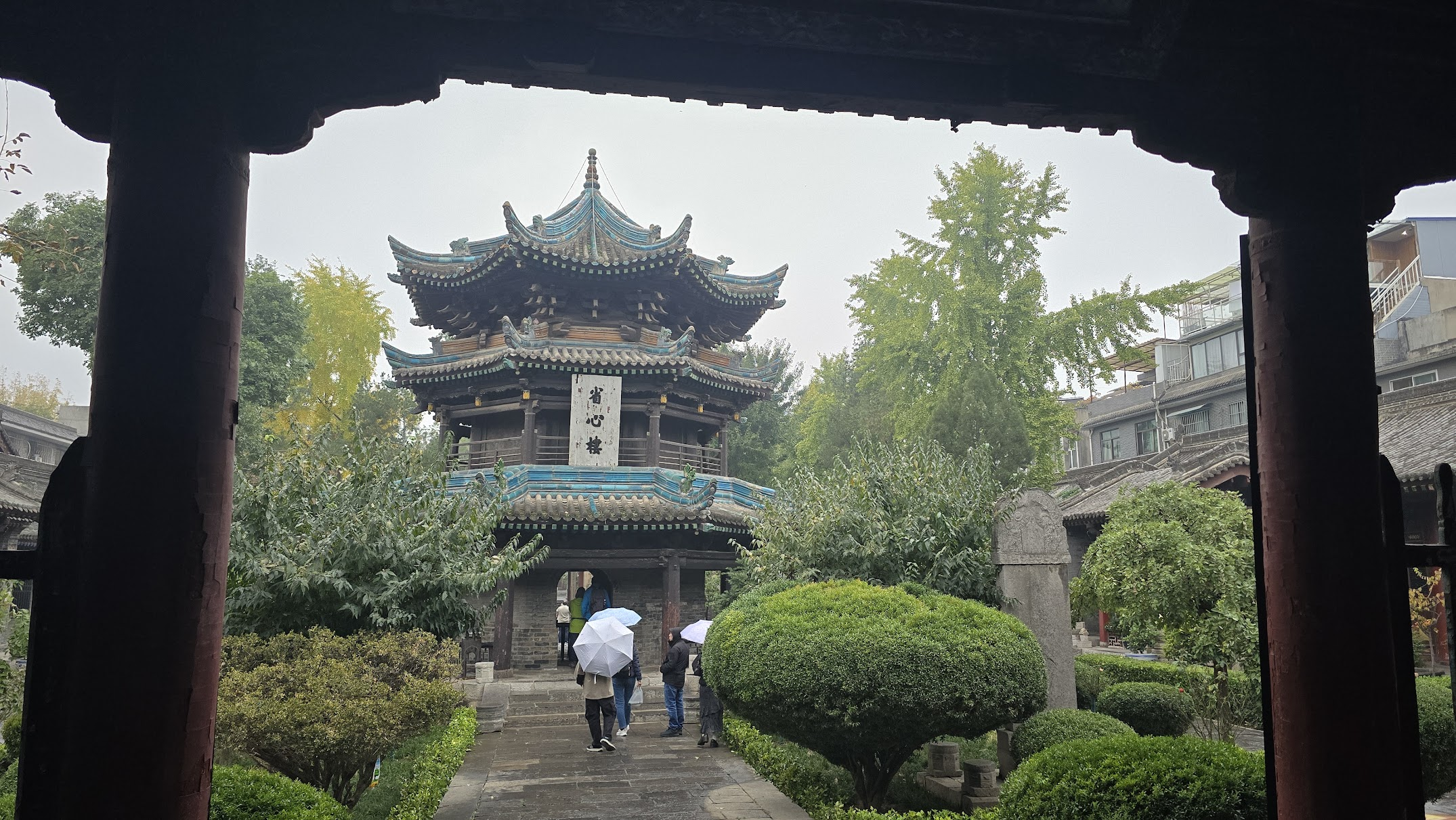
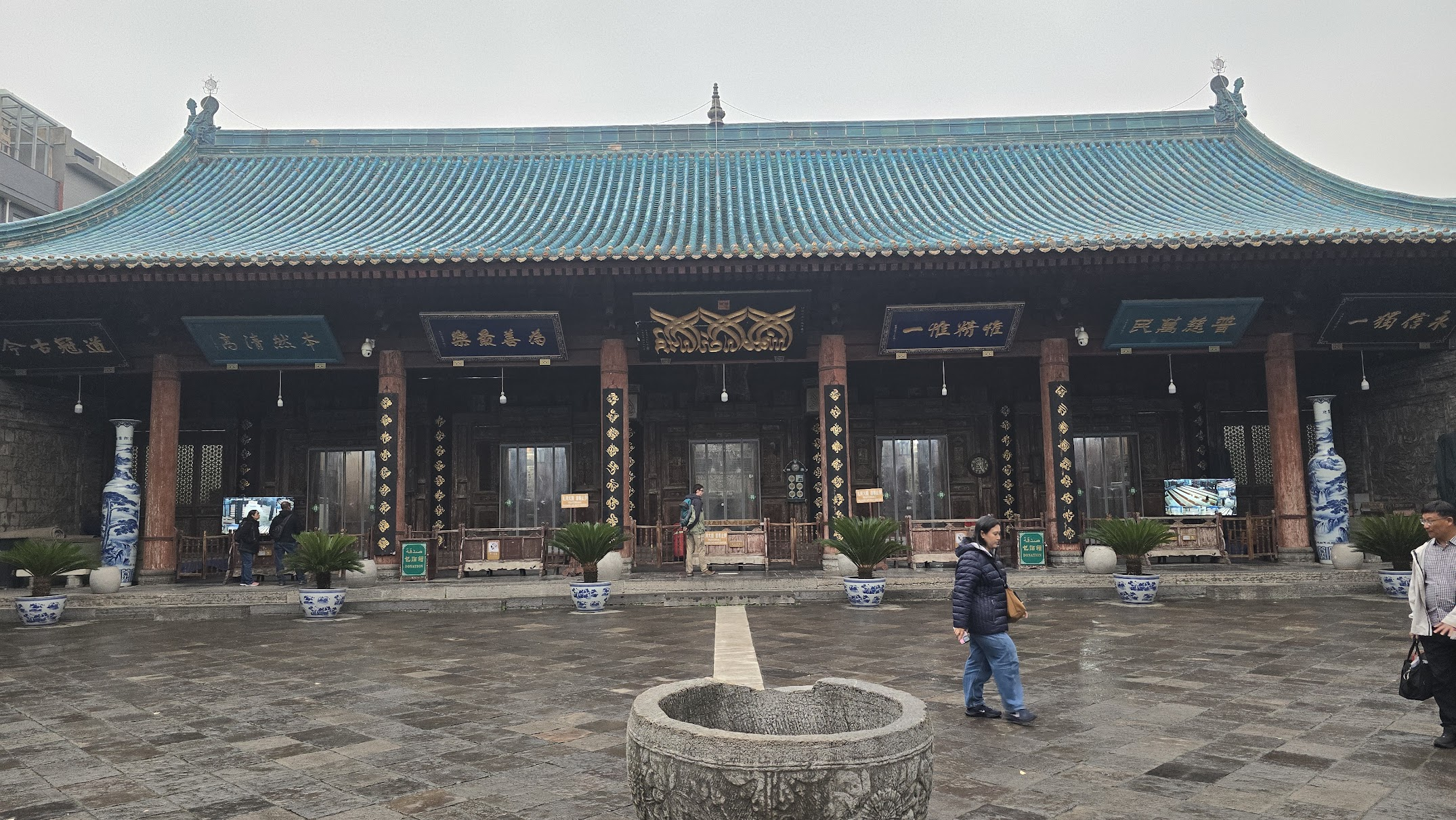
There are something like 10 million Hui Muslims living in China, dispersed throughout the country, and other Muslim sects that are more concentrated in the west. Here in Xi’an there are about 60 to 80 thousand Muslims, and Xi’an has a Muslim quarter with a mosque that is the oldest and best preserved in China.
Most of the Hui Muslims came here as merchants, following the silk road, so they’ve been here for well over a thousand years. The Great Mosque of Xi’an dates back to the Tang Dynasty. It was established in 742.
Thoughts
I have so many more photos of wonderful things I saw in Xi’an, and I’ll be sharing them as soon as I can find the time to organize them. But I want to share some thoughts first.
China is so different from what I imagined. Coming to a place where there is limited freedom, I never expected to find so many people thriving. There seems to be so much joy. There is poverty, yes, but there is also much prosperity. Cities are clean. The food is astonishingly good. People are out and about, on the streets and in parks, exercising or strolling, shopping, eating, laughing. They are curious about us, frequently taking photos of us as we learn Tai Chi from a local master or watch calligraphers write with water on the pavement.
It feels safe here. People feel secure.
I guess there is a trade-off. Security comes with a price. No freedom of speech or the press. People don’t know a lot of things. And they don’t know that they don’t know. Maybe ignorance really is bliss.
Would you trade freedom for being part of a culture of respect and happiness? Before visiting China, I would have said not in a million years. But now, having been here a few weeks, I have to say the answer is still no, but far less definitive.
Wow! This is amazing. I didn’t know much about the terra cotta army. Thanks for enlightening me!
Lane
It is poignant for me to view your photos and experience the astounding artistic and engineering feats of an ancient civilization while back home in the USA we are dealing with the likes of the white Supremacist Stephen Miller who declares that only descendants of white Europeans are worthy and that everyone else is uneducated, stupid and evil with the intent to despoil our country.
Apologies for the politics but your post hit a spot for me today.
Wonderful photographs-Happy Travels
Margo