
Chengdu: Pandas and Kung Pao
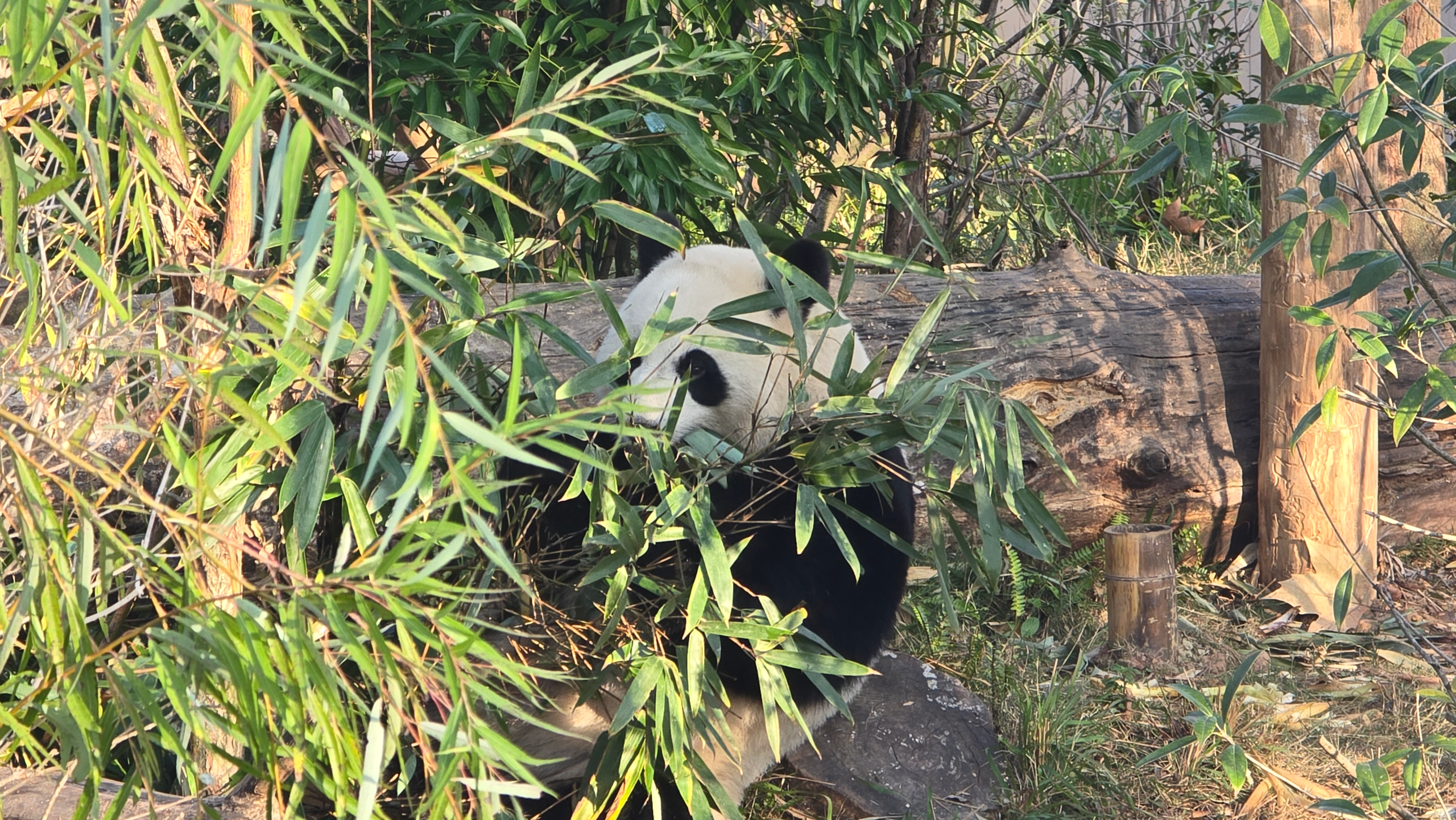
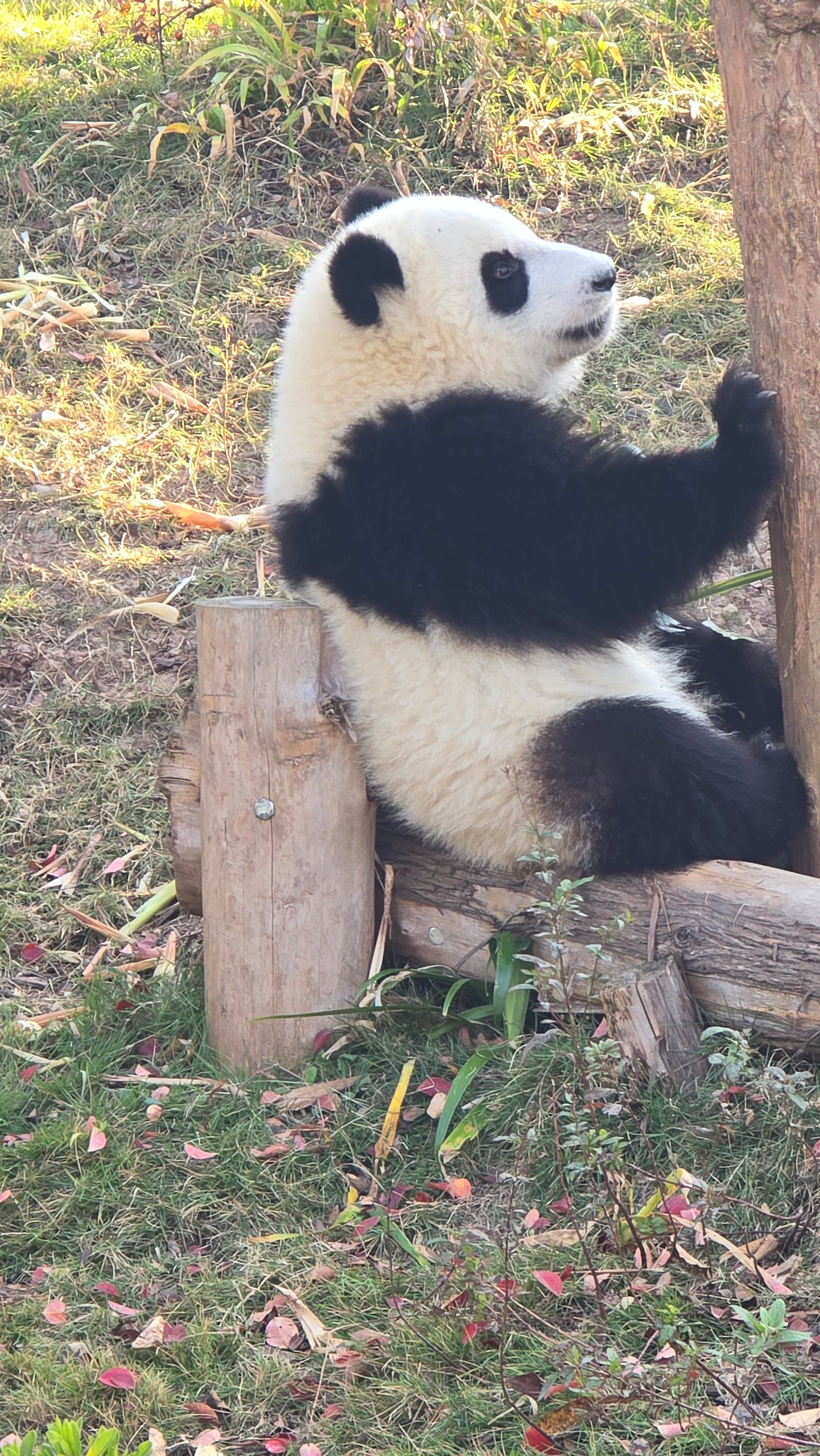
On Tuesday we flew from Guilin to Chengdu, where we are spending three nights. Yesterday was our last full day here. And I’m back to a situation where I cannot upload photos in bulk because I can’t get my VPN to work with the hotel WiFi, so I won’t be able to share the hundreds of photos I took at the Chengdu Research Base of Giant Panda Breeding. Just one or two.
About Chengdu
The population of Chengdu is about 21 million. That makes it the fourth largest city in the world counting the city proper. But that also makes it the fourth largest city in China. (Chengdu drops to thirteenth in the world if you count the entire urban area.)
Chengdu is the capital of Sichuan province. So in addition to being the home of the giant panda, it is the home of Sichuan cooking, including the Sichuan peppercorn and kung pao chicken. Sichuan cuisine was the first Chinese food I ate that wasn’t chow mein or egg foo yung or barbecued spare ribs. In other words, I didn’t eat it until I was an adult. And I have just learned that the chili pepper, a staple of Sichuan cooking, wasn’t introduced here until the 17th century, when Portuguese traders brought them from the Americas. (The Sichuan pepper, however, is unrelated to chili peppers. It is native here and has been used for medicinal purposes for over two thousand years.)
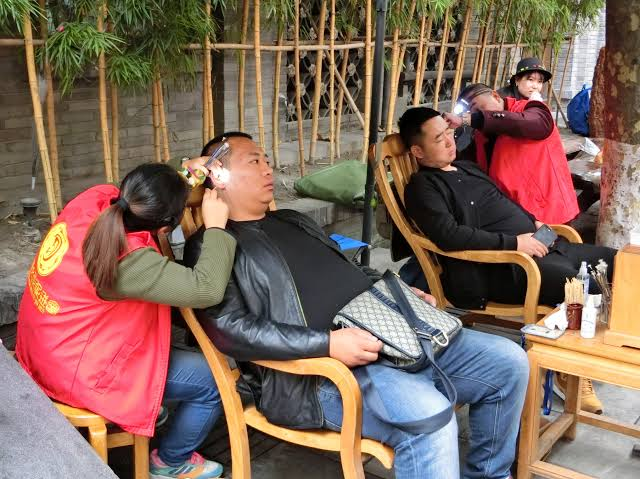
Chengdu is also known as China’s party city and the “Land of Abundance.” It is famous for its laid-back lifestyle. There are more bars here than in any other Chinese city, and there are some 30,000 tea houses where, in addition to drinking tea, one can play mahjong, get a massage, or get an ear cleaning.
A Chinese saying
This has nothing to do with Chengdu, but I wanted to share this saying that Jenny, our trip leader, told us about the other day.
For a Chinese man to have the happiest life, he should get an American salary, a British house, a Chinese cook, and a Japanese wife.
For a Chinese man to have a miserable life, he should get a Chinese salary, a Japanese house, a British cook, and an American wife.
And a story about learning English
When Jenny was young, and newly learning English, she was riding on a crowded bus, and accidently stepped on a man’s foot. Seeing he was a foreigner, she thought she could practice her English.
“I’m sorry,” she said.
The man replied, “I’m sorry too.”
This confused her, so she replied, “I’m sorry three.”
Then the man said, “What are you sorry for?”
Now she was really confused. How should she reply? “I’m sorry five”???
Pandas
There’s not much to say about pandas. They are very cute.
Pandas are listed as vulnerable. They were previously endangered, but China’s excellent breeding and conservation programs are helping the population increase. An estimated 1,900 live in the wild, and an additional 750 or so in captivity, including 280 at the research center we visited.
Zoos around the world pay Chinese research facilities something like one million US dollars per year to “rent” pandas.
Home-hosted dinner
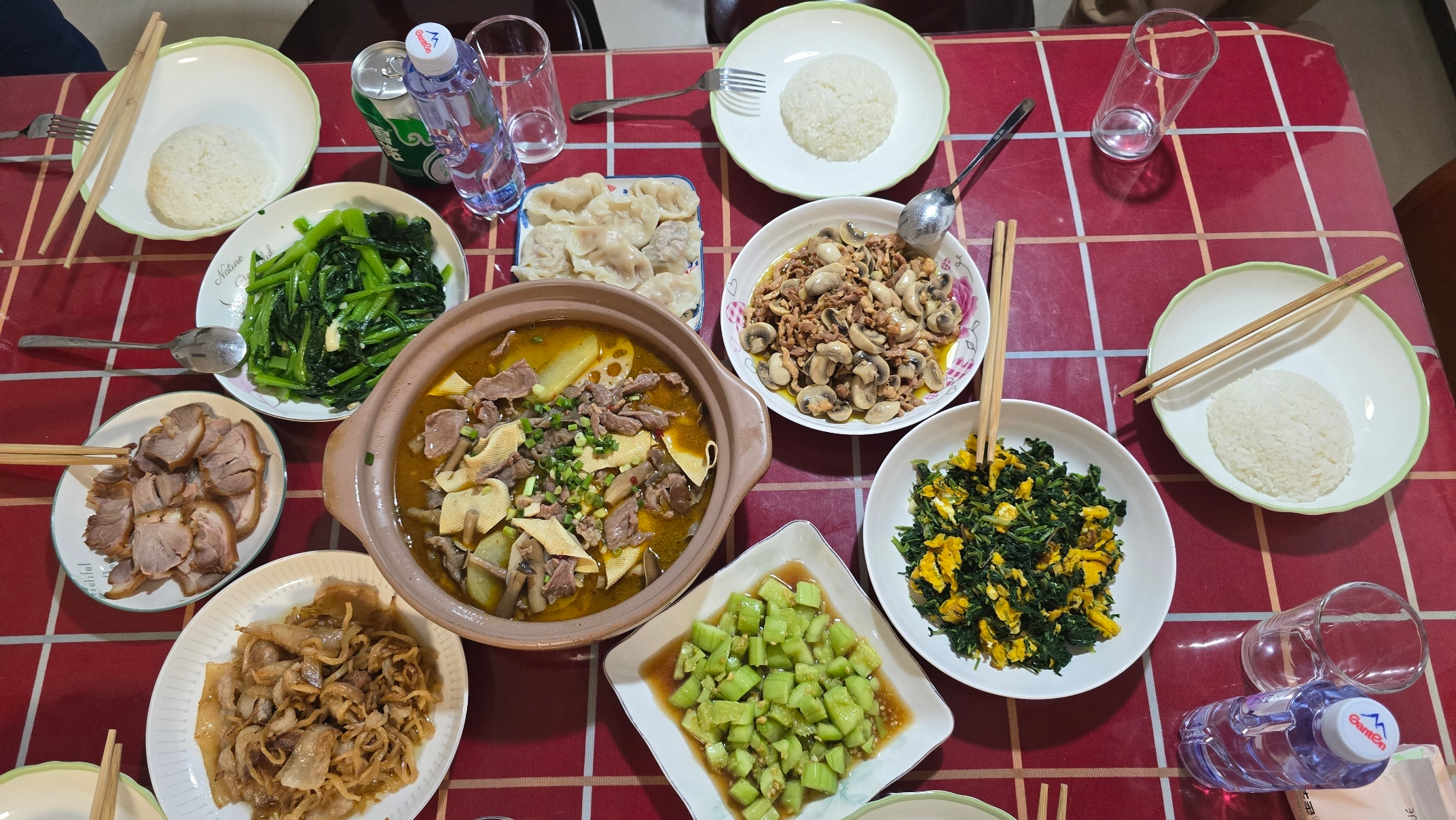
One of the cool things OAT offers on its tours is a home-hosted dinner. This is a chance for us to visit a local family without a guide or trip leader. We chat, they serve us dinner, and and we learn from each other. (Of course, OAT pays them and covers the cost of the food.)
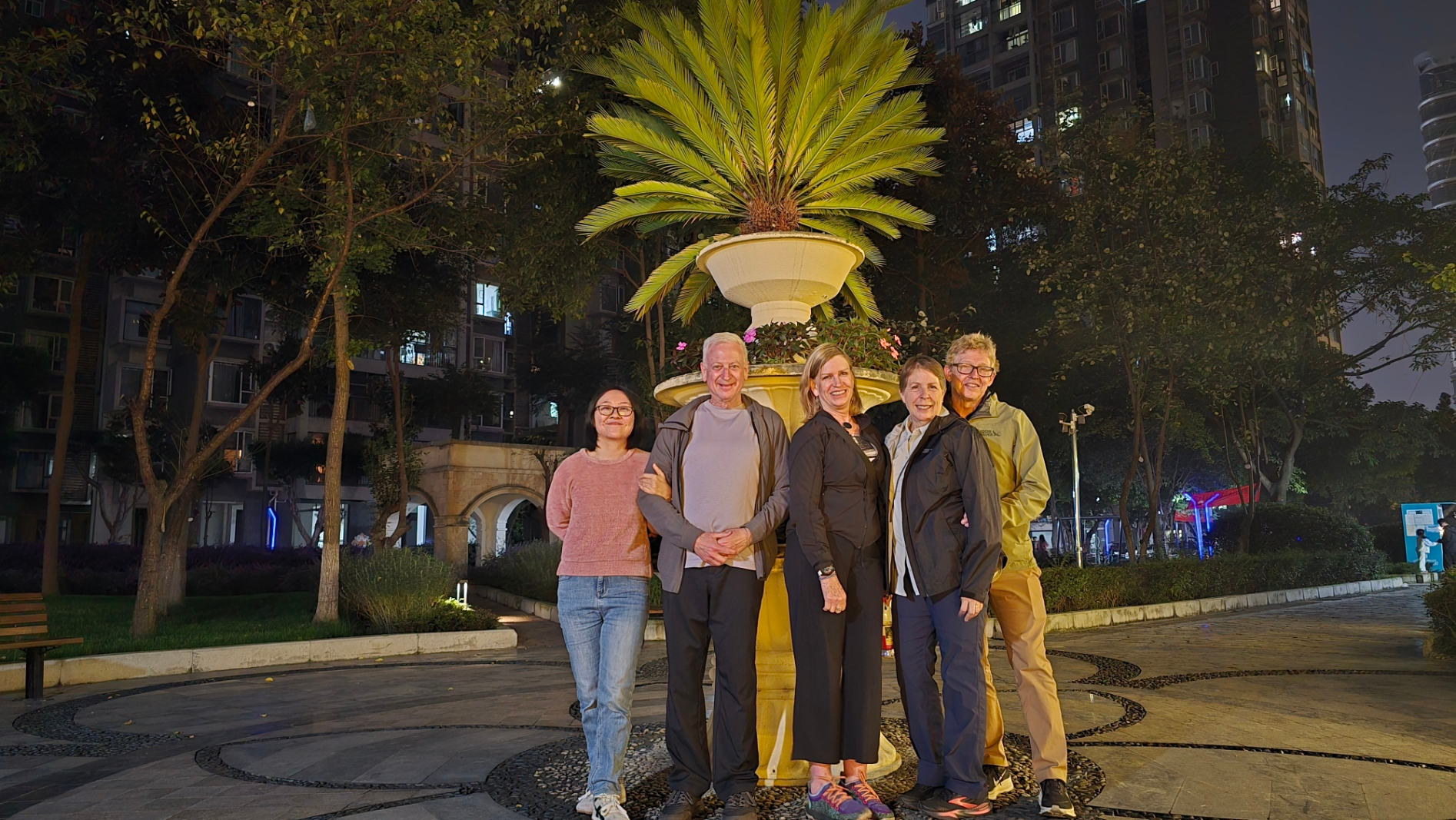
Vivian is 38. She works as a software engineer, but she feels that this is not her calling. She isn’t sure what she wants to do, but with her excellent English (which she taught herself three years ago), her outgoing personality, and her seemingly boundless energy, I could imagine her doing anything she sets her mind to. Vivian told us that when she applied for her last job, it required fluency in English. At the time she didn’t speak English, but she promised them she’d learn it in three months, and she did.
At the end of the night I asked Vivian if she could change any one thing about China, what would it be. And she said she would make it a more accepting place for single moms and for gays and lesbians.
Cooking school
Yesterday morning we visited the Sichuan Cuisine Museum of Chengdu. The museum itself wasn’t anything special, and it was overrun with school kids on field trips. (They were all so thrilled to see foreigners in their midst!)
The real highlight of our experience there was cooking school. We made two local dishes and then got to eat our creations for lunch. Most all the ingredients were measured for us, and our instructor gave us very precise directions on how to do everything. But we did get to control the spice level, and I amped up the spice in both my dishes.
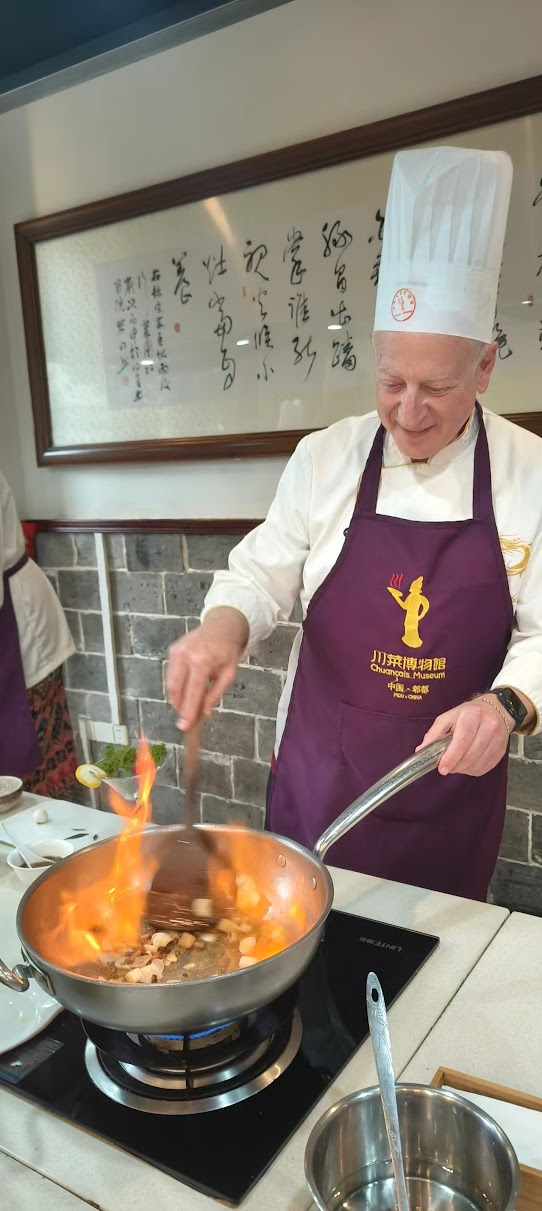
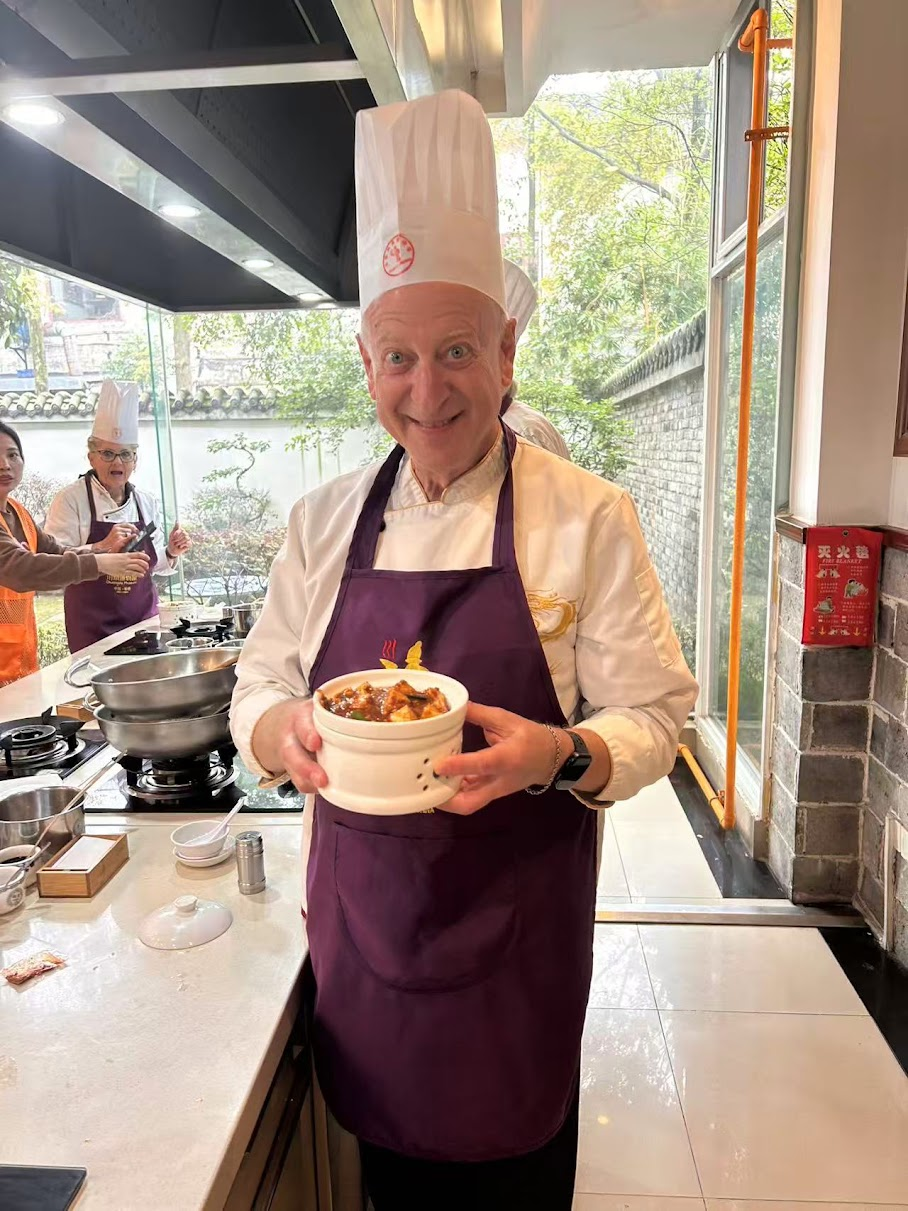
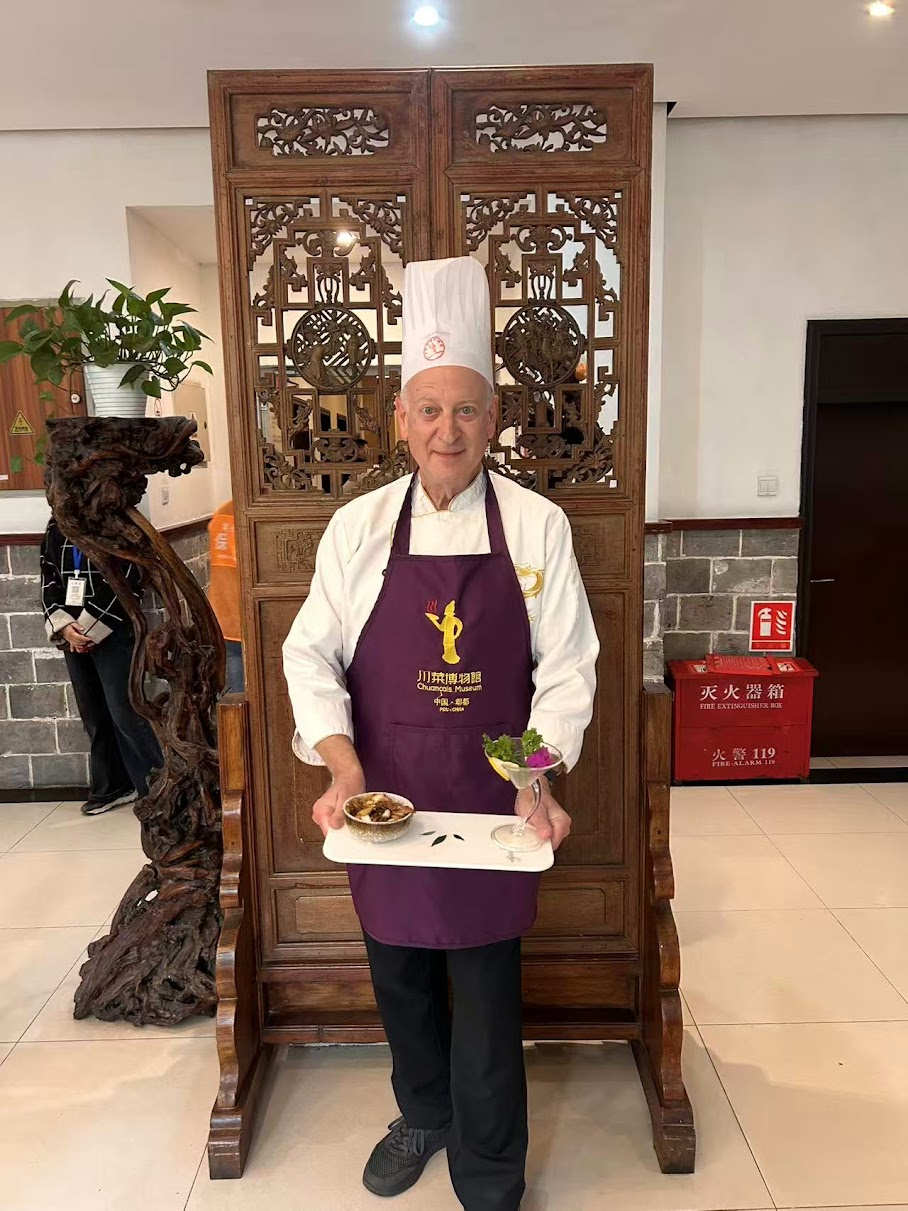
It turns out I’m not a bad cook: my lunch was delicious!
The People’s Park
On our way back from cooking school, we stopped at the People’s Park, Chengdu’s social headquarters. It seemed as if the entire city was there, enjoying a beautiful afternoon.
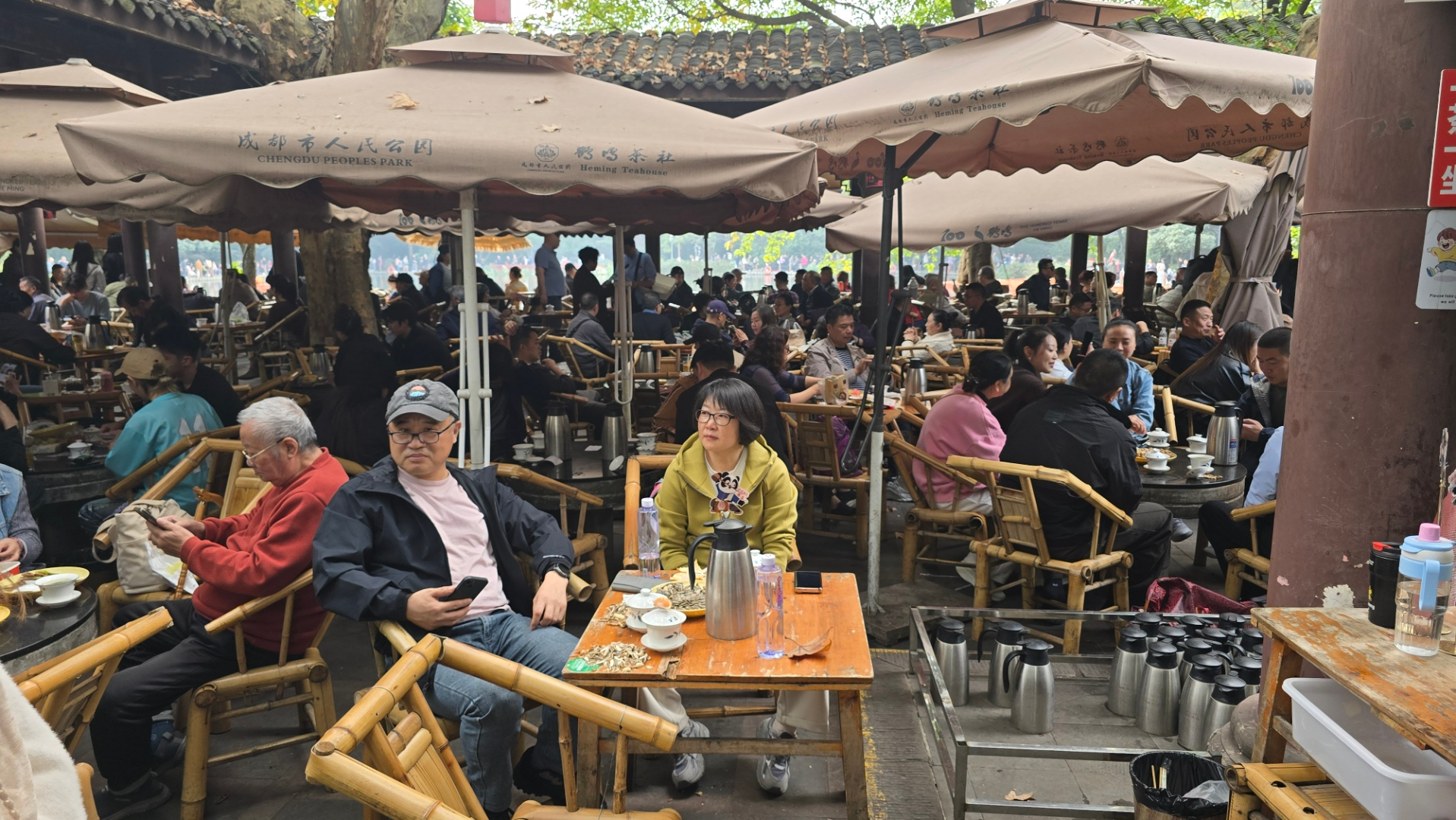
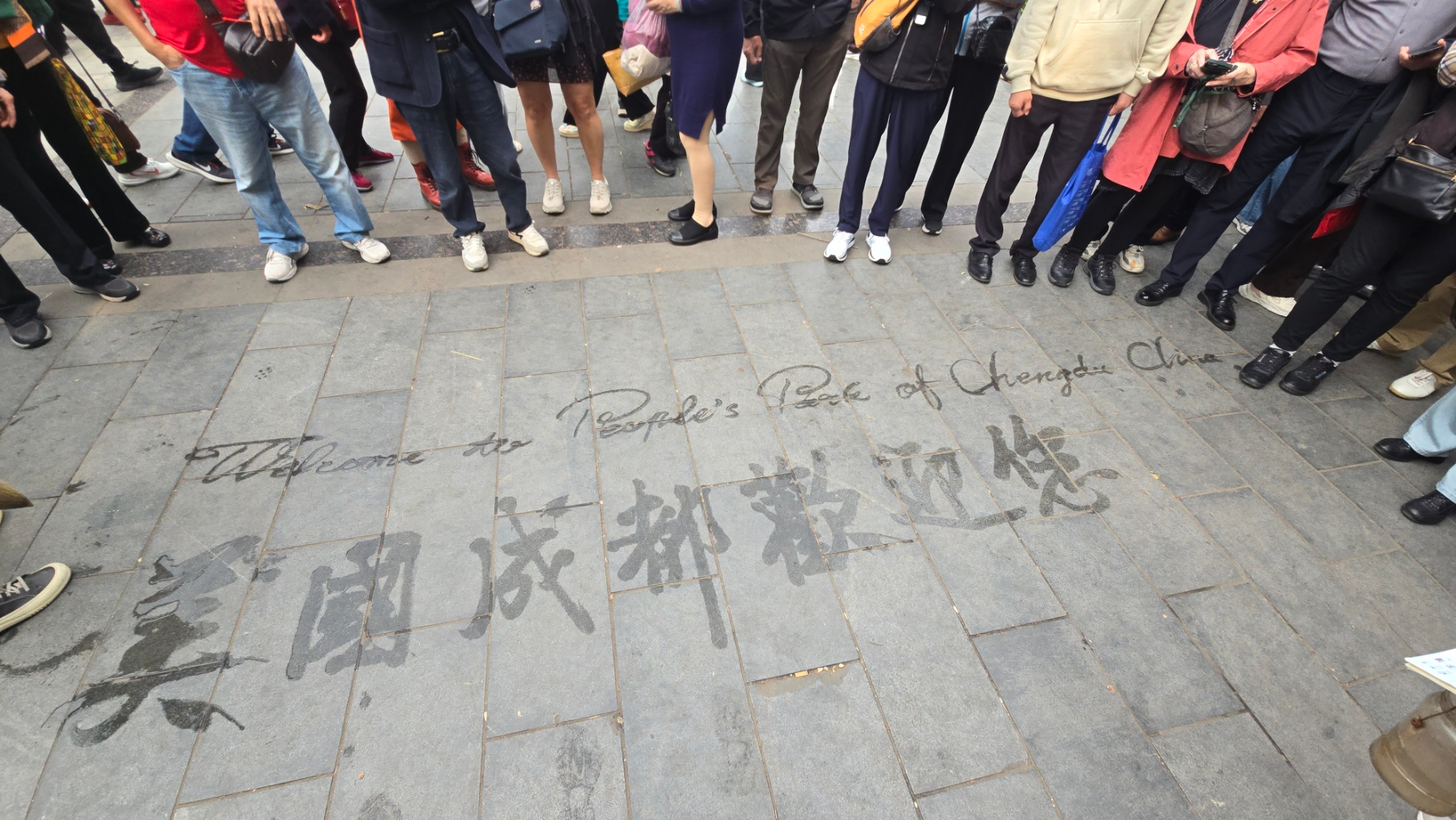
A woman standing next to me asked me where I was from, and she translated the Chinese characters the men were writing. She was so happy to welcome me to China and to Chengdu. It occurred to me that many Chinese think of the US as a place filled with crime and violence and homelessness, and that we are lucky to have the money to come to a place like China, which is safe and clean.
Today we are off to Xi’an, and tomorrow we will visit the terra cotta warriors and horses. Sorry I can’t share more photos.