
My last day in Korea: North and South
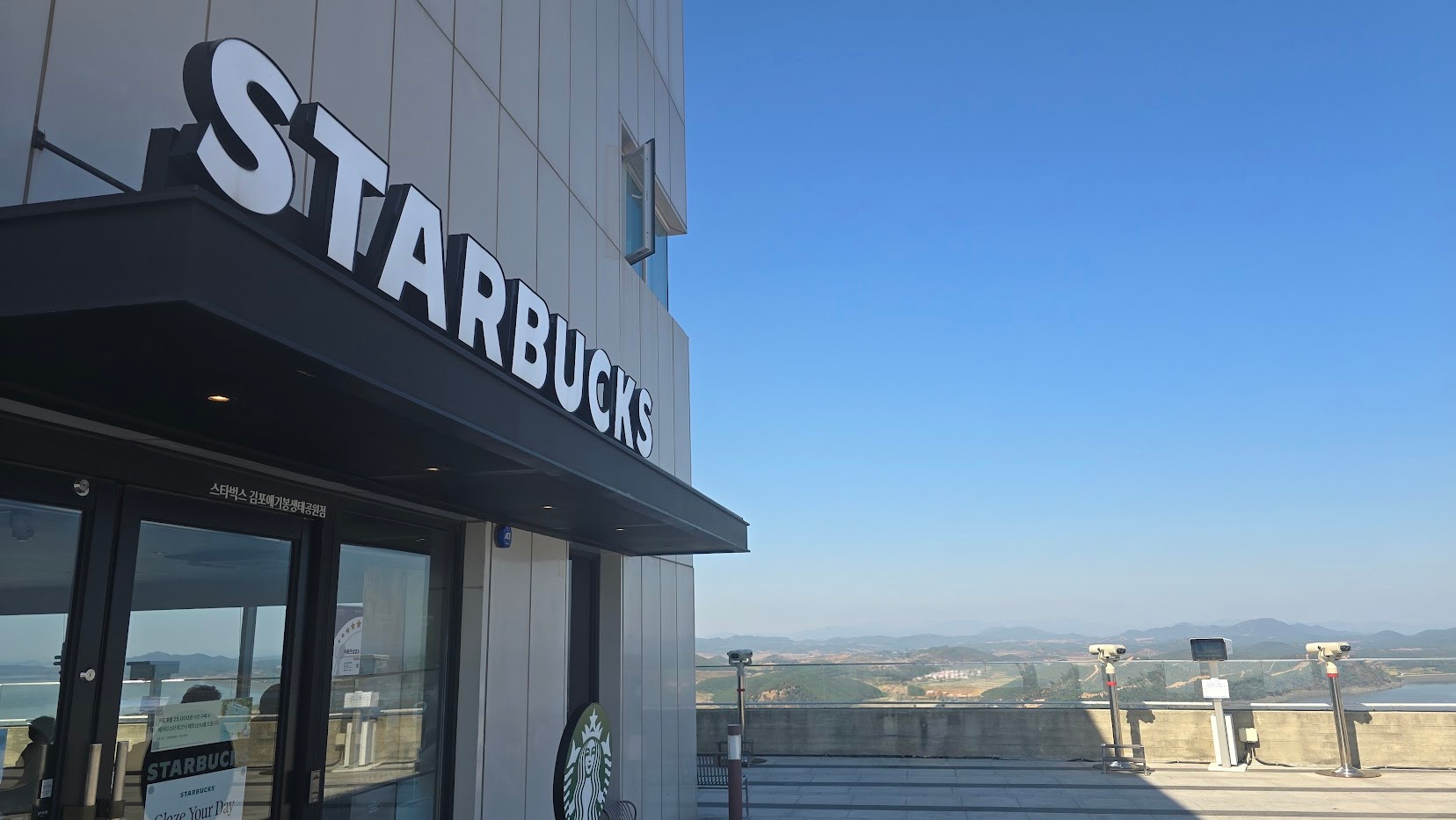
No, I didn’t make it to North Korea, but yesterday we went to the DMZ and looked across the Jo River to get a glimpse while enjoying some Starbucks. We also had a chance to meet with a defector from North Korea and hear her story. It was a fascinating way to spend my last day in Korea.
History
Before I delve into the day’s activities, it’s time for a history lesson, courtesy of Google Gemini.
Ancient Korea and the Three Kingdoms (2333 BCE – 676 CE)
- Gojoseon (2333 BCE – 108 BCE): Traditionally founded by Dangun, Gojoseon is recognized as the first Korean kingdom, which eventually fell to China’s Han Dynasty.
- Three Kingdoms Period: The peninsula and Manchuria split into competing powers—Goguryeo (largest
and northernmost), Baekje (southwestern maritime kingdom), and Silla (southeastern kingdom), alongside the Gaya confederacy. - Buddhism and Culture: Buddhism and Confucianism arrived from China, deeply influencing architecture, arts, and statecraft across the kingdoms.
Unified Silla and Balhae (676 – 935 CE)
- Peninsular Unification: Allied with China’s Tang Dynasty, Silla conquered Baekje and Goguryeo, unifying most of the Korean peninsula.
- Balhae (698 – 926 CE): Refugees from Goguryeo established Balhae in the northern territories and
Manchuria, creating a ‘North-South States’ period. - Culture: Unified Silla experienced a golden age of Buddhist art and literature, centered around its capital in Gyeongju.
Goryeo Dynasty (918 – 1392 CE)
- Origin of Name: Wang Geon overthrew the Later Three Kingdoms and founded Goryeo, from which the modern name “Korea” is derived.
- Innovations & Invasions: Goryeo produced exquisite celadon pottery and invented the world’s first metal movable type. The kingdom later faced devastating Mongol invasions in the 13th century and became a tributary state.
Joseon Dynasty (1392 – 1910)
- Neo-Confucian State: General Yi Seong-gye founded Joseon with Seoul (then Hanyang) as its capital,
establishing a strict, scholarly Neo-Confucian social and political order. - Cultural Milestones: King Sejong the Great introduced Hangeul in 1443 to improve literacy among
common people. - Foreign Wars & Isolation: Joseon survived the destructive Japanese invasions (Imjin War, 1592–1598)
and Manchu invasions, earning the nickname ‘Hermit Kingdom’ due to its isolationist policies. - Korean Empire (1897–1910): Joseon was briefly proclaimed an empire before falling to external
pressures.
Japanese Colonial Rule (1910 – 1945)
- Annexation & Suppression: Imperial Japan annexed Korea in 1910, enforcing harsh assimilation
policies, cultural suppression, and forced labor until Japan’s defeat in World War II in 1945.
Division and Modern Era (1945 – Present)
- Post-WWII Division: Liberation brought Soviet occupation in the north and U.S. occupation in the south, leading to the creation of North Korea (DPRK) and South Korea (ROK) in 1948.
- Korean War (1950–1953): A brutal conflict broke out across the peninsula, ending in an armistice rather than a peace treaty, leaving the two nations separated by the Demilitarized Zone (DMZ).
- Contemporary Paths: South Korea transformed from a war-torn agrarian state into a major democratic and industrialized global powerhouse, while North Korea remained under a tightly controlled dynastic totalitarian regime.
A defector’s story
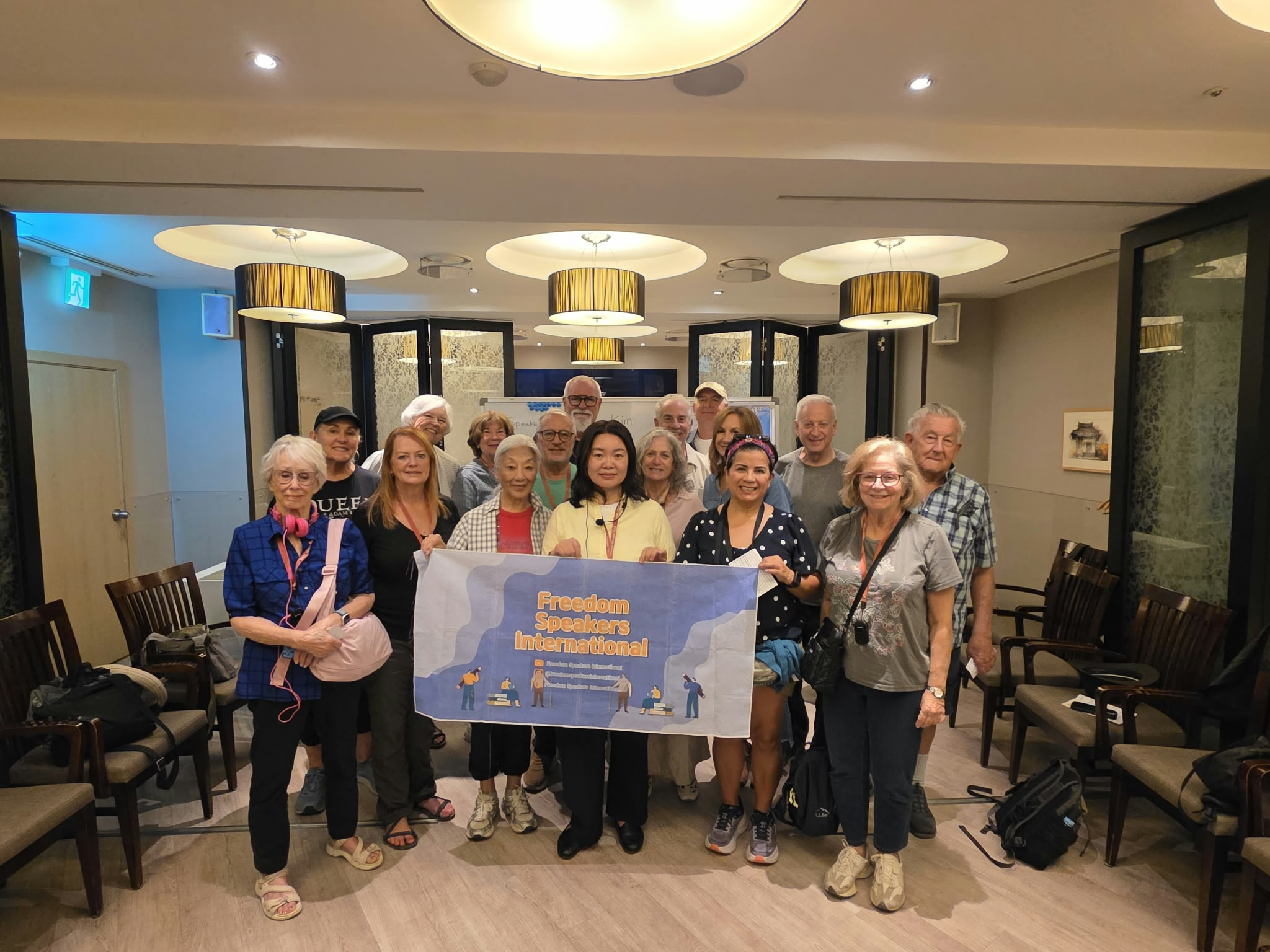
In the morning, before we headed out of Seoul to visit the DMZ, we met Sujin Kim. Now in her late 40s, Sujin escaped from North Korea more than 20 years ago. Her story was both painful and inspiring.
The “Arduous March”
Until its collapse in the early 1990s, the Soviet Union had bolstered the North Korean economy. With the loss of that support, together with a series of droughts and floods, economic mismanagement, and the imposition of sanctions, the North Koreans suffered severe famine from 1994 through 1999. Only about 20% of the mountainous terrain of North Korea is arable farmland. It cannot produce enough food to feed its population of about 26 million. It has always relied on imports. The estimated deaths from starvation and hunger-related illnesses in the 1990s number around half a million to a million.
The North Korean government referred to the crisis as “The Arduous March.” This phrase is meant to evoke a memory of Kim Il Sung’s experience fighting the Japanese in harsh winter conditions. Words like “famine” and “hunger” were banned, and the government blamed the United States.
Sujin’s escape
Facing starvation, Sujin, at age 23, made the difficult decision to try to escape. She found a broker who promised her a job in a restaurant in China. Since she had no money, the broker would require payment from her future salary. She crossed into China at night, but there was no restaurant. She was sold to a farmer and forced to become his wife. The stories she’d about opportunities in China were all untrue. The broker was engaged in human trafficking.
When she became pregnant she knew she had to escape. She managed to get away, but her limited Chinese language made it difficult to find work. She moved from one job to another, working more than 10 hours a day, until she found a job at a sewing factory earning just enough to survive. But she miscarried.
Eventually Sujin met another North Korean defector who introduced her to a new broker. She was now 26 years old. On a bus to the Vietnamese border with a group of defectors, they were stopped by the police at a security checkpoint. All the others were deported to North Korea, but because she had basic Chinese language skills and a discarded ID card she had found, she was allowed to pass. She crossed from China to Vietnam and then to Cambodia. From there, she finally made it to South Korea.
This, it seems to me, was Sujin’s Arduous March.
The present and the future
There were lots of questions. She still has her mother and sister in the North, and she last spoke with them several years ago. We wondered whether they are safe. Sujin told us she is not significant enough for the North Korean authorities to punish her family for her escape. This surprised me. I would have thought the threat of punishing the family is an important way the North keeps people from trying to escape.
About 34,000 North Korean defectors live in the South. I asked Sujin about the challenges if and when reunification happens. She said most of those defectors would head back to help family and friends adapt to freedom. And I asked if she has hope for this to happen in her lifetime. She said yes.
Sujin is a nurse. She has completed a Masters and is currently working on her PhD in Social Welfare. She is married and has two children.
DMZ
The drive to the DMZ took a little over an hour from Seoul. The line between North and South sits roughly at the 38th parallel, but when the armistice was signed, the final border was drawn where the fighting stopped.
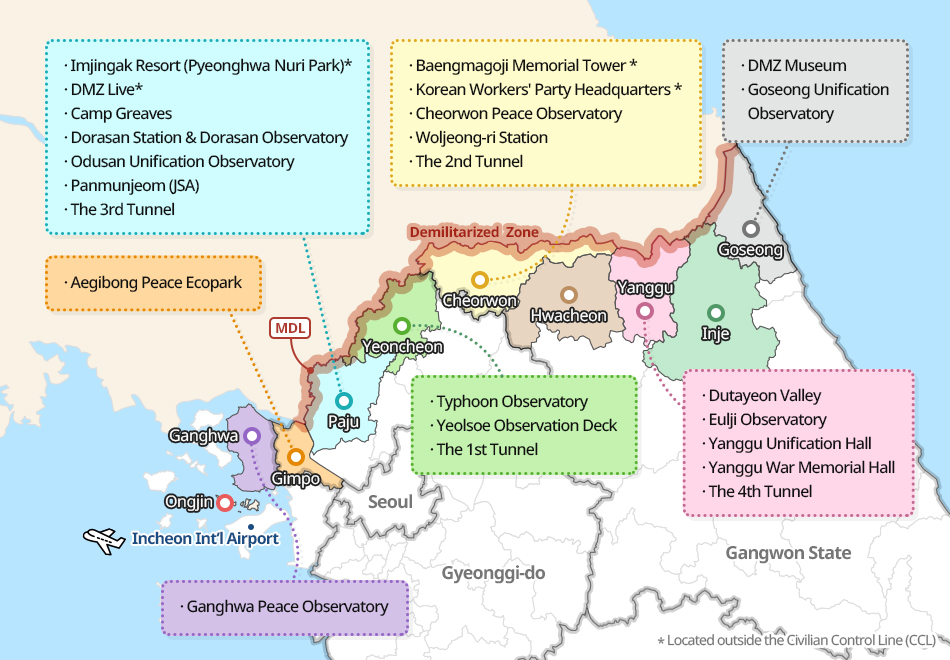
Most tour groups go from Seoul to the Paju corridor to visit the DMZ, but Sunny took us to Aegibong Peace Ecopark. I don’t remember the reason for this, but I think it was because most tour groups go to the Paju corridor. We didn’t quite have Aegibong to ourselves, but there were no big throngs of tourists. Of course I don’t know what we missed, but I was fascinated with what we saw.
As you can see from the photo up top, there is a Starbucks here, clearly visible from North Korea.


We’re now at Gimpo International Airport waiting for our flight to Tokyo. We had to say goodbye to Sunny, one of the best trip leaders I’ve had on my fourteen tours with OAT.
In the 1950s, after the Korean War, this was one of the poorest countries in the world. Today it’s one of the wealthiest. I walked around in amazement at what they’ve achieved in 70 years.
Korea was never a country I had anywhere near the top of my bucket list. But four days was not nearly enough time here. I loved the culture, the energy, (most of) the food, and the people.
Korea is now at the top of my list for places I want to return to.