
Delhi: Toilets and Modern Art
I’m back in Delhi for a few days after the end of my Heart of India tour and the start of my next tour. I had a free day yesterday to visit a couple of museums. I read in Atlas Obscura about the Sulabh Museum of Toilets, so I decided to go see what it was all about. And I also visited the National Museum of Modern Art.
Toilets
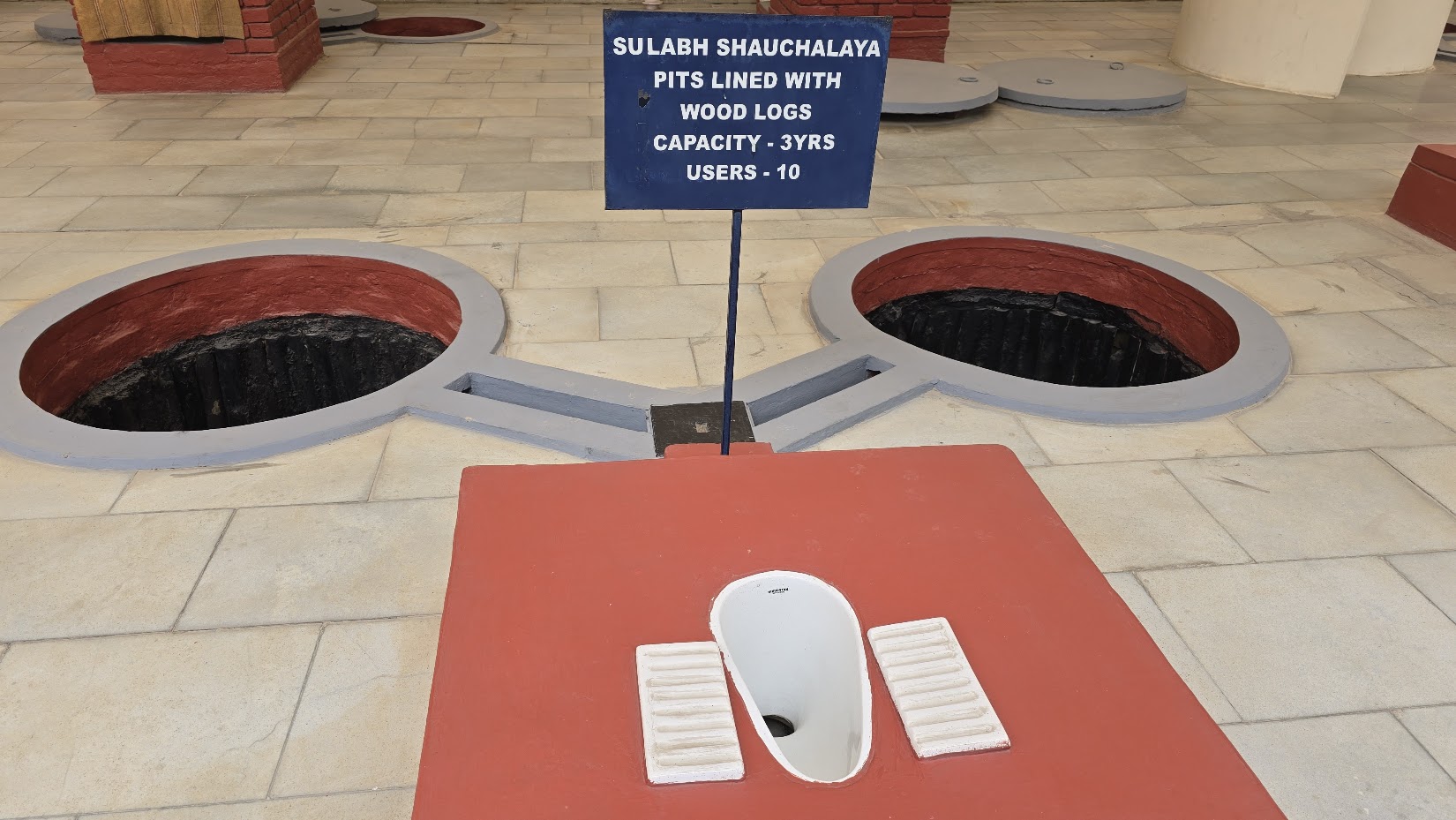
Okay, so here’s my take on the Sulabh International Museum of Toilets. You have this guy, Dr. Bindeshwar Pathak (1943–2003), who was deeply concerned about sanitation and waste management. He founded Sulabh International, an NGO dedicated to bringing hygenic toilets to communities where dry latrines and buckets were all that was available. He developed the two-pit pour flush latrine (photo at the top of the page).
Sulabh International has installed over 1.6 million household toilets and has built these new latrines in 1,749 communities. They’ve also installed more thanj 10,600 public toilets across India.
How do you make this interesting to people who visit India? You build a museum about toilets.
The museum was indeed interesting, but I was disappointed that there weren’t more examples of toilets. It was a lot of information and reading. Some of it was humorous, because toilet humor is always funny, I guess. Some of it was too much to read.


Modern Art
The National Gallery of Modern Art has an excellent collection, and I’m so glad I went. Unfortunately, they don’t allow photos, so I can’t share any of my favorite works with you. But what it did so well is demonstrate how Indian artists were influenced by westerners who came to India starting in the 16th century. At the same time, there were so many fine examples of works that forged their own path. I appreciated seeing how people of color are portrayed by artists who are not treating their subjects as exotica, but rather as part of everyday life.
There were some interesting outdoor sculptures I did take photos of.


I’ve added photos from yesterday to my Delhi photo album.
Snakebite victims
When we visited Varanasi, we learned about the Hindu custom of cremation.
Among those who are traditionally not cremated are snakebite victims. It is a spiritual belief among Hindus that snakebite victims are not truly dead. So rather than cremate them, their bodies are floated on the Ganges (or whatever river is available), often on a raft made of a banana stem, with the hope that a wandering healer would find and treat the person.
I thought of this because I saw a painting in the NGMA that depicted this.