
Agra: The Taj Mahal and a lot more
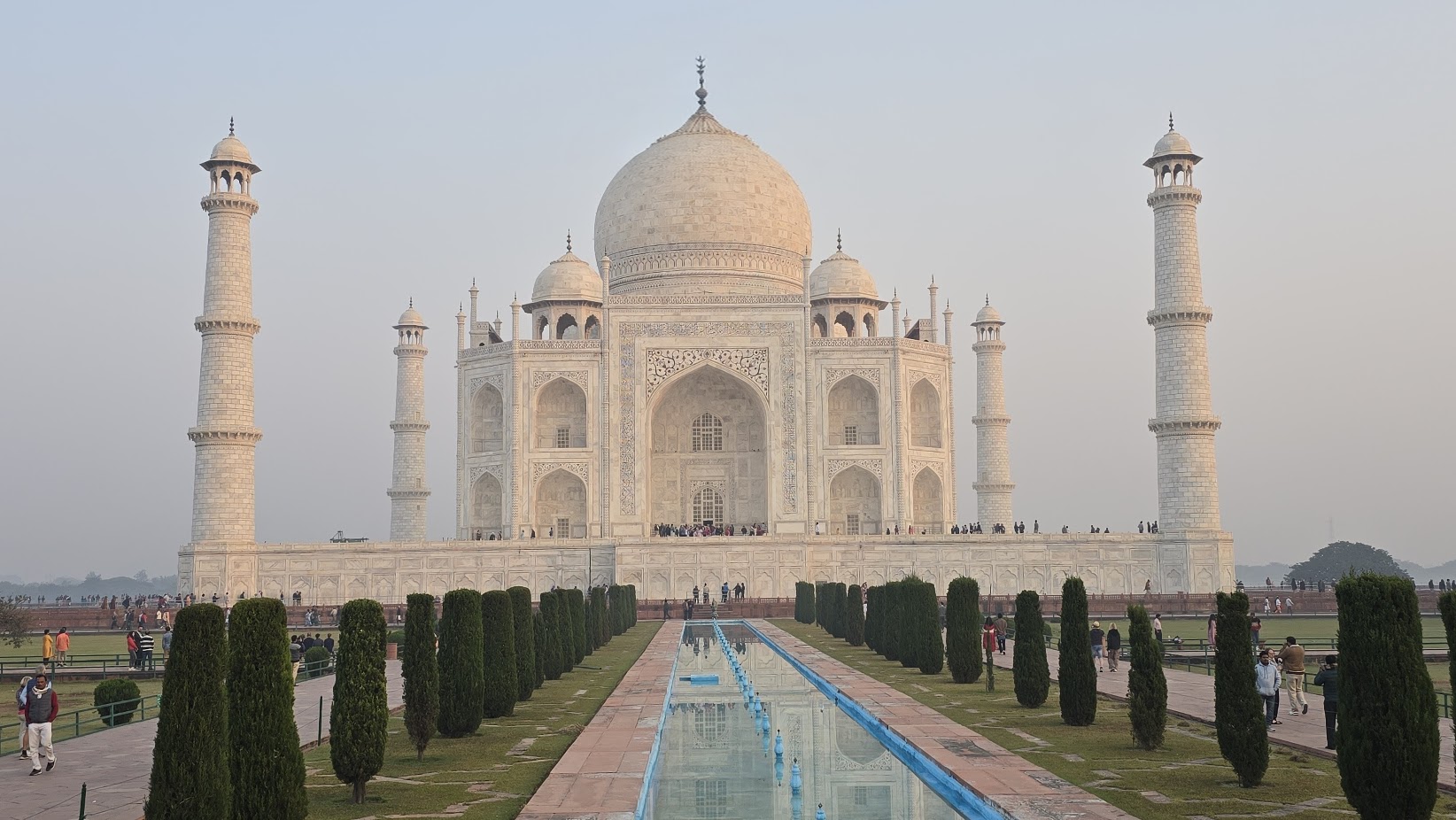
Agra is the most touristed city in India. No doubt that is because of the Taj Mahal, one of the New 7 Wonders of the World. And of course we visited this beautiful monument. But there is a lot more to see in Agra, so here’s the rundown of what I did.
Mohabbat The Taj
So the night we arrived in Agra, we had the option to attend this show. It was a colorful spectacle with song and dance, telling the story of the Taj Mahal.
The music and dance and costumes were all very enjoyable. The sound, though, including all the dialog and singing, was pre-recorded, so for me that was a disappointment. It was done in Hindi, and we had headphones to listen to the English translation. Overall, it was a good show, and it actually did offer an understanding of how the Taj Mahal came to be.

The Taj Mahal
We got up early yesterday to visit the Taj Mahal at sunrise. So did thousands of other tourists. We departed by bus at 6am from our hotel to the parking lot. From there we rode in golf carts to the entrance. It took a half hour to go through security. But the sun was just coming up at around 7am, when we got our first glimpse.


By the way, in the two photos above, I used Google’s Magic Eraser tool to remove all the people. There is also currently scaffolding at the top of the dome, and I removed that as well.
The story of the Taj Mahal
Here’s the story, glommed together from the show, Wikipedia, and our tour leader, Ashish.
Shah Jahan
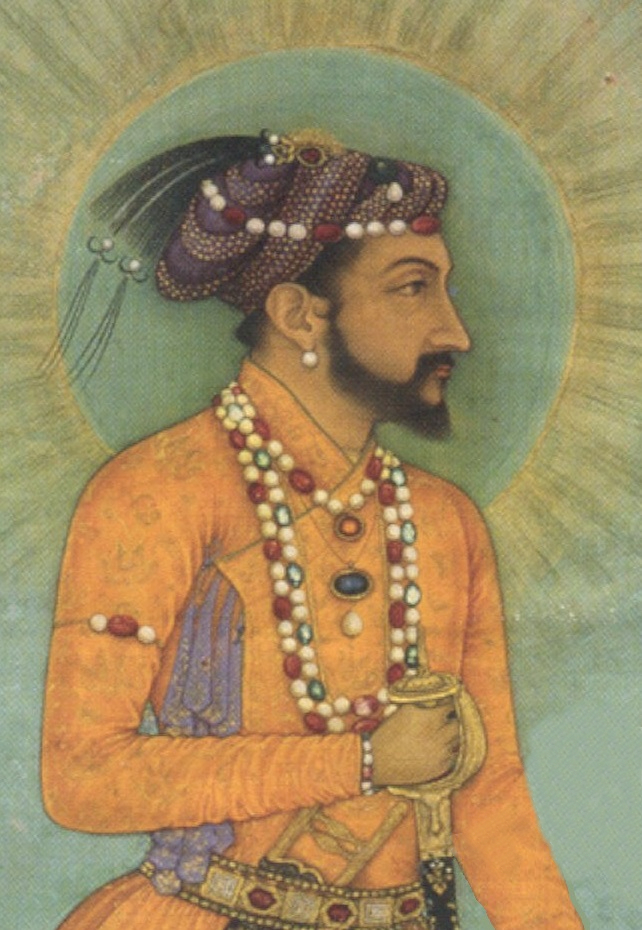
Khurram was born in 1592, the third son of Jahangir, the fourth Mughal emperor. You may recall that in Delhi we visited the Tomb of Humayun, who was the second king of the Mughal empire. Humayun was Jahangir’s grandfather.
Jahangir died in 1627, and after defeating all his rivals (his half-brothers), Khurram became emperor Shah Jahan.
Mumtaz Mahal
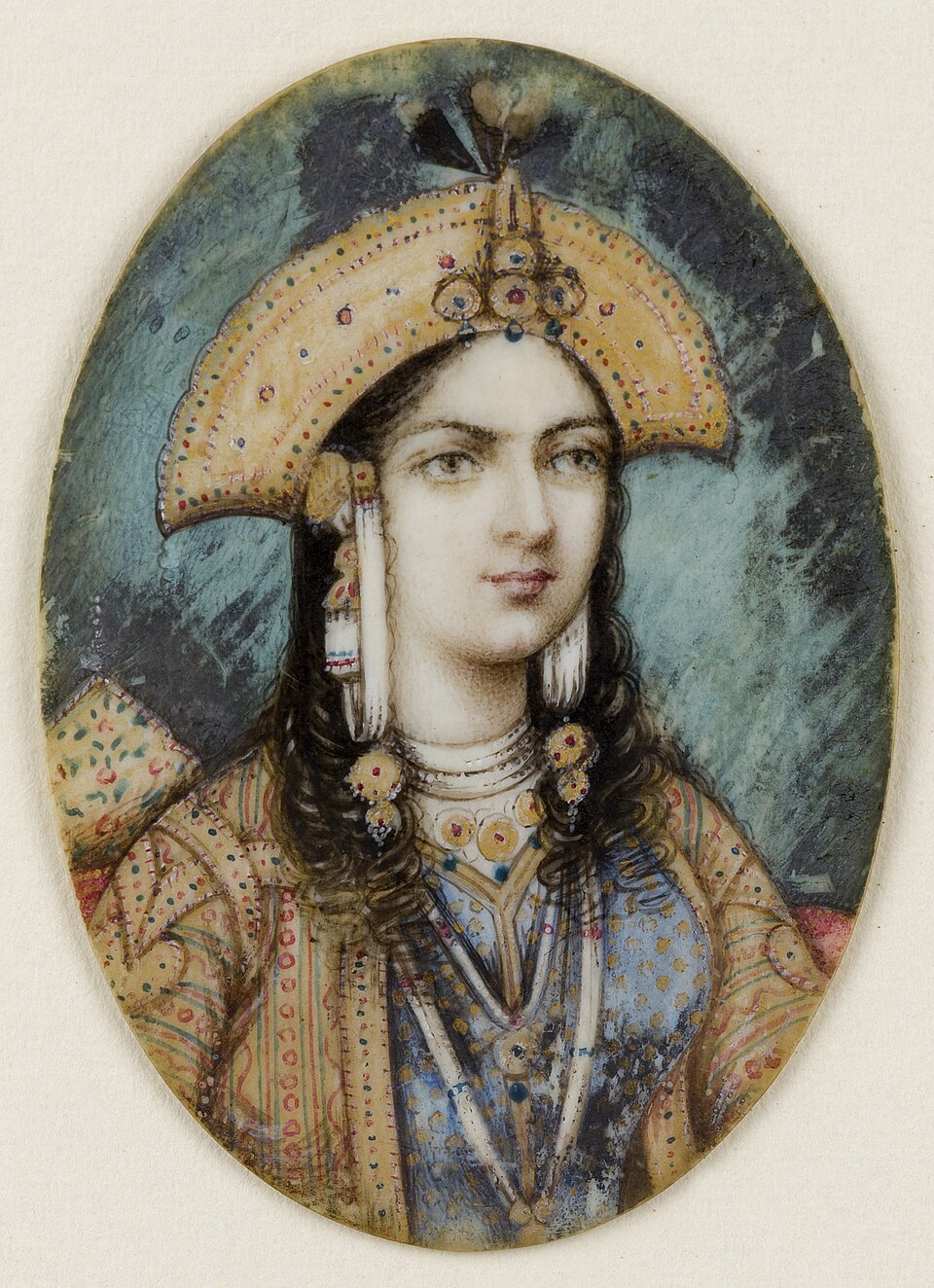
Arjumand Banu Begum was born in Agra in 1593 to a family of Persian nobility. As a young girl, she would sit in the Meena Bazaar in Agra Fort, selling beads and silk items. One day in 1607, 14-year-old Khurram was strolling through the market when he saw here there, wearing a burqa. He was immediately stricken. A few days later he saw her again, this time without her face covering, and he rushed to his father and told him he wanted to marry her. Jahangir agreed but postponed the wedding until they were older.
Khurram and Arjumand married in 1612. When he took the throne and the name Shah Jahan, he also bestowed on his wife the name Mumtaz Mahal, which means, “Jewel of the Palace.”
Marriage
Though Shah Jahan had several other wives, Mumtaz was his favorite, and they had a special bond. He was so smitten with her and so beguiled by her beauty that she complained he would make her vain and arrogant. He told her her arrogance was deserved. She accompanied him on all his journeys, even when fighting wars. They had thirteen children, and in 1631 she was pregnant with their fourteenth.
Tragedy
In June 1631 Mumtaz gave birth to their fourteenth child, a daughter, but died from postpartum hemmorhage. She was buried in a garden in Burhanpur, about 800 km south of Agra, where Shah Jahan was involved in a military campaign.
Shah Jahan was inconsolable. He neglected royal affairs and went into secluded mourning for a time. He gave up listening to music and lavish dress for two years. In December 1631 her son moved her body to Agra, and Shah Jahan began planning for a suitable mausoleum and funerary garden for his beloved wife.
Construction of the Taj Mahal
Shah Jahan was enamoured by the beauty of the land at the south side of Agra on which a mansion belonging to Raja Jai Singh I stood. He chose the place for the construction of Mumtaz’s tomb after which Jai Singh agreed to give it to the emperor in exchange for a large palace in the centre of Agra.
Construction began in 1632. The mausoleum was completed in 1648, and the surrounding buildings and garden took an additional five years. The tomb is composed primarily of white marble, with inlayed jeweled stones. The other buildings (a mosque to the west; a matching building to the east, providing symmetry; and a gate at the south end of the garden) are red sandstone.
Visit to the Taj Mahal
The main thing to do when visiting the Taj Mahal is to take photos. You have to compete with the throngs who all want to take the same photo from the same angle. Everyone wants the reflection in the garden pools. Everyone wants to stand in the perfect spot to capture the perfect symmetry.
And of course everyone wants to be photographed in front of the Taj Mahal.
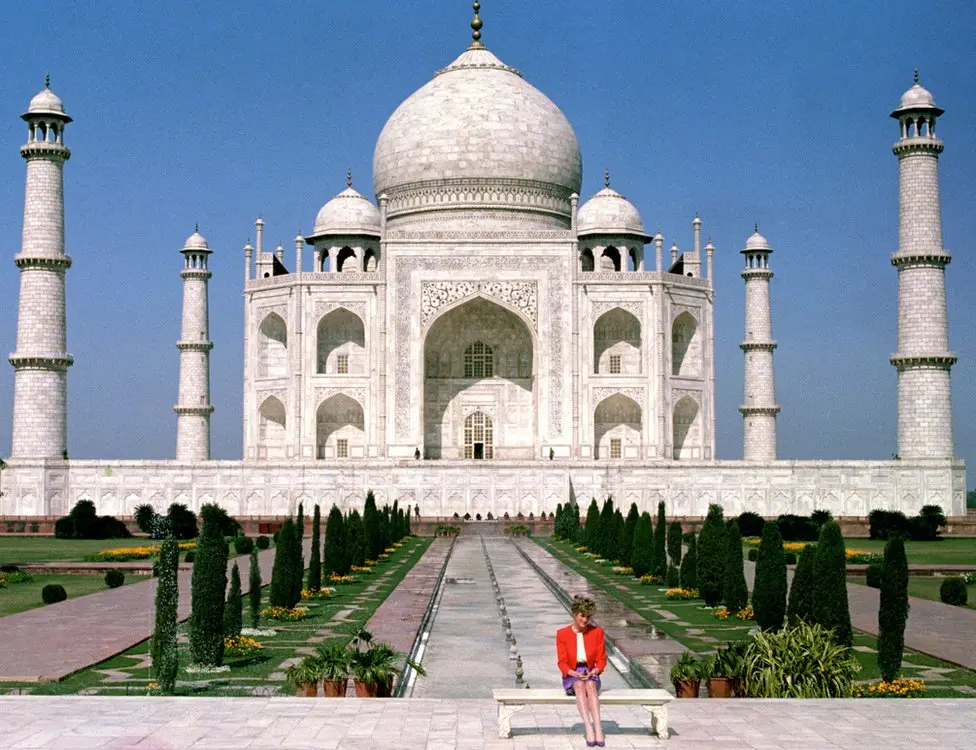
The most coveted spot for a photo is the bench where Diana sat — alone — in 1992, right about the time she and Charles separated.
Inside
After donning paper shoe covers, we got in line to go inside. There you can see the grave of Mumtaz Mahal right in the middle, under the central dome.
Alongside her is the grave of Shah Jahan, who died in 1666. He had fallen ill in 1657, and he named Mumtaz’s eldest son, Dara Shikoh, as regent. But his brothers would have none of that. The third son, Aurangzeb, defeated Dara in 1659. Even though Shah Jahan recovered, Aurangzeb had him declared incompetent and imprisoned him in Agra Fort, where he died.

The Taj Mahal, in addition to being an extraordinarily beautiful edifice, is one of the world’s great testaments to love. I must say, though, that while it was even more beautiful than I imagined from all the photos I’ve seen, the visit was marred by the throngs of amateur photographers. It made me long for the days when we had film cameras and maybe took one picture and hoped it came out okay.
Yes, I took photos too (including one selfie). And Ashish took a picture of me, which I posed for begrudgingly. My complaints are hypocritical, I admit.
Sheroes
Later we visited Sheroes Hangout, which is operated by an NGO called Chhanv Foundation. Here’s what their website says.
Chhanv Foundation is a Non-Profit Organisation in India working for the rehabilitation of acid attack survivors. Chhanv Foundation raised the unheard voices of acid attack survivors through its campaign Stop Acid Attacks in 2013. We redefined the definition of rehabilitation by advocacy for the acid attacks followed by providing Medical Assistance, Legal Assistance, Education help then at last but not least by providing the Employment at Cafe Sheroes Hangout located in Agra.
We had a chance to chat with several of the women who work at the café. This was so inspiring and empowering. Learning about the events that changed their lives forever and seeing how this lovely café has helped them turn their lives around was wonderful.

Red Fort
Our final stop in Agra was at Agra Fort, commonly called the Red Fort. The exact history of the fort is unknown, but it was captured by the Babur, the first Mughal empire, around 1526. His son and successor, Humayun, was crowned here, but the Mughals lost it and recaptured it several times. Finally, Humayuns son, Akbar, the third Mughal emperor, made Agra his capital in 1558 and rebuilt the fort, which was in ruins. Akbar’s construction project concluded in 1573. Jahangir and Shah Jahan added additional sections to the fort, and it was here that Shah Jahan spent his final years under house arrest. Here he could gaze out the windows at the Taj Mahal.


