
Beppu
I spent the last two nights in Beppu, on the east coast of Kyushu. This is a busy port city and tourist mecca, but there didn’t seem to be any large cruise ships in port, so the crowds were acceptable.
The best part of my time here was before I got settled in. I had a full day free yesterday, and I can’t say I made the most of it, but I enjoyed the downtime after being on the go for the last few days.
Day Seven
As I wrote about in my last post, My driver, Qiu, picked me up from my ryokan in Yufuin and, after a stop at the Stained Glass Museum, we headed toward Beppu.
Beppu Ropeway
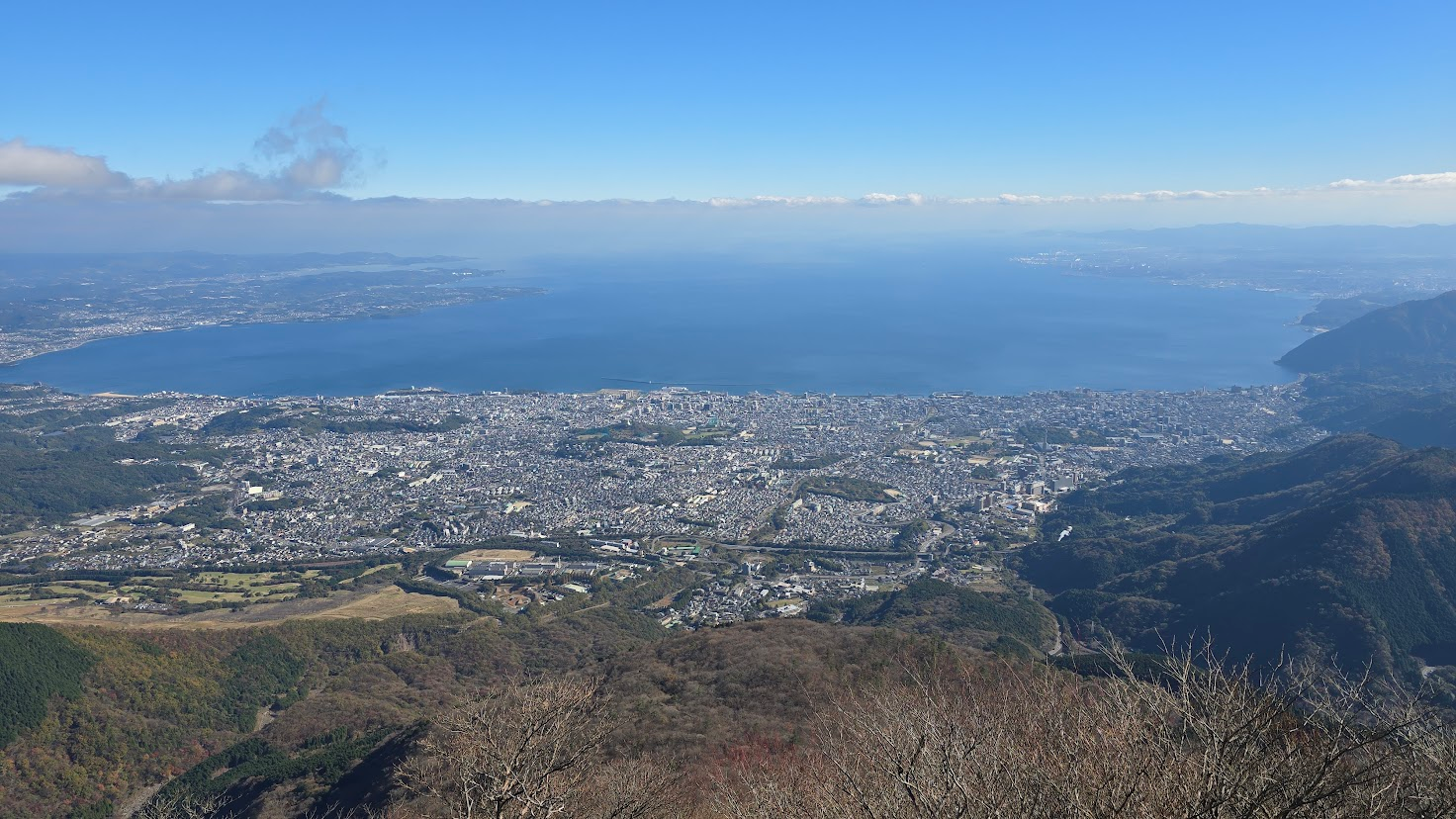
Before we got into Beppu, we stopped at the foot of Mount Tsurumi, where a cable car called the Beppu Ropeway climbs to the peak. (Well, not all the way to the peak; the last part is, optionally, done on foot.)
The views were impressive, and, though it was cold and windy, I enjoyed the walk to the summit.


The Hells of Beppu
Our next stop was in hell.
Jigoku is the Japanese word for “hell.” There are actually seven hells. These make up an area of geothermal activity just outside Beppu that is interesting and very popular. I visited all seven. I actually anticipated doing this on my free day yesterday, but Qiu brought me here, so I did it then.
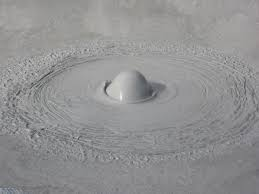
Oniishi Bozu Jigoku
The hot gray mud boiling in large and small spheres is said to resemble the shaved heads of monks. Oniishi Bozu means “demon stone shaved head.”
Umi Jigoku
The cobalt blue pond here formed out of the eruption of Mount Tsurumi 1,200 years ago. Umi means “beach” or “ocean.”

Kamado Jigoku
A kamado is a traditional Japanese wood- or charcoal-fueled cook stove or oven used for cooking rice and other dishes. The steam here is used to cook. Visitors can buy or bring food to cook themselves in steam pits. The hot spring’s temperature is just 90° C.

Oniyama Jigoku
Oniyama means “demon mountain.” Here, the demons are crocodiles. In 1923, this area became home to Japan’s first crocodiles. The hot springs here are used to provide a suitable habitat.

Shiraike Jigoku
The hot springs water is colorless and transparent at first, but when it falls into the pond, it exhibits a bluish-white color due to the decrease in temperature and pressure. (Shiraike means “white pond.”) The hot spring’s heat is used for breeding a variety of large tropical fish.


Chinoike Jigoku
This is the oldest natural Jigoku in Japan. The hot spring is just 78° C (172° F), and the clay is reddish in color. Chinoike means “pool of blood.”

Tatsumaki Jigoku
Tatsumaki means tornado, twister, whirlwind, or waterspout. In this jigoku, it refers to a geyser, which spouts every 30–40 minutes. I was lucky to arrive just as it gave its display.

Lunch
After my tour of the Hells of Beppu, Qiu brought me to a sushi restaurant for lunch. This was unlike any sushi restaurant I’ve ever been to. I’ve had conveyer-belt sushi plenty of times, but this took things to a whole new level.
First, when I arrived I entered my “party of one” info on a tablet. This spit out a slip of paper with a number and a QR code on it. After a short wait, my number appeared on a monitor. I scanned the QR code into a reader, and it spit out another piece of paper with my table number on it. All the tables were clearly numbered; I went to my table, where I found yet another tablet, which I used to place my orders.
I ordered several sushi dishes. After a few minutes, the tablet sang a song and announce that my food was arriving. And it zipped right up to my table on a speedy conveyer belt, stopping right in front of me. (I saw other dishes go by as I ate, speeding along to other tables.)
I never interacted with a human being the entire time. Until it was time to pay. I brought my table slip up to the cashier, who took my payment.
The sushi was decent. Not as good as the conveyer belt sushi I had in Kumamoto, but good.
Hotel
Finally, Qiu brought me to my hotel, and this was the last I saw of him.
My hotel is conveniently located across from the train station, which will be very convenient when I leave for my next destination in about an hour.
It’s a shoes-off hotel. There are shoe lockers at the entrance. But they don’t provide slippers, which I would have appreciated. Going to breakfast in stocking feet (many other people are barefoot) doesn’t feel right to me.
There’s are public onsen, one for men and one for women, as well as seven private onsen. But after the luxury of having my own personal in-room onsen in Yufuin, I didn’t feel like partaking here.
Day Eight
I enjoyed my free day without filling the day with activities. I made a haircut appointment, walked along the waterfront, did some shopping (but didn’t buy anything), had a really nice lunch, went to the Beppu Art Museum, and took an afternoon nap. Then I went out for pizza in the evening, which was actually very good.
The art museum was small but had some surprisingly good work, including a number of famous western artists (Picasso, Matisse, Chagall) as well as some good Japanese art. What I found annoying and disappointing, though, is that virtually every painting was covered with glass, creating reflections that really messed with the viewing (as well as the photography).
Photos from Beppu are here, and separately, from the art museum. (Yes, I managed to get some photos in spite of the reflections.)
I a short while, I’m off on a train journey to my next destination. I’ll be back in a few days with more, as my Far East adventure winds to a close after ten weeks.