
Ise and Toba: Shrine and Ryokan
We left Tokyo on Tuesday and traveled to Toba, with a stop in Ise. Both cities lie inside Ise-Shima National Park, which encompasses a stretch of coastline with numerous inlets as well as a densely forested interior. We had the chance to experience the maritime heritage of the region as well as one of Japan’s most important Shinto shrines, lying in a peaceful (albeit popular) wooded area.
Here are my photo albums from our two days in Toba.
Shinkansen
We traveled out of Tokyo on the famous Japanese bullet train, Shinkansen. With top speeds of 320 km/h (200 mph), it was certainly zippy, though the highest speed I clocked, using my phone’s speedometer app, was 176 mph. It’s not a particularly smooth ride, though, and other than being fast, there was nothing special about it. It did have WiFi, though, so I was able to work on blogging.
We got off at Nagoya and transfered to a regular train that took us to Ise.
Ise Shrine
Ise Shrine, or Jingū (神宮), actually consists of two locations. The one we visited is the Inner Shrine or Naikū. It is dedicated to the solar goddess Amaterasu. She is the most venerated deity of the Shinto religion, and making this Japan’s most sacred shrine. (The Outer Shrine, or Gekū, is located about six kilometers away and is dedicated to Toyouke-hime, the female deity of agriculture, rice harvest and industry.)
What is a shrine?
A Shinto shrine is completely different from the grand structures of other religions. Here are the main features:
- Torii Gates: A distinct traditional archway (often painted vermilion) that marks the boundary between the everyday human world and the sacred space of the kami (the sacred spirits, deities, or divine forces).
- Honden & Haiden: The honden is the inner main hall that houses the sacred object representing the kami (inaccessible to ordinary visitors), while the haiden is the outer hall of worship where people pray.
- Purification Station (Chōzuya or Temizuya): A water basin near the entrance where visitors wash their hands and rinse their mouths before approaching the shrine.
- Guardian Statues (Komainu or Foxes): Stone or bronze pair statues—such as lion-dogs (komainu) or foxes (at Inari shrines)—that guard the sacred grounds. Other than these, there are no other statues, and no human likenesses of any kind.
- Nature Connection: Shrines are typically built with natural wood materials and often nestled inside sacred forests, groves, or near mountains, waterfalls, and rocks.
It is customary to perform certain rituals when visiting a shrine. When entering through the torii, make a slight bow. While walking on pathways, stay to the side, as the center is reserved for the kami. And at the haiden, toss a coin into the offering box, bow deeply twice, clap twice (to alert the kami of your presence), make your prayer (preferably one of thanksgiving rather than asking), and make one final deep bow.

Naikū


Here are some more photos from Ise.
Toba
It was a short drive in a bus from Ise to Toba, where we checked into the Todaya Hotel, which is a traditional ryokan, but which felt more like a cross between a traditional inn and a modern spa/hotel.
What is a ryokan?
Ryokan are Japanese-style inns found throughout the country, especially in hot spring resorts. More than just a place to sleep, ryokan are an opportunity to experience the traditional Japanese lifestyle and hospitality, making them popular with both Japanese and foreign tourists alike.
japan-guide.com
The main features of a ryokan are these:
- Tatami Rooms: Bedrooms feature straw-mat floors (tatami) with traditional futon beds rolled out at night.
- Omotenashi: Staff practice wholehearted, instinctive Japanese hospitality, treating visitors like family.
- Hot Spring Baths: Many ryokan are built around natural hot springs (onsen) featuring communal or private baths (ofuro).
- Kaiseki Dining: Stays frequently include a multi-course traditional Japanese dinner and breakfast featuring local, seasonal ingredients.
- Traditional Attire: Guests are provided with comfortable cotton robes called yukata to wear inside the inn and around the surrounding town.
- Etiquette: Visitors remove their shoes at the entrance and switch to indoor slippers.
Todaya


Pearls
We took a ride to a secluded area of the coast where pearl production is an important activity. There we visited Pearl Miki, a small, family-run business. We each got an oyster to shuck and extracted the cultured pearl from inside. Then we had a chance to talk with the owner and her family and learn a little about the business of culturing pearls. It was not my favorite activity of the trip, but it was interesting.

Ama
The traditional method of fishing in this area involves diving by women without any scuba gear or air tanks. Ama, which literally means “sea women,” may have been doing this kind of diving for more than 2,000 years. They used to dive for pearls and for seafood, but nowadays pearls are cultivated by hanging them on racks from rafts, as the Pearl Miki family does. When weather cooperates (which it hasn’t recently, as Japan has been hit by a number of typhoons), Ama go out fishing as often as permitted; their activity is controlled to prevent overfishing.
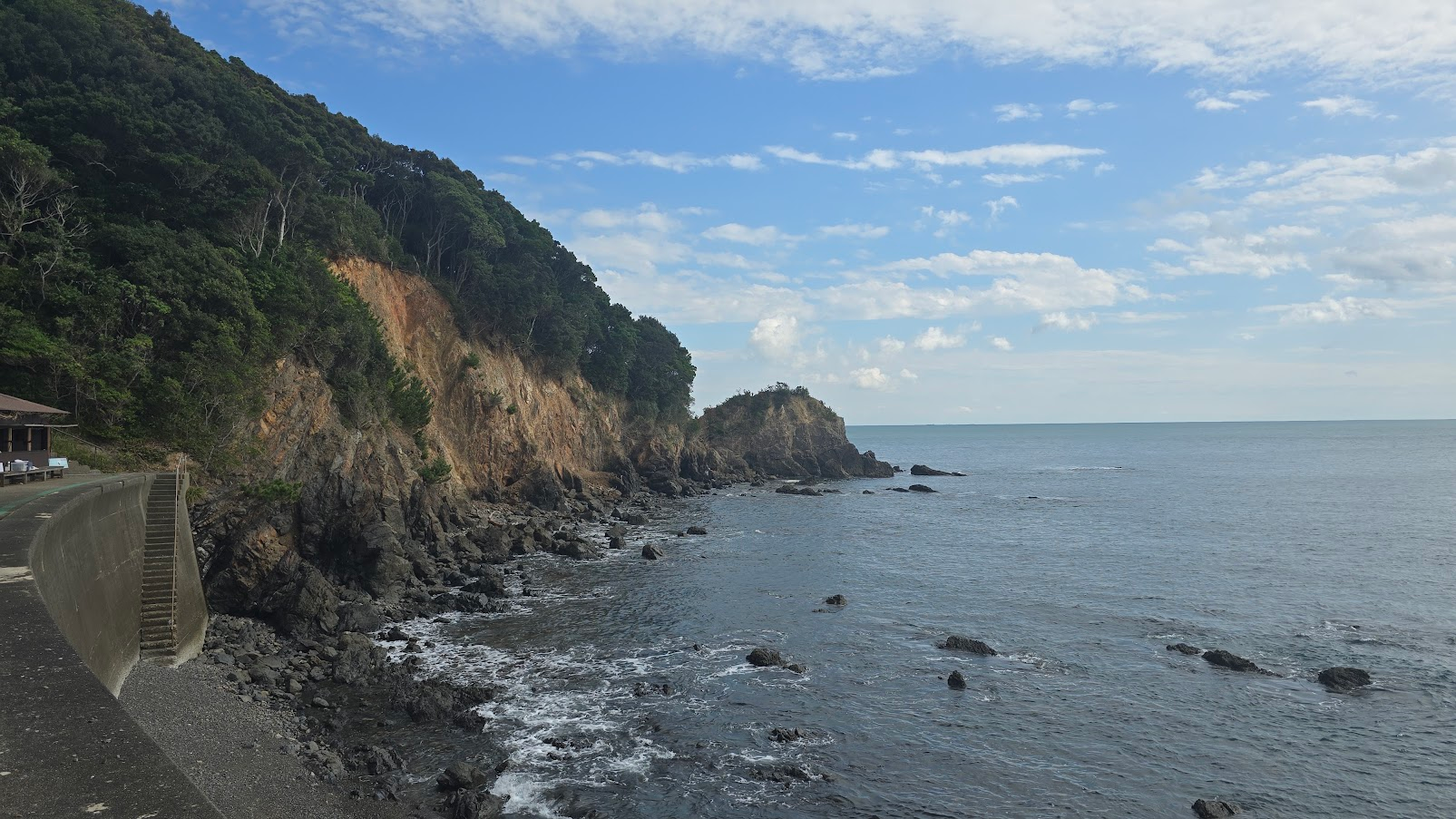
The ama of Toba run a restaurant of sorts. Wearing their white diving uniforms, they grill fish and vegetables for tourists like our group. If you look at the picture up top, you can see a small shack at the far left. This is where we gathered for lunch.


They served us a delicious meal and then answered our questions about their work as ama. In case you are wondering, there are a few men who dive, but women are better suited to it because their higher percentage of body fat provides better insulation against cold water temperatures. Also, women generally can hold their breath longer than men.
Aquarium
Toba Aquarium is one of Japan’s largest aquariums and has about 1,200 species, the most in Japan.
The star of the aquarium is the dugong named Serena. She was rescued as an infant in the Philippines over 30 years ago, making her a record-holder for the longest time cared for in captivity in East Asia.

The only other dugongs in captivity are in Sydney and Jakarta.
Check out all my other photos from Toba Aquarium. (I took a lot!)
We left Toba yesterday and came to Kyoto. I’ll try to get caught up and blog about Kyoto soon.